
Three minutes before Neil Armstrong set the Eagle down in the Sea of Tranquility on July 20, 1969, the lunar module’s onboard computer started screaming. Alarm 1202. Then more alarms over the next few minutes — 1202, 1201, 1202, 1202 — each one announcing that the processor was being asked to do more than it could handle. The landing did not abort. The descent program kept running. The reason it kept running is that a computer scientist named Margaret Hamilton had spent years arguing that flight software needed a way to triage its own workload, and had built one into the Apollo Guidance Computer over the objections of people who thought the astronauts would never make that kind of mistake.
Hamilton was leading the software team at MIT’s Instrumentation Laboratory, which held the NASA contract to write the code for both the command module and the lunar module. According to Scientific American’s account of her work, the onboard computer had roughly 74 kilobytes of read-only memory. A modern phone carries millions of times that capacity, mostly to scroll video.
Coining a discipline that did not yet exist
Hamilton started calling what her team did “software engineering” sometime in the mid-1960s, partly as a joke and partly as a serious land grab. Hardware engineers in the building treated code as a secondary craft — something closer to typing than to design. She wanted the word “engineering” attached to it so that the discipline could be taken seriously, funded seriously, and held to the same standards of review as a circuit board or a fuel line. A profile of Hamilton notes that she developed the building blocks for the field and coined the term itself.
The label stuck. Today it covers millions of jobs worldwide. In the mid-1960s it was concentrated in just a handful of institutions like MIT’s Instrumentation Laboratory.
A four-year-old crashed the simulator
The priority-scheduling idea did not arrive as a memo from NASA. It arrived because Hamilton’s daughter, then about four years old, came to the lab on weekends and pressed buttons on the flight simulator while her mother worked. One evening her daughter managed to start the pre-launch program while a simulated mission was already in flight. Two programs tried to occupy the same memory. The simulator crashed.
Hamilton wanted to add code that would prevent a live astronaut from doing the same thing. NASA’s initial response, by her own later telling, was that astronauts were trained too well to make that kind of error. She pushed anyway. What her team eventually built was less a single safeguard and more an operating philosophy: every task running on the Apollo Guidance Computer carried a priority ranking, and if the processor ran out of cycles, the system would jettison the lowest-priority work, restart cleanly, and protect whatever was keeping the spacecraft alive.
The same instinct — building for the failure no one expects — shows up in other founding moments of modern industry. Tweak Your Biz has covered how a similar bias toward small, autonomous teams produced the Lockheed Skunk Works under Kelly Johnson, and how the Agile Manifesto in 2001 codified an idea that working software, not paperwork, is the only honest measure of progress. Hamilton’s priority-scheduling system fits the same lineage — build for what actually happens, not what the spec assumes.
What actually went wrong at 33,500 feet
The proximate cause of the 1202 alarm was a switch. As Scientific American reconstructs the sequence, the rendezvous radar had been activated during the final descent. The rendezvous radar was meant for the trip back up, when the lunar module would have to find and dock with the command module circling overhead. Switching it on during descent meant the computer was suddenly being asked to process a steady stream of radar data it had not budgeted for, on top of the landing radar, the descent engine throttle commands, the attitude sensors and the displays the astronauts were reading.
The first alarm came around 33,500 feet, just after the lunar module had rotated for the landing radar. The computer was now drowning.
What Hamilton’s system did next is the part that mattered. The executive software recognized it had run out of time to complete every task it had been handed. It shed the lower-priority work — chiefly the rendezvous radar processing it didn’t need yet — restarted, kept the descent guidance loop running, and reported the overload through the 1202 code rather than crashing silently. The astronauts saw an alarm. They did not lose control.
Why the call from Houston came so fast
The flight controller who told the crew to proceed was Steve Bales, working under guidance officer Jack Garman. Garman had a handwritten cheat sheet of program alarms and what each one meant. Bales recognized 1202 as the executive overload code — one that Hamilton’s team had designed to indicate the computer was shedding lower-priority tasks while continuing critical functions. Bales relayed “Go” within seconds. The descent continued.
Armstrong later described being used to the computer warnings by the final approach. He spent his attention on flying past a boulder field the autopilot was steering him toward, hunting for a flat patch a mile west, and watching the fuel gauge fall. He landed with little propellant remaining. The computer never failed him during that final manual flight, because Hamilton’s scheduler had already triaged the workload down to what mattered.
The idea that outlived the mission
Priority scheduling is now basic plumbing in every operating system on Earth. The phone in your pocket does it thousands of times a second — protecting the call you are on while it kills a background process that has gone greedy. The pattern Hamilton’s team baked into rope-core memory in Cambridge in the late 1960s now runs air traffic control, hospital monitoring, anti-lock brakes and the servers that route this article to your screen.
She did not get much public credit for any of it until 2016, when Barack Obama gave her the Presidential Medal of Freedom. She was 80. By then, “software engineer” had been a job title for two generations of people who had never heard her name.
What this still teaches founders
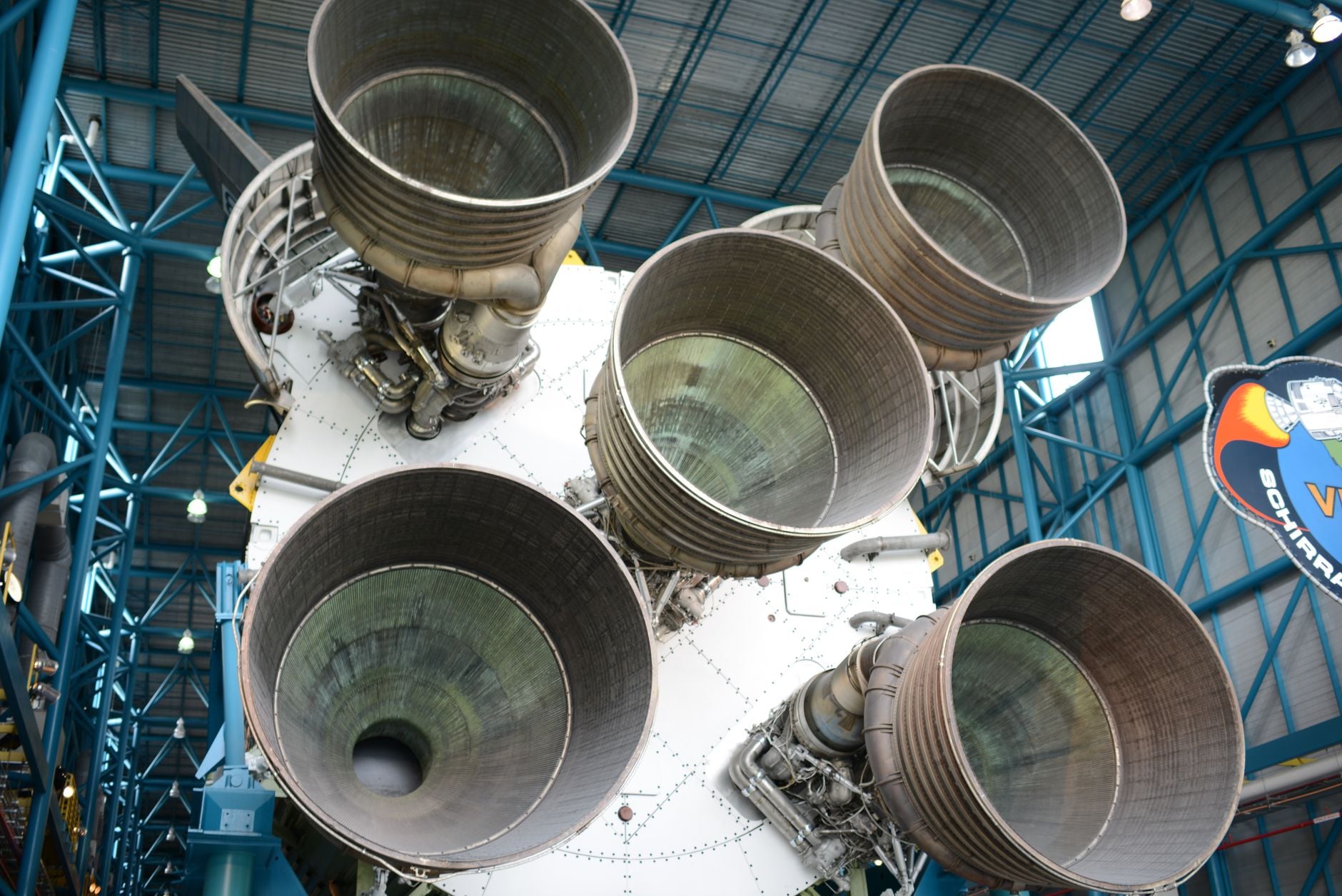
The Apollo story tends to get told as a hardware triumph — the Saturn V, the heat shield, the rocket engines. The software half ran on a machine with less memory than a 1990s pocket calculator, written by a team that had to invent the meaning of its own job title as it went. Hamilton’s insistence on a priority-scheduling system, over the objections of people who said no astronaut would ever cause that bug, is the kind of stubborn defensive design that almost never makes it past a budget meeting.
The lesson translates well beyond aerospace. Plenty of business histories Tweak Your Biz has tracked — from Joe Coulombe’s reinvention of Trader Joe’s to the way early Airbnb survived on cereal money — turn on a founder who insisted on building for the edge case other people dismissed. Hamilton’s edge case was a four-year-old in a flight simulator. Years later, that same edge case kept two astronauts alive on their journey to the moon.
Armstrong stepped onto the surface on July 20, 1969. Somewhere in Cambridge, a stack of code with handwritten margin notes had already done its job and gone quiet.