
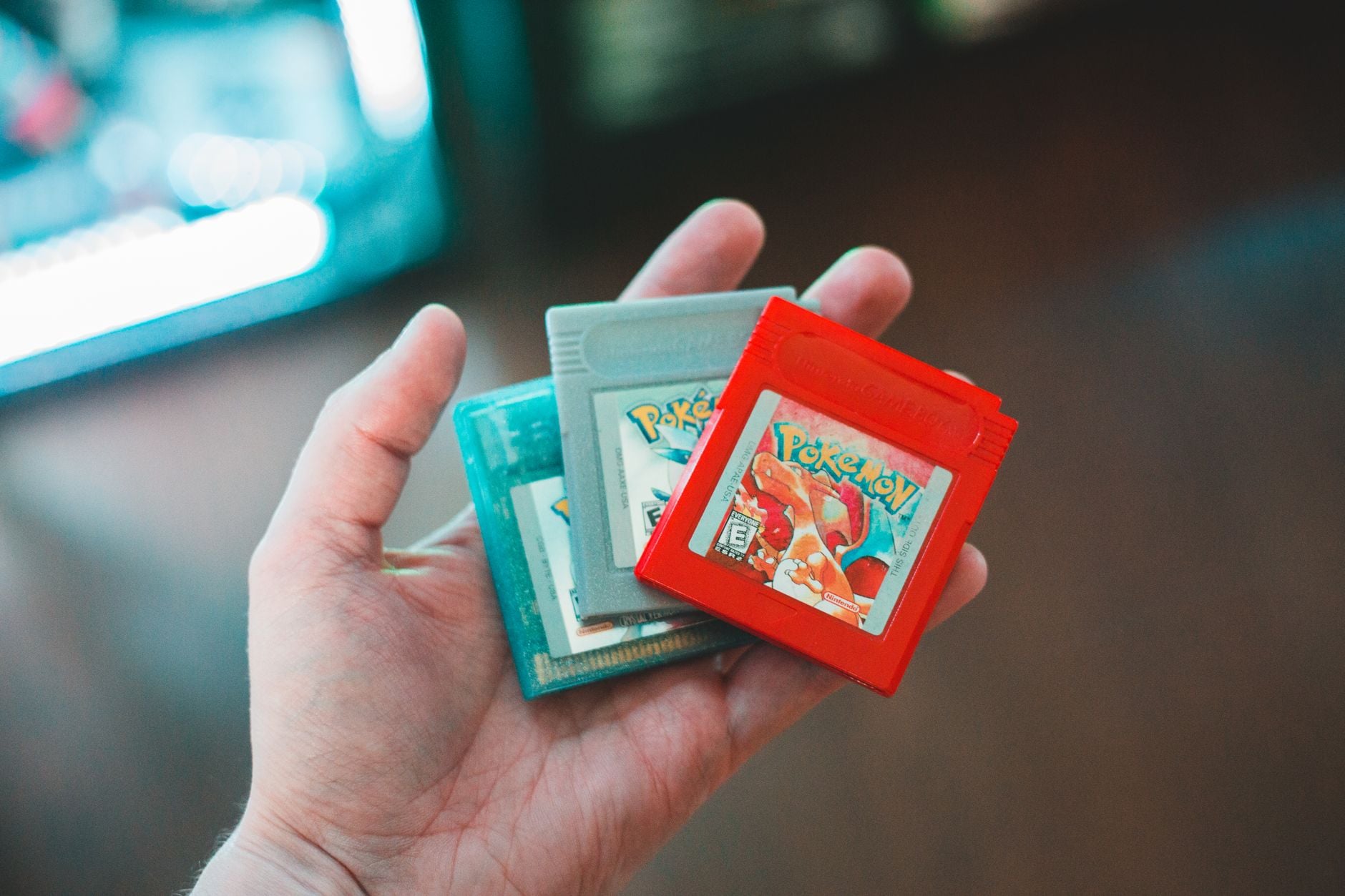
The Game Boy that shipped in April 1989 was, by every spec sheet of the era, the worst handheld on the market. Its screen was a swampy green-grey. It could not display color. Its processor was already old when it launched. And it crushed everything in its path — outselling the technically superior Sega Game Gear and Atari Lynx combined by roughly eight to one over the lifetime of the platform, a margin so wide that gaming historians still cite it as one of the cleanest case studies in product strategy the industry has ever produced.
The man responsible was Gunpei Yokoi, the Nintendo engineer who had also designed the Game & Watch series and is credited with the cross-shaped directional pad that defined the NES controller. Yokoi had a philosophy he called kareta gijutsu no suihei shikō — usually translated as “lateral thinking with withered technology.” Take cheap, mature, well-understood components. Use them in a new way. Refuse to chase the cutting edge.
The battery math that decided the war
The Game Boy ran on four AA batteries for roughly 30 hours. The Atari Lynx, released later in 1989 with a backlit color LCD, ran on six AAs for about four to five hours. The Sega Game Gear, which arrived in 1990, burned through six AAs in about three to five hours depending on use. A kid on a road trip with a Lynx needed a shoebox of Duracells to get to grandma’s house. A kid with a Game Boy needed four batteries and a copy of Tetris.
That trade — fidelity for endurance — looked insane on the showroom floor and obvious on an airplane. Yokoi understood something his competitors did not: a portable device is defined by the constraints of portability, not by the specs of a living-room console shrunk into a smaller box. Color screens were impressive. Dead batteries were not.
The price gap reinforced everything. The Game Boy launched at $89.99. The Lynx launched at $179.99. The Game Gear at $149.99. A parent at a Toys “R” Us in 1990 was being asked to pay twice as much for a device that died before the kid finished a single car ride.
Withered technology as a business model
Yokoi’s framework was not just engineering folklore. It was a deliberate rejection of the spec-chasing arms race that had already destroyed Atari once, during the Video Game Crash of 1983. Mature components are cheap because suppliers have amortized their tooling. They are reliable because the bugs have been found. They are well-documented, so developers can squeeze performance out of them. And they leave room in the bill of materials for the things that actually matter to a player — battery life, durability, software library, price.
The Game Boy’s CPU was a modified Sharp LR35902, essentially a hybrid of the Intel 8080 and Zilog Z80 — chips that were a decade old at launch. The screen was a passive-matrix LCD with four shades of grey-green, the cheapest display technology Nintendo could source that still produced legible sprites. The cartridge slot used the same kind of mask ROM Nintendo had been shipping since the Famicom.
None of it was new. All of it worked. And the savings went into a plastic shell that survived being dropped on concrete, a speaker loud enough to hear on a school bus, and a bundled copy of Tetris — a game Nintendo licensed from Alexey Pajitnov through a tangled negotiation that ended up shutting Atari out of the rights for handheld use. The Tetris pairing is widely credited with cementing Nintendo’s grip on the handheld market, and the bundle of hardware and software was not an accident. It was the entire pitch.
Why Sega and Atari read the market wrong
The Lynx, designed by the team that would later become Epyx, was a marvel — more advanced than Nintendo’s monochrome Game Boy. It had hardware sprite scaling, a color backlit screen, and could be flipped for left-handed play. The Game Gear was essentially a portable Master System, with a library that could be ported from Sega’s existing console catalog. On paper, both should have won.
They lost for the same reason a lot of technically superior products lose: they answered the wrong question. Sega and Atari focused on making portable consoles that matched living room console capabilities. Yokoi focused on what a portable device actually needed to do, rather than matching home console specs. The first question produces a device that has to apologize for what it gives up. The second produces a device that brags about what it keeps.
There is a similar pattern in how Henry Ford rewrote the rules of the labor market in 1914 — picking a single counterintuitive variable, pushing it hard, and letting the rest of the industry scramble to catch up to a definition of the product they hadn’t realized was being rewritten.
The numbers, and what they mean
Lifetime sales make the story clean. The Game Boy and Game Boy Color sold roughly 118 million units worldwide. The Game Gear sold about 10 to 11 million. The Lynx sold around 2 to 3 million. Even excluding the Game Boy Color, the original mono Game Boy moved more than 60 million units before the Game Boy Advance arrived in 2001 — a twelve-year product lifespan that no handheld since has matched.
For Nintendo, the Game Boy did something more important than print money. It established the company’s identity as the brand that owned portable play, an identity that survived the rough Nintendo 64 era when, as ComicBook.com has documented, third-party developers drifted toward the PlayStation and its CD-ROM economics. The handheld line was the cash engine that kept Nintendo solvent and culturally relevant through the Sony years, and it set the template for the DS, the 3DS, and eventually the hybrid logic of the Switch.
The Yokoi principle, still showing up
Look at what Nintendo has done since and the same fingerprint keeps appearing. The Wii used last-generation graphics hardware and put the savings into motion controls. The Switch shipped with a mobile-class Tegra chip that was already a couple of years old in 2017. The company is still making bets that look strange on a spec sheet and obvious in a living room. Tweak Your Biz has covered how Nintendo’s market value has moved on cultural moments rather than horsepower, and the through-line is Yokoi’s: pick the variable that matters to the human holding the device, and let competitors win the benchmark wars.
Even the recent pricing skirmish over Switch 2 software follows the pattern. When Nintendo confirmed it would price physical copies above digital ones starting with Yoshi and the Mysterious Book, it explained the difference by pointing to the different costs of producing and distributing physical versus digital formats — the same blunt input-cost logic Yokoi used to justify a green LCD in 1989.
The lesson the Game Boy taught the consumer electronics industry has been re-learned and re-forgotten several times since. The original iPod had less storage than the Creative Nomad and a worse processor than competing players, and it sold because of the click wheel and the iTunes pairing. The Kindle launched with a slow refresh rate and no color, and it took the e-reader market because the screen was readable in sunlight and the battery lasted weeks. Every few years a category gets reset by a company willing to look at a spec sheet and cross out the row everyone else is competing on.
Yokoi’s quieter ending
Gunpei Yokoi left Nintendo in 1996, partly under the shadow of the Virtual Boy — a rare miss where the withered-technology principle collided with a gimmick the market didn’t want. He died in a car accident in 1997, before the Game Boy Color even shipped, and before the global Pokémon phenomenon turned his handheld into the best-selling cartridge platform in history. He never saw the full scale of what his battery-life argument had built.
The Game Boys themselves, though, are still around. One unit belonging to Stephan Scoggins, a US Army medic deployed during the 1990–1991 Gulf War, was caught in a barracks bombing that scorched its casing and melted its buttons — and it still powered on and ran Tetris. Nintendo kept the charred relic, displayed it for years at its New York store, and sent Scoggins a replacement. Nearly four decades of plastic that refused to die, running a game older than most of the people now buying retro handhelds on Etsy, on a screen that anyone in 1989 would have told you was the wrong choice.
- 10 Fun and Simple Team Building Activities for Work
- Kitchen Display System: 5 Key Benefits of Having in your Restaurant
- React.Native or How to Simplify e-Banking Maintenance
- Why Game Publishers Hire Outsourced Teams for 2D Animation Services
- What can you see in a Social Media Bubble?
- Why Does Safari Keep Crashing: 5 Tips to Fix a Problem on Mac
