
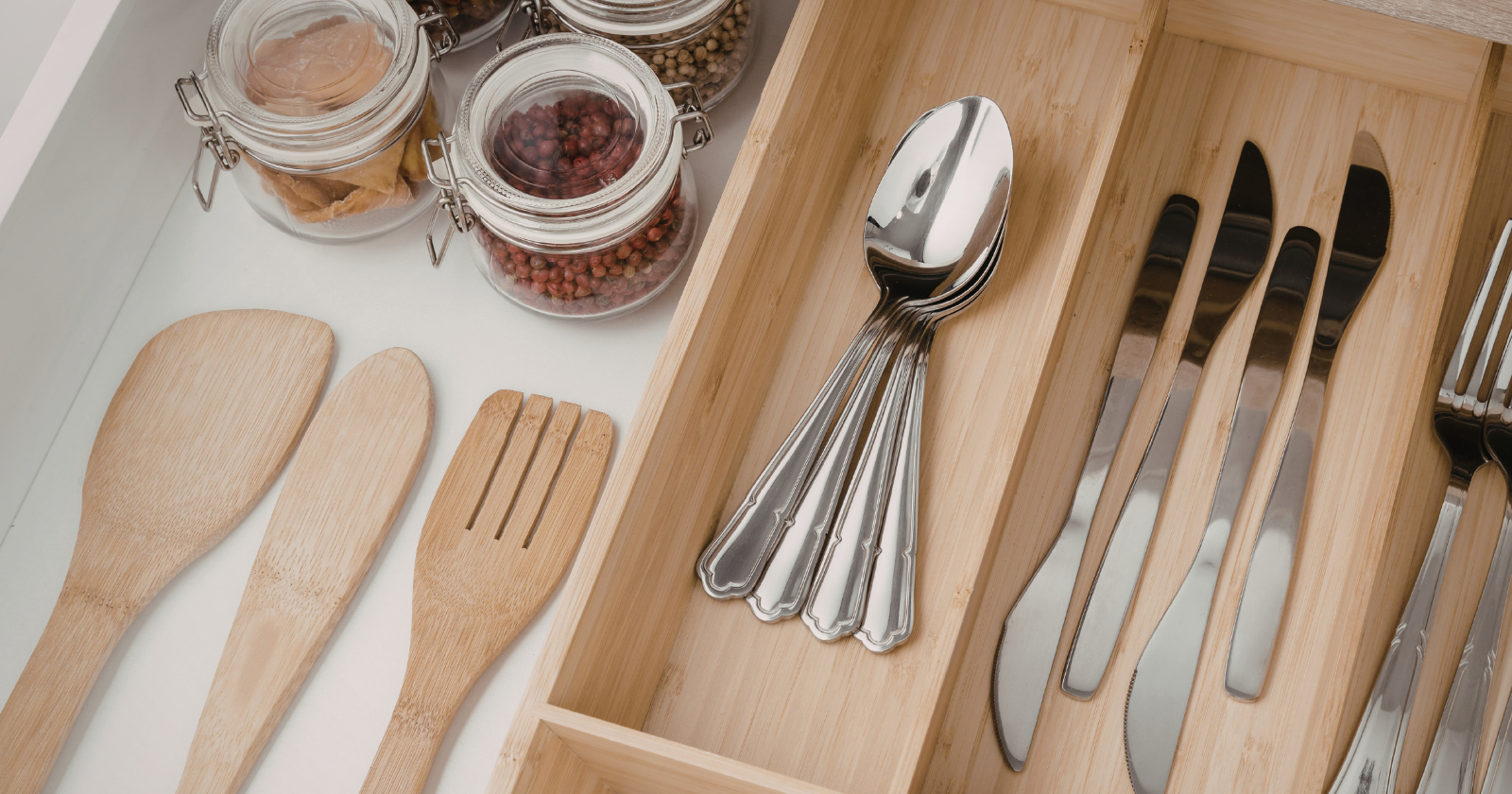
Growing up, I watched my mother guard our wooden spoons like they held the family fortune. Not the fancy cooking utensils you see in magazine spreads, but the basic ones from the dollar store with the slightly rough handles.
She’d lose her mind if one went missing. “That’s my good spoon,” she’d say, as if we had a bad one hiding somewhere.
Years later, helping her move, I found that same spoon collection wrapped in a dish towel, stored in its own special drawer section. The whole set probably cost three dollars at Family Dollar in 1987.
That memory hit me recently while decluttering my own kitchen. I realized I’d inherited this same reverence for cheap kitchen items. Not because they were valuable, but because in working-class households, everything had to last. You didn’t replace things that still worked. You protected what you had.
Here’s what’s fascinating: we assigned meaning to objects based on their function, not their price. That plastic cutting board wasn’t just a cutting board. It was the cutting board that survived twenty Thanksgivings. The one dad used for his famous potato salad.
The one with the permanent beet stains that meant mom was making her signature coleslaw.
These weren’t heirlooms by any traditional measure. But in homes where money was tight and waste was sin, they became sacred through sheer endurance.
1) The wooden spoon collection
Every working-class kitchen had them. Three to five wooden spoons, each with its designated purpose. The pasta stirrer. The brownie mixer. The one reserved for Sunday gravy.
These spoons cost maybe seventy-five cents each at their peak price. But touch the wrong one for the wrong job? You’d think you’d committed a federal crime.
The psychology here is pure scarcity mindset. When you can’t easily replace things, you create systems to preserve them. Each spoon had its role because that prevented wear. It spread the damage across multiple tools instead of destroying one.
My family had a spoon that survived from 1982 to 2018. Thirty-six years of stirring, scraping, and occasionally threatening misbehaving children. When it finally cracked, my mother wrapped it in paper towels before throwing it away. A funeral for a fifty-cent utensil.
2) The good scissors
Not kitchen shears. I’m talking about the one pair of scissors that actually cut things, hidden in the junk drawer under the pile of twist ties and rubber bands nobody would ever use.
These scissors cost four dollars at most. But they achieved mythical status because every other pair in the house was garbage. The kids’ craft scissors. The rusty pair from the garage. The mystery scissors that appeared from nowhere and cut nothing.
So the good scissors became precious. They had rules. Kitchen use only. Must be returned immediately. No cutting paper, and definitely no cutting hair. One violation and they’d disappear into a parent’s secret hiding spot for weeks.
The protection wasn’t about the scissors. It was about preserving the one tool that actually worked when you needed it.
3) Plastic containers with matching lids
The Holy Grail of working-class kitchens: a plastic container with its original lid. Not similar. Not “close enough.” The actual lid it came with.
These containers started life holding margarine, sour cream, or Chinese takeout. Free with purchase. Zero dollars of additional investment. Yet finding a matched set sparked genuine joy.
The container drawer was chaos. Twenty-seven containers. Thirty-two lids. Three matches if you were lucky. But those three became the crown jewels. They held the good leftovers. They went to potlucks. They came back or someone caught hell.
We treated them like fine china because they represented something rare: completeness in a world of mismatched everything.
4) The dish towels that actually dried things
Most dish towels in working-class homes fell into two categories: decorative ones nobody could touch and functional ones that just pushed water around.
But every kitchen had one or two that actually worked. Usually thin, faded, and older than half the kids. These cost maybe two dollars new, but they’d achieved perfect absorbency through decades of washing.
These towels had preferred users. Mom got first dibs. Dad could use them for dishes but not his hands. Kids? Forget it. Use the paper towels if you need to dry something.
The reverence came from experience. You’d gone through dozens of towels that looked nicer but worked worse. So when you found one that actually functioned, you protected it like gold.
5) The sharp knife
One knife in the whole house that could actually cut a tomato without crushing it. Usually a cheap paring knife that somehow held its edge while every other blade went dull.
This knife lived separately from the others. Sometimes hidden behind the utensil crock. Sometimes in its own special slot. Touch it for anything besides food prep and face the wrath.
It probably cost three dollars at a grocery store. But it was the difference between cooking being bearable and cooking being torture. So it got protected accordingly.
6) The measuring cups that nested properly
A complete set of measuring cups where all the pieces still nested together. Not fancy. Usually plastic. Definitely under five dollars when new.
But keeping that set complete for more than a year? Miraculous. One cup would walk away. Another would melt on the stove. The quarter-cup would vanish into whatever dimension holds missing socks.
So when you had a complete set, you guarded it. They stayed together. They had their specific spot. Use a coffee mug to measure instead of breaking up the set.
7) The good spatula
Every family had one spatula that was perfect. Right flexibility. Right size. Didn’t melt when it touched the pan. Usually cost about four dollars, but finding another one exactly like it? Impossible.
This spatula flipped eggs without breaking yolks. It got under pancakes without tearing them. It scraped bowls clean. It was the MVP of Sunday breakfast and weeknight dinners.
Lose it and you’d try five replacements before finding another that worked half as well. So it stayed in the kitchen. No borrowing it for the grill. No letting it near the garbage disposal. This was the spatula.
8) The ice cream scoop that didn’t bend
Most ice cream scoops in working-class homes were bent spoons or butter knives. But occasionally, someone would splurge on an actual scoop. Metal. With a handle that didn’t snap under pressure.
Five dollars max. But it survived years of rock-hard freezer-burned ice cream. It handled the cheap stuff that turned to concrete. It portioned without destroying your wrist.
This scoop had one job and it did it perfectly. So it earned protection. Hidden after use. Washed immediately. Never used for anything besides ice cream because that’s how things get ruined.
Bottom line
These items weren’t valuable in any traditional sense. Add them all up and you might hit thirty dollars on a generous day. But they represented something bigger: the tools that actually worked in a world where most things didn’t.
The protection wasn’t really about the items. It was about preserving function in a life with little margin for error. When you can’t easily replace things, you develop systems to protect what works. You create hierarchies. You establish rules.
Looking at my own kitchen now, I’ve kept some of these habits. Not from scarcity but from something learned: the value isn’t always in the price tag. Sometimes it’s in knowing exactly which tool will work when you need it.
That wooden spoon my mother protected for decades? It stirred a thousand meals that held our family together. Four dollars? Five? Doesn’t matter. Its value was never about money.
It was about having something that lasted. Something you could count on. In working-class households, that reliability was worth more than gold.
