
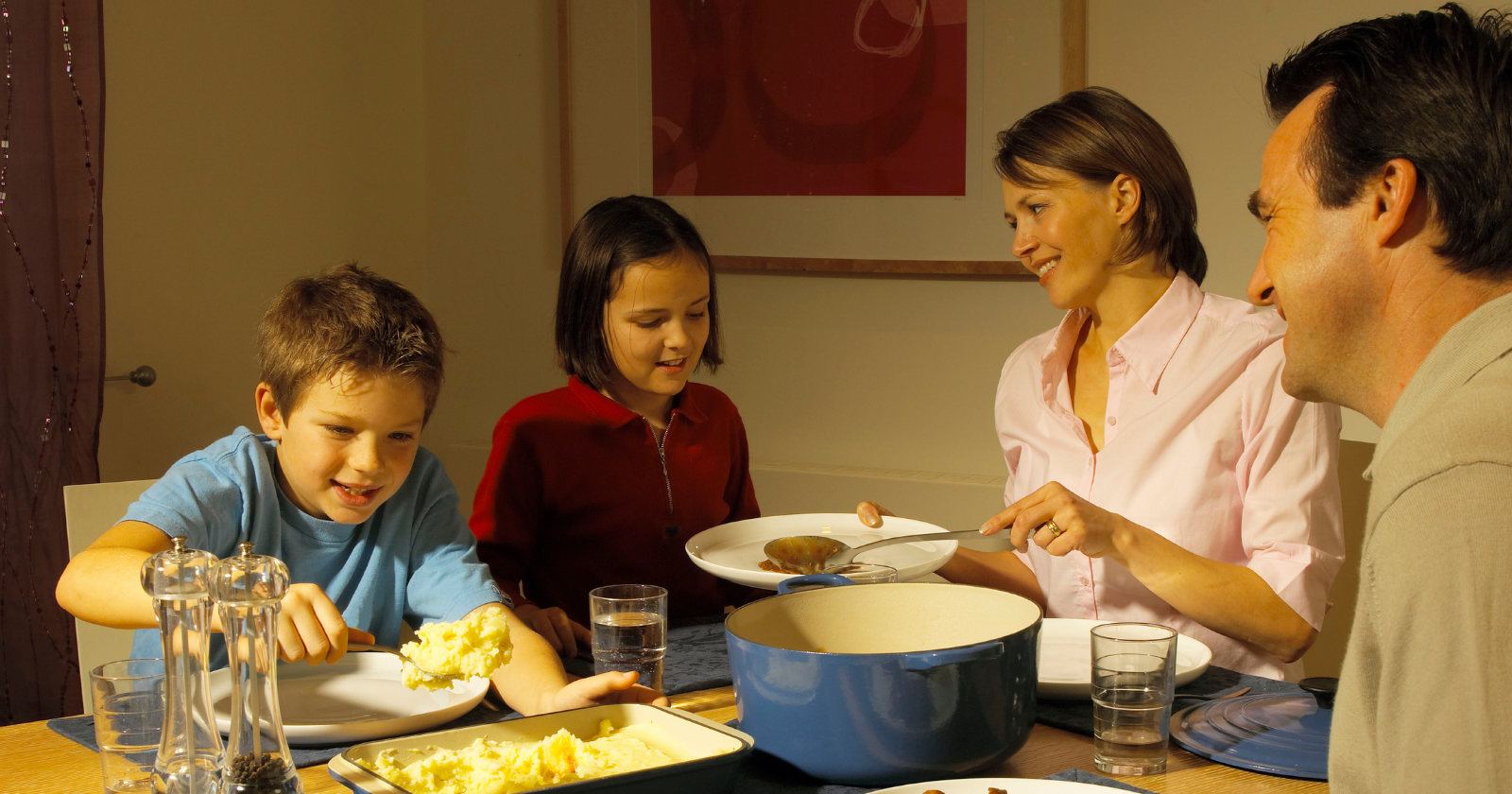
The smell of percolator coffee and cigarette smoke. The sound of a wooden spoon scraping against a pot while the evening news played in the background. The feel of vinyl chair cushions sticking to your legs in summer.
If you grew up in the 1970s, your kitchen table was more than just a place to eat. It was where life happened, where lessons landed without fanfare, where adults talked over your head while you absorbed everything.
I’ve been thinking about this lately, especially as I watch modern parents schedule every moment of their children’s development. They buy books on emotional intelligence, sign up for parenting workshops, download apps to track milestones.
And yet, something essential gets lost in all that intentionality. The kitchen table of the 1970s taught us things no curriculum could capture, precisely because nobody was trying to teach anything at all.
At 64, I realize how much of my understanding of the world came from those unguarded moments when adults forgot children were listening. The lessons weren’t packaged or sanitized. They were raw, real, and accidentally profound.
1) Money problems were discussed openly, and nobody pretended they didn’t exist
Your parents talked about the electric bill right there at dinner.
When Dad got laid off from the factory, it wasn’t hidden behind closed doors. You heard Mom calculating whether they could stretch the grocery money another week. You learned that sometimes the car payment came before the new school shoes, and that was just how it worked.
This wasn’t trauma. It was education. We understood early that money was finite, that adults worried about it, and that financial pressure was part of life. No financial literacy class has ever replicated the visceral understanding you got from watching your mother sort bills into “pay now” and “pay later” piles on that kitchen table.
2) Adults had real conflicts in front of you
Parents in the ’70s didn’t retreat to their bedroom for every disagreement. They hashed things out while you ate your meatloaf. Not the explosive fights, but the everyday friction of two people navigating life. You watched them work through disagreements about in-laws, jobs, and whether to fix the washing machine or buy a new one.
You learned that conflict doesn’t mean catastrophe. That people who love each other still get frustrated. That resolution sometimes meant one person backing down to keep the peace, and that keeping score never helped anything.
Modern conflict resolution workshops try to teach what we absorbed through osmosis: disagreement is normal, and most fights aren’t worth having.
3) Nobody explained why life wasn’t fair
When the neighbor kid got a new bike and you didn’t, nobody sat you down for a conversation about equity and feelings. When you complained that something wasn’t fair, the standard response was a shrug and “Life isn’t fair.” End of discussion.
This sounds harsh by today’s standards, but it prepared us for reality in ways that endless discussions about fairness never could. We learned early that good things happen to difficult people, that hard work doesn’t always pay off immediately, and that comparing yourself to others was a fool’s game.
The kitchen table taught us to play the hand we were dealt, not the one we wished we had.
4) Work stories showed you how the world really operated
Your dad came home and told stories about his supervisor, the guy who got promoted for all the wrong reasons, the coworker who got fired for speaking up. Your mom talked about office politics while making dinner. These weren’t edited for young ears. They were raw workplace realities, complete with personality conflicts and power plays.
From these stories, you learned that being right wasn’t enough if you couldn’t navigate relationships.
That keeping your mouth shut was sometimes smarter than being honest. That reputation traveled faster than truth, and once people formed an opinion about you, changing it was nearly impossible. No business school case study matches the education of hearing your parents navigate real workplace dynamics.
5) Extended family drama played out without protection
Aunt Marie’s divorce, Uncle Tony’s drinking problem, your cousin’s unexpected pregnancy. These weren’t secrets whispered after bedtime. They were discussed at Sunday dinner while you passed the green beans.
Nobody worried about age-appropriate information or protecting your innocence.
You learned that families were complicated, that love and frustration often lived in the same relationships, and that blood didn’t always mean loyalty. You understood that people made mistakes, that consequences were real, and that family meant showing up even when you didn’t want to.
6) Death and illness were matter-of-fact realities
When Grandma got cancer, nobody used euphemisms. When the neighbor dropped dead of a heart attack at 52, it was discussed at dinner. Death wasn’t hidden or sanitized. It was part of the conversation, as natural as talking about the weather.
This gave us a relationship with mortality that modern parenting tries to avoid. We understood that life was finite, that health was precious, and that bad things happened to good people. We learned to appreciate the present because we knew it wouldn’t last forever.
7) You learned your parents’ real opinions about people
After company left, your parents dissected the visit. You heard what they really thought about their friends, relatives, and neighbors.
Not cruel gossip, but honest assessment. That couple was heading for divorce. That friend was making a mistake with his business. That neighbor was too proud to ask for help.
From this, you learned that public faces and private realities rarely matched. That people showed you what they wanted you to see. That reading between the lines was a survival skill. You developed a radar for authenticity that no amount of formal education could provide.
8) Boredom was your problem to solve
“I’m bored” was met with “Go find something to do.” Nobody entertained you. There were no scheduled activities, no planned enrichment.
The kitchen table was where you did homework while life happened around you, where you colored while adults talked, where you learned to exist without being the center of attention.
This taught us to be self-sufficient in ways that seem almost impossible now. We learned to create our own entertainment, to be comfortable with silence, to find interest in whatever was available. The ability to manage our own time and attention became second nature.
9) Food wasn’t a negotiation
You ate what was served or you didn’t eat. There were no special meals for picky eaters, no discussion about what you felt like having. The kitchen table rules were simple: take what you want, eat what you take, and be grateful there’s food at all.
This taught us about gratitude, flexibility, and picking our battles. We learned that hunger was the best seasoning, that preferences were luxuries, and that making do was a valuable skill.
10) Success and failure were witnessed, not celebrated or cushioned
When Dad didn’t get the promotion, you saw his disappointment at dinner. When Mom’s garden produced the best tomatoes on the block, you felt her quiet pride. Success wasn’t met with parties and failure wasn’t softened with consolation prizes. Both were part of life’s rhythm.
We learned that not every effort pays off, that small victories matter, and that resilience comes from experiencing both wins and losses without too much fanfare about either.
Closing thoughts
The 1970s kitchen table wasn’t trying to build character or teach life skills. It was just where life happened, unfiltered and unscripted. Parents weren’t curating experiences or managing our emotional development. They were living their lives, and we were there to witness it.
The irony is that all this benign neglect and casual exposure to adult reality produced remarkably resilient people. We learned to read rooms, navigate complex social dynamics, and handle disappointment because we saw it all play out in real time.
The kitchen table gave us something that no amount of intentional parenting can replicate: the chance to learn from reality rather than from someone’s idea of what we should know.
The lesson isn’t to recreate the 1970s. It’s to remember that children learn more from what they observe than from what they’re taught, and that sometimes the best education happens when nobody’s trying to educate at all.