
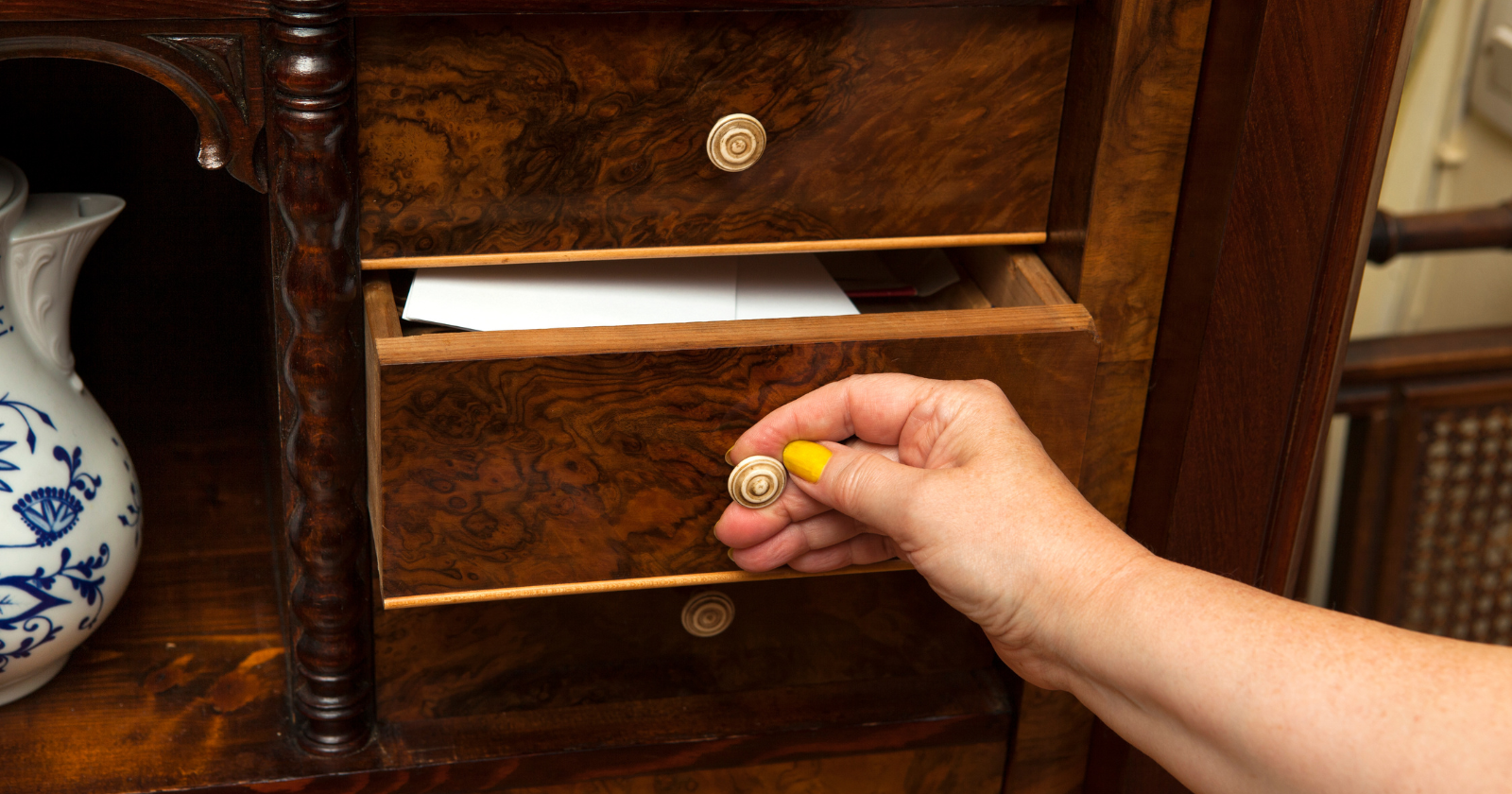
I opened my neighbor’s junk drawer last week while looking for scissors, and something stopped me cold.
Between the dead batteries and takeout menus sat a broken watch, its leather band worn smooth from decades of wear. Margaret mentioned offhandedly that it was her husband’s first good watch, bought the year they married. “Still keeps it,” she said, then changed the subject.
That drawer told a story. Not the one about keeping broken things, but about what happens when two people build a life together for thirty-plus years. Every house with a long marriage has that same drawer, filled with the same eight things, and each one represents a compromise that family never discussed out loud.
I’ve been in enough homes over my sixty-four years to recognize the pattern. The items change slightly, but the underlying dynamics remain constant.
These aren’t keepsakes or memorabilia. They’re artifacts of negotiation, silent agreements, and the peculiar economics of staying married when divorce would have been easier.
1) Keys to something nobody remembers
There’s always a ring of mystery keys. Could be to an old filing cabinet, a storage unit long emptied, or a car sold fifteen years ago. Nobody throws them away because somebody might remember what they open. Nobody ever does.
Those keys represent every argument that ended with “fine, keep them if they’re so important to you.” They’re the physical manifestation of choosing battles. One partner wanted them gone, the other insisted they might be needed.
After enough years, neither person remembers who took which position. The keys stay because removing them would require a conversation about why they were kept, and that conversation would surface other, harder questions.
I keep old pens because I like how they write and hate replacing what works. My wife keeps them in the drawer because fighting about pens after thirty years feels like admitting something larger failed. The pens multiply. Neither of us mentions it.
2) Instruction manuals for appliances that died during the Bush administration
Every long-married couple’s drawer contains manuals for a bread maker last used in 1998, a VCR that went to Goodwill, or a coffee grinder that broke when the kids were in middle school. These manuals stay because one person believes in being prepared and the other learned that “organized” means different things to different people.
The manual-keeper usually lost bigger battles about money, careers, or where to live. Keeping outdated instructions becomes their small territory of control. Their spouse knows this unconsciously and lets them have it. It costs nothing to store paper, but it would cost something intangible to force its removal.
3) Expired coupons saved by someone who meant to use them
These aren’t just any coupons. They’re for restaurants where one person wanted to go for an anniversary, oil changes someone meant to schedule, or home improvement stores for projects that never started. Each expired coupon represents an intention that met reality and lost.
The coupon-saver in the marriage typically carried the mental load of planning, scheduling, and remembering.
The expired coupons prove what they always suspected: they were rowing alone. But bringing this up would mean relitigating every forgotten birthday, every missed appointment, every project that became their responsibility by default. So the coupons stay, yellow and curled, a receipt for efforts nobody acknowledged.
4) Business cards from the career that ended
Hidden under rubber bands and tape measures, there’s always a small stack of business cards from the job someone left to raise kids, or the career that ended when the family moved for the other spouse’s promotion. The name and title on those cards belong to a person who made a choice they never fully discussed.
I keep old notebooks filled with meeting notes, arrows connecting names to “real issue:” scribbles in the margins. They remind me who I was before I learned that winning an argument at home usually costs more than it’s worth.
Those business cards in the drawer work the same way. They’re proof of the person who existed before compromise became survival.
5) Batteries that might or might not be dead
The battery situation in these drawers defies logic. Some are new, some are completely dead, most exist in an uncertain state that nobody wants to test.
They accumulate because testing batteries requires admitting that the household systems for managing small things broke down somewhere around year fifteen.
One person thinks dead batteries should be thrown away immediately. The other thinks they should be tested first. Neither wants to become the battery manager. So they multiply in the drawer, a monument to the smallest hill nobody wants to die on.
6) Gift cards with unknown balances
That Olive Garden card from 2019 might have seven dollars left or might be empty. The Home Depot card could buy a drill or a single screw. Nobody checks because checking would mean using them, and using them would mean deciding together how to spend what’s left.
These cards often came from extended family who never quite understood what the couple actually needed or wanted. Keeping them unused avoids admitting that Aunt Helen’s gifts missed the mark for twenty straight years.
They represent every polite thank you note written for presents that solved no problems, every forced smile at another gift card to somewhere you never shop.
That Chinese place that delivered during the kids’ soccer years. The pizza joint that knew your order. The Indian restaurant from before one spouse developed stomach problems. These menus mark time better than calendars.
Each menu represents a phase when the family worked differently. When both parents worked late. When Friday meant pizza. When trying new food felt like adventure instead of risk.
They stay because throwing them away means acknowledging those phases ended, that the family who ordered from these places doesn’t exist anymore.
8) A single earring from a pair that mattered
At the bottom, wrapped in tissue or loose among the chaos, sits one earring. Good jewelry, usually. From the early years when gifts meant something different, when there was money for symbols, when occasions demanded marking.
The other earring vanished at a company Christmas party, during a move, or down a drain. This one stays because it cost too much to throw away but serves no purpose alone. It’s the perfect metaphor for every compromise in a long marriage: valuable but incomplete, kept out of hope that wholeness might return, knowing it won’t.
Closing thoughts
Got married at thirty-five myself, later than many peers, because work took up my prime years. Learned fast that a junk drawer isn’t about junk.
It’s neutral territory where neither spouse’s rules fully apply. It’s the DMZ of domestic life, where broken things coexist with possibility, where the past gets stored instead of processed.
These eight items appear in every long marriage because they represent the same universal compromises: careers deferred, arguments avoided, systems that failed but endured.
The drawer stays messy because organizing it would require conversations that successful marriages learn to skip. Sometimes the key to staying married isn’t talking everything through. Sometimes it’s knowing what to leave in the drawer.
