
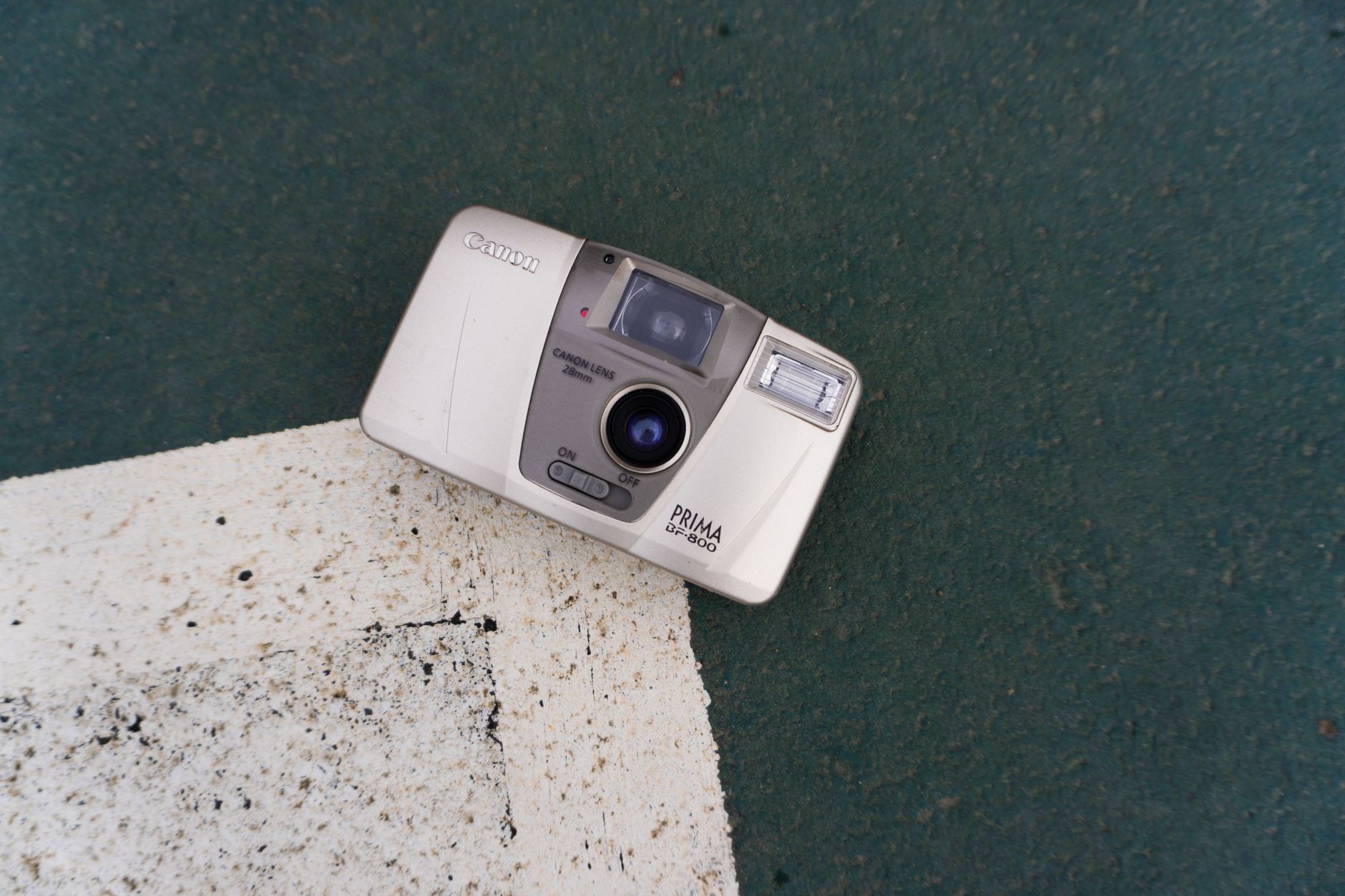
In December 1975, Eastman Kodak engineer Steven Sasson wheeled a contraption of circuit boards, a Super 8 movie camera lens, and a cassette tape deck into a conference room and asked a group of executives to sit still. Twenty-three seconds later, a black-and-white image appeared on a television screen. The device weighed roughly eight pounds. It captured 0.01 megapixels. And according to Sasson’s own account at the Rochester Institute of Technology, the room’s response was something close to polite alarm.
The executives didn’t say no. They said something worse: that’s cute, now put it away.
What happened next is one of the most expensive cautionary tales in modern business history. Kodak owned the future of photography in 1975. By 2012, it was bankrupt. The technology that killed it was built inside its own walls, by its own engineer, on its own dime — and shelved because the people in charge couldn’t imagine a world where film didn’t pay the bills.
The question every incumbent leader should be asking, almost fifty years later, is simple: where is your Sasson, and what are you about to do to him?
The 23-Second Photograph Nobody Wanted
Sasson wasn’t trying to overthrow anything. He had been handed a vague assignment in Kodak’s applied research lab: see if the new charge-coupled device sensor — a piece of silicon that converted light into an electrical signal — could do anything useful. He spent a year cobbling together a prototype from spare parts. The image was stored on a cassette tape. To view it, he had to build a separate playback unit that read the tape and displayed the picture on a television.
The demonstration worked. The image was grainy, slow to render, and printed nothing. Sasson would later receive national recognition for this work, along with numerous digital imaging patents. The original camera now sits in the Smithsonian Institution.
But in 1975, what the executives saw was a threat dressed up as a science project. Kodak’s business ran on a razor-and-blades model perfected over nearly a century. The cameras were the razors. Film, chemicals, and photo paper were the blades — and the blades printed money. A photograph that needed no film, no developer, no glossy 4×6 print was a photograph that bypassed every profit center the company had.
The Sasson Test
Here is the question that emerges from this history, and it is worth asking inside any company old enough to have a profit engine: somewhere in your building, has an engineer or analyst or product manager built a thing that works, that customers might love, and that quietly threatens the line item paying everyone’s salary? Call it the Sasson Test. Pass it, and you have a shot at the next decade. Fail it, and you become a case study.
The 1975 digital camera failed every test a Kodak executive would have applied. It produced worse images than film. It had no infrastructure around it — no storage standard, no display ecosystem, no printing path. It threatened a margin structure that delivered most of the company’s profit. By every internal metric, it deserved to be buried. And that is precisely why most disruptive technology dies inside the companies best positioned to commercialize it.
The pattern has a name. The innovator’s dilemma describes why well-managed companies routinely lose to inferior new technologies. Writing in Harvard Business Review, this framework explains the mechanism with uncomfortable clarity: incumbents listen to their best customers, allocate resources toward their highest-margin products, and treat low-end or unproven alternatives as distractions. The behavior is rational. It is also fatal. The Sasson Test, then, isn’t really a test of technology — it’s a test of whether a company can recognize a future it doesn’t want to see.
The Math That Killed Kodak
Kodak did not actually ignore digital photography after 1975. The company invested heavily in digital R&D over the following decades. Sasson himself went on to work on subsequent prototypes that eventually became the architecture of consumer digital cameras sold in the 1990s.
The problem wasn’t ignorance. It was commitment asymmetry. Every dollar spent defending the film business returned reliable margin. Every dollar spent on digital returned an uncertain future at the cost of the present. When executives modeled the trade-off, film always won — until suddenly it didn’t, and by then the company had spent twenty-five years training itself to protect a business model the market had already abandoned.
This is what the Sasson Test is really diagnosing. It is not whether you can spot the new thing — Kodak spotted it before anyone. It is whether you can fund the new thing at the expense of the old one, year after year, while the spreadsheet screams that you are destroying value. Few companies can. The internal politics of asking one division to fund the weapon that will be used against another are brutal.
Passing the Test
Companies that pass the Sasson Test tend to do something structurally specific. They wall off the disruptive project from the parent P&L. They give it different metrics, different timelines, and often a different building. They accept that the new unit will be unprofitable for years and forbid the core business from killing it for missing targets it was never designed to hit. This is how Amazon built AWS inside a bookseller. It’s how Netflix built streaming while still mailing DVDs. It is, notably, not what Kodak did.
Sasson has given the same talk many times — at RIT, at industry conferences, at engineering schools. The framing he uses is striking. He doesn’t blame the executives who shelved his demonstration. He describes them as rational actors responding to rational incentives inside a structure that didn’t reward what he was showing them. The film business in 1975 was generating extraordinary returns. Asking a senior leader to bet that against a black-and-white image that took longer to capture than a Polaroid was, in context, an absurd request.
What he does argue is that established corporations need explicit mechanisms for handling work that contradicts the existing business. Without those mechanisms — protected budgets, separate reporting lines, leadership willing to defend uncomfortable projects from the people whose bonuses depend on killing them — the default outcome is the Kodak outcome. The technology gets invented. It gets demonstrated. It gets shelved. And eventually, someone outside the building builds it again and takes the market.
The Eight-Pound Lesson
The first digital camera sits in a museum, preserved as a milestone in photographic history. It is heavy and ugly and slow. It is also, in retrospect, one of the most significant objects Kodak ever produced — and the company gave it twenty-three seconds of attention before deciding it didn’t matter.
Most disruptive technology does not arrive looking like a threat. It arrives looking like a toy. It is worse than what exists, slower than what exists, and serves a market too small to bother with. The executives who dismissed Sasson’s prototype were not stupid. They were doing the job they were paid to do, which was to protect a business that was working. The lesson is not that they should have been smarter. The lesson is that the job description itself was the trap — and it still is, in most companies, right now. Somewhere in your building, an eight-pound prototype is waiting for a hearing. The Sasson Test asks whether you will give it one.
- Why Should You Hire a Creative Agency to Help Develop Your Brand?
- The Economics of Returns: Amazon Restocking Fee Strategy Explained
- The Benefits of a Term Loan for Small Business Borrowers
- Transform How You Nurture Business Relationships
- Read This Before Deciding About Launching Your Own Start-Up
- All You Need to Know About Business Process Outsourcing
