
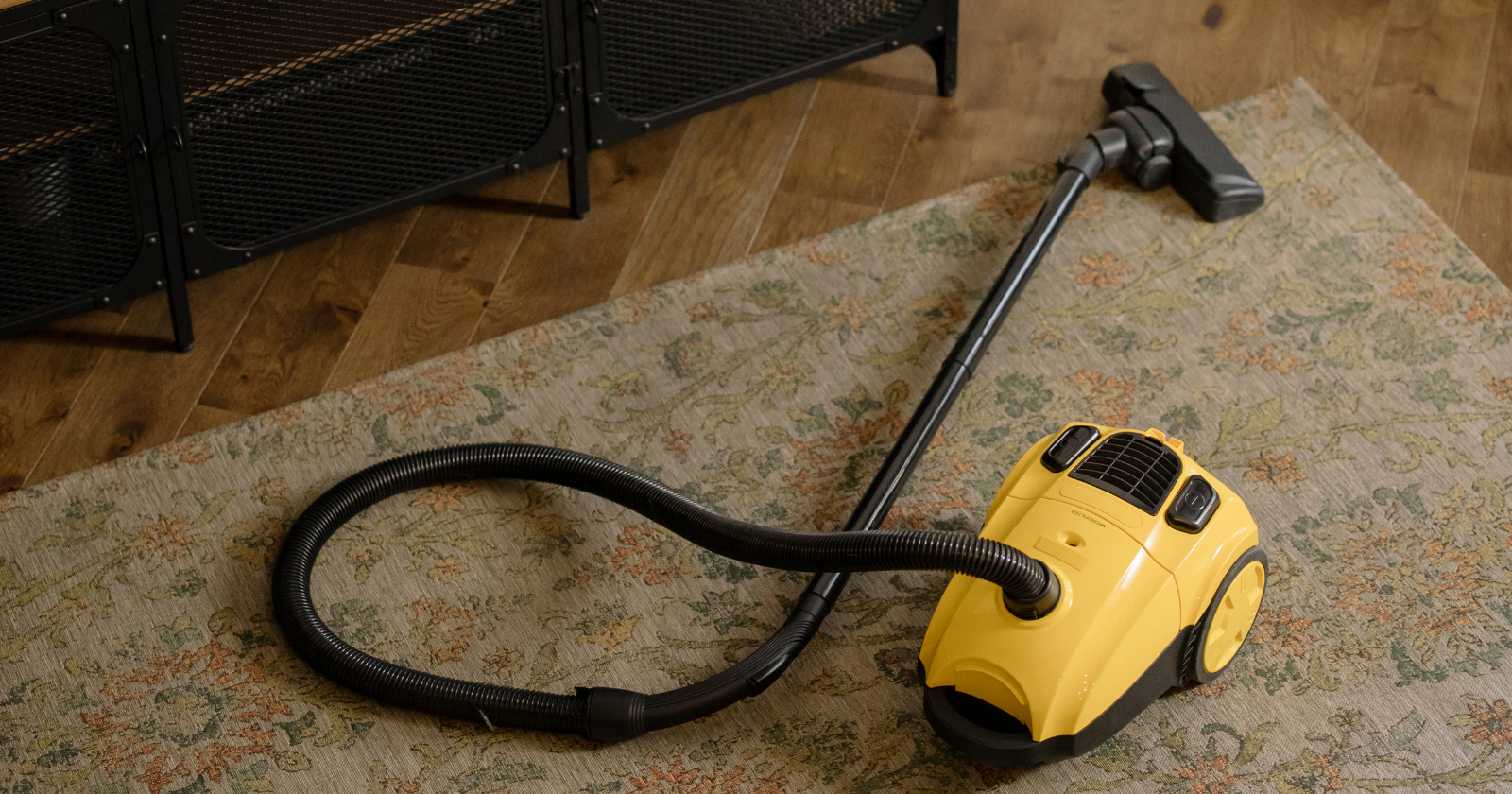
James Dyson built 5,126 failed prototypes before the one that worked. Five years of sketching, machining, testing, throwing the result in a bin, starting over. By the time prototype 5,127 spun up cleanly in his workshop in 1983, he was reportedly deep in debt, his wife was teaching art classes to keep the family afloat, and the entire vacuum industry told him no.
The rejection wasn’t about the technology. It worked. The cyclonic separator pulled dust from air without losing suction, which no bagged vacuum on the market could honestly claim. The rejection was about arithmetic. Major manufacturers sold replacement bags. The global bag-replacement market represented hundreds of millions in annual revenue. A bagless vacuum didn’t just compete with their machines. It killed an annuity.
The math that kept him poor
Dyson later described it plainly in interviews: a major manufacturer’s executive admitted that if the cyclone system had been any good, they would have invented it. They hadn’t, because they didn’t want to. A company earning hundreds of millions on disposable bags has no incentive to sell a machine that makes those bags obsolete. This is the innovator’s curse — the better your invention, the more existing revenue it threatens, and the more violently the industry pushes back.
So the licensing meetings dragged on. One company took the design and then countersued. European manufacturers passed. Dyson kept borrowing. Thousands of prototypes is not a metaphor — across those years it works out to roughly one new version every day and a half, every working day, for the better part of half a decade. The number is so absurd it sounds invented. It is not.
Why most people would have quit at prototype 50
There is a name in behavioral economics for the trap Dyson should have fallen into: the sunk cost fallacy. The idea that because you’ve already invested years and money, you should keep going to justify what you’ve spent. It is the wrong reason to continue. The dollars and years are gone whether you stop or not. The only honest question is whether the next dollar and the next year have a reasonable chance of paying out.
This is where the Dyson story gets interesting, because on the surface it looks like the world’s most extreme case of sunk cost reasoning. Five thousand failures and he keeps going? That sounds like a man who cannot read a spreadsheet.
It wasn’t. Each prototype was a test of a single variable — cone angle, intake diameter, airflow geometry. He wasn’t repeating the same attempt 5,127 times. He was running a controlled experiment with sample size 5,127, and the data was getting better. Forward-looking expected value, not backward-looking regret, kept him in the workshop. That distinction is the entire difference between obsession and delusion.
The grit literature, and what it actually says
Angela Duckworth’s work made “grit” a household word, but the academic picture is more textured than the TED talk version. Research on grit and resilience notes that the construct splits into two facets — perseverance of effort and consistency of interest — and they don’t behave the same way. Studies have found that perseverance of effort predicted growth and life satisfaction, while consistency of interest sometimes predicted nothing, and in some cultural contexts, it predicted worse outcomes.
Translated out of academic prose: showing up every day and grinding matters. Refusing to ever change your mind about what you’re grinding on can hurt you. Dyson did the first thing relentlessly. He also, quietly, did the second — he iterated. Prototype 5,127 was not prototype 1 repeated. Some of the attributes that show up repeatedly in entrepreneur profiles — tolerance for ambiguity, willingness to revise a hypothesis without abandoning the goal — describe this exact behavior.
What deep debt does to a person
The financial reporting on Dyson glosses over what years of mounting debt actually feel like to live with. Money worry has a way of following you around the house. It frays sleep, narrows focus down to the next payment, and quietly pushes people toward the small avoidances — letting the post pile up, not checking the balance, changing the subject when a friend asks how things are going.
It bleeds into marriages, into friendships, into the basic capacity to make a calm decision when every choice seems to carry the weight of the overdraft sitting behind it. None of that was hypothetical for someone as deep in the hole as Dyson was.
So the Dyson question becomes sharper. How did a man under that load keep producing clean engineering work? Part of the answer is that his wife’s income covered the household. Part of it is that he held onto the patent rights — he never sold the idea, even when broke, because selling the patent would have meant the whole exercise was over. And part of it, by his own account, was a furious refusal to let the industry that rejected him be right.
The Japanese detour that saved everything
In the mid-1980s, a Japanese company licensed the design and sold the G-Force vacuum as a high-end product. It became a status symbol in Tokyo apartments. The royalties were enough — barely — for Dyson to start his own company and manufacture his own vacuum in the early 1990s, and within a few years become the best-selling vacuum in the United Kingdom, outselling the very companies that had refused to license his work.
By the mid-2000s, Dyson had become the best-selling vacuum brand in the United States. The bag-replacement market that the legacy manufacturers had protected so carefully collapsed underneath them, exactly as they had feared. A major manufacturer later paid Dyson millions after a patent infringement suit over their own bagless model. The annuity they were protecting died anyway. They just made sure they weren’t the ones who killed it.
What the story is actually about
The temptation with Dyson is to read the story as a grit parable — work hard enough, long enough, and the world rewards you. The data on persistence does not actually say that. Most people who spend years and enormous sums on a single product die broke. The survivors get written about. The casualties don’t.
The more useful read is structural. Dyson was right about a technical fact (cyclonic separation works) and right about a market fact (consumers would pay a premium for a vacuum that didn’t lose suction). The industry was wrong about both, but had every financial reason to stay wrong. When an incumbent’s revenue depends on a product being inferior, the incumbent will defend the inferiority. The opening for a new entrant is not innovation in the abstract. It is the specific willingness to attack a margin that someone else cannot afford to attack themselves.
This pattern repeats across industries. Kodak invented the digital camera and shelved it because film represented the bulk of its revenue. Blockbuster passed on opportunities in streaming because late fees were central to the business model. The questions new founders ask often skip the most important one: what is the existing industry making money on that my product would destroy, and how hard will they fight to stop me?
Dyson knew the answer to that question by prototype 50. He kept building anyway, for thousands more versions. Not because the sunk cost demanded it, but because he had run the forward math and the forward math still worked. The years and the debt were the price of being right before the market was ready to admit it. Today he is worth billions, which means each of those prototypes cost him relatively little to build and returned millions in value.
It is a terrible business plan to recommend to anyone. It is also, occasionally, how the world actually changes.
