
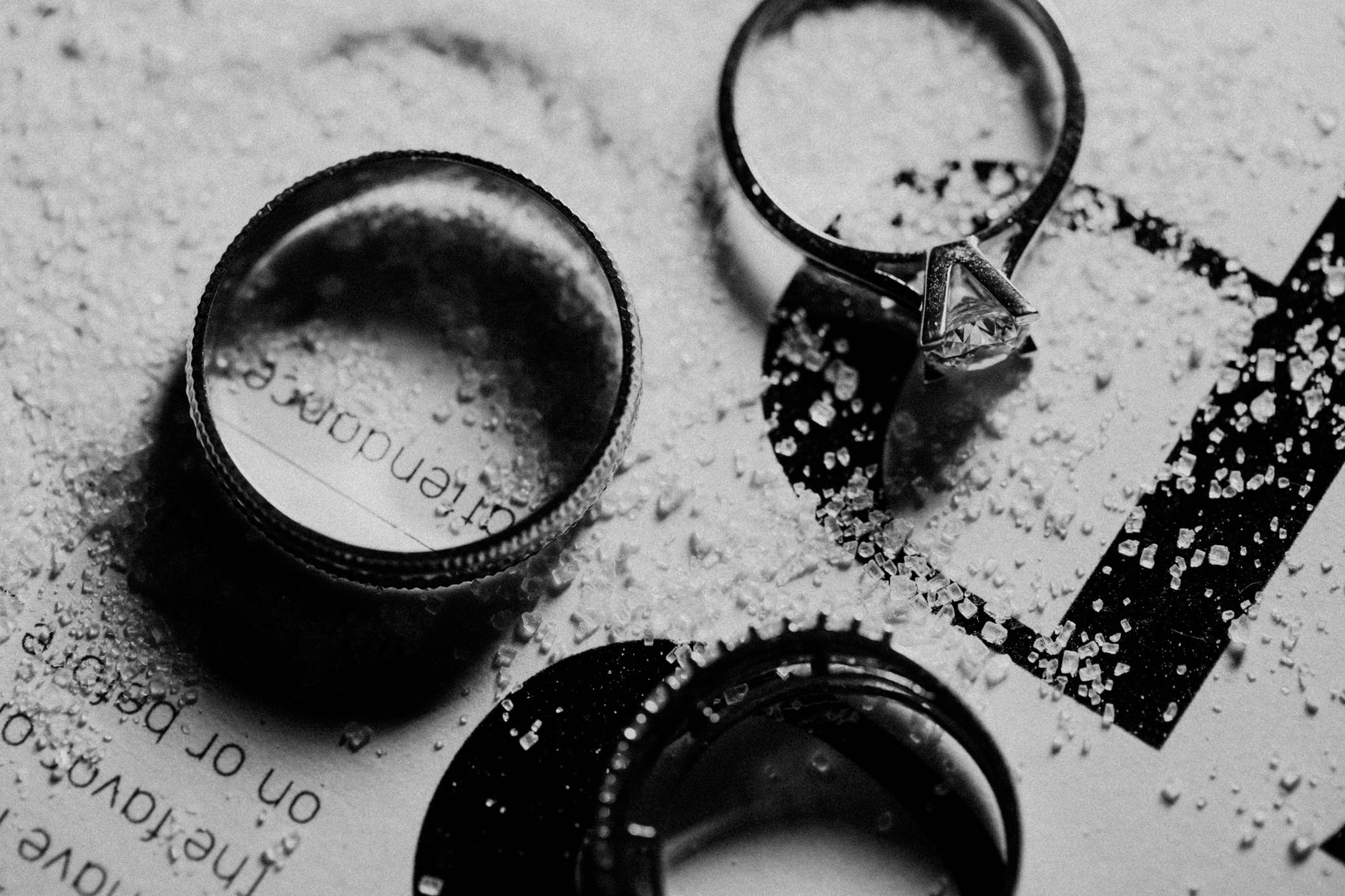
When De Beers hired N.W. Ayer & Son in 1938, diamond engagement rings were still far from the American default. Before 1930, only about one in ten engagement rings contained a diamond. By 1990, that figure had climbed to roughly eight in ten.
The shift was not driven only by changing taste, new mining discoveries, or rising incomes. It was driven by a long, disciplined advertising campaign, crystallized in four words written by a copywriter named Frances Gerety, who worked at the Philadelphia agency N.W. Ayer & Son: A Diamond Is Forever.
That single line, introduced in 1947, became what Advertising Age later named the slogan of the 20th century. It also became one of the most successful exercises in manufactured desire in commercial history — a case study in how a struggling diamond business helped rewrite the emotional grammar of marriage itself.
The problem De Beers walked into
By the late 1930s, De Beers was in trouble. The Great Depression had hollowed out diamond demand. South African mines were producing more stones than the market could absorb. Americans, the largest potential consumer base, were buying small, low-quality stones when they bought diamonds at all.
Harry Oppenheimer, son of De Beers founder Ernest Oppenheimer, traveled to New York in 1938 and hired N.W. Ayer with a brief that sounds almost absurd in retrospect: convince Americans that a diamond was the only acceptable symbol of romantic commitment. Not a tradition to be revived. A tradition to be built.
Ayer’s early research was honest about the obstacle. Many young couples viewed an expensive ring as wasteful. Diamonds were associated with European aristocracy, not ordinary American courtship. The agency’s task was not simply to sell a product but to sell a meaning — and to make that meaning feel older than it was.
How a slogan rewires a culture
Gerety wrote her famous line in 1947, nearly a decade into the campaign. The genius of “A Diamond Is Forever” was not its poetry but its logic. The slogan accomplished three things at once, and each one solved a specific business problem De Beers faced.
First, it tied the stone to the permanence of the marriage itself. If a diamond is forever, then giving anything less than a diamond could be made to feel like doubt about the relationship. The product became a test of seriousness.
Second, it discouraged resale. A diamond that is forever does not go back on the market, which mattered because De Beers’ pricing power depended partly on keeping secondary supply from undermining new sales.
Third, it gave the purchase a built-in emotional ratchet. A future anniversary upgrade or larger stone could be framed not as replacing the original promise, but as reaffirming it.
The campaign worked because it understood something marketers were learning to exploit more aggressively in the postwar period. Advertising was moving beyond product features and into status, belonging, fear, aspiration, and social proof. De Beers’ campaign became one of the clearest early examples of that shift.
The mechanics of manufactured tradition
Ayer’s strategy went far beyond the slogan. The agency placed diamonds on the fingers of movie stars and arranged for fashion designers to discuss diamonds favorably in public statements. Lecturers were sent to high schools across the country to talk to teenage girls about engagement rings, planting the expectation years before any proposal. Society columnists were fed stories about which heiress had received which stone.
In 1977, De Beers pushed the “two months’ salary” idea with an ad asking how two months’ salary could last forever. The guideline had no deep historical basis. It was a spending anchor, designed to turn a personal purchase into a social benchmark.
That is the mechanism of what researchers now call mimetic desire — the tendency for people to want things partly because other people want them. De Beers did not need to convince every individual woman that she personally needed a diamond. The company needed to convince her that other women expected one, and that her partner would be judged by the size and quality of the stone he produced. Once that social fact was established, the market could reinforce itself.
Why the trick is harder to repeat today
The campaign ran with relatively little resistance for decades, partly because consumers in the 1950s lacked the vocabulary to push back. The ability to recognize a sales pitch as a sales pitch is itself a learned skill. Generations raised on native advertising, influencer disclosures, and algorithmic feeds tend to spot the move faster than their grandparents did.
That shift is now visible in the diamond market itself. Lab-grown diamonds, commercially viable in the jewelry market for only about a decade, have already captured roughly 20% of the diamond jewelry market. According to Unity Marketing, citing The Knot, 52% of engagement-ring center stones in 2024 were lab-grown, up from 12% in 2019. The cultural script Ayer helped write is finally cracking, and it is cracking fastest in the market segment De Beers spent decades securing.
The 2025 counterattack
De Beers is now spending more money fighting back than at any point in the past decade. In October 2025, the company announced the consumer launch of Desert diamonds — natural stones in warm whites, champagne tones, and amber hues. The pitch is no longer simply that a diamond is forever. The pitch is that a natural diamond is unique in a way a manufactured one cannot be.
The strategy is a near-perfect inversion of Gerety’s playbook. Where the mid-century campaign sold uniformity, the 2025 campaign sells distinction. According to De Beers, Desert diamonds use their natural color spectrum as a marker of authenticity, linking the stones to individuality, nature, and personal meaning.
Whether it works is an open question. ACRC survey data cited by Unity Marketing found that 71% of affluent consumers found a lab-grown engagement ring appealing when it was described in environmental and ethical terms. Brides and grooms are also choosing visibly larger lab-grown stones at lower prices, directly challenging the spending heuristic De Beers spent decades installing.
What Gerety’s slogan still teaches
The diamond story is sometimes told as a cautionary tale about consumer gullibility. It is more usefully read as a lesson in how durable a well-constructed cultural frame can be once it embeds itself in ritual. Marketers who study the case — and many do, including those exploring how lasting business relationships get built — tend to focus on the same three features.
The campaign anchored the product to a non-negotiable life event, not a discretionary purchase. It established a price floor through social expectation rather than corporate pricing. And it made the product’s value feel stronger, not weaker, with time held. Modern attempts to engineer similar effects — in luxury goods, in tech status symbols, and in the long work of building long-term wealth through brand equity — borrow from this template whether their architects know it or not.
What is striking, looking back, is how thin the actual content of the original campaign was. Four words. A copywriter who reportedly never married. An agency brief written during a market slump. The cultural weight came later, accreting around the slogan like sediment around a seed crystal.
Frances Gerety died in 1999. By then, the line she wrote had helped shape the engagement decisions of generations and moved more product than almost any sentence in commercial English. The newest generation is reading it more skeptically — and, in growing numbers, choosing something else.
- 4 Social Media Marketing Hacks You Wish You Knew Sooner
- From an Email Spam Tester the Best Tricks: Add these improvement tricks to an email spam check
- 5 Benefits of Omnichannel Messaging Campaigns
- Three Key Ingredients that Make an Engaging Marketing Video
- 4 Ways to Improve Your Marketing Strategies With a CRM
- Why Should You Do Marketing For Your Small Business On Twitter?
