
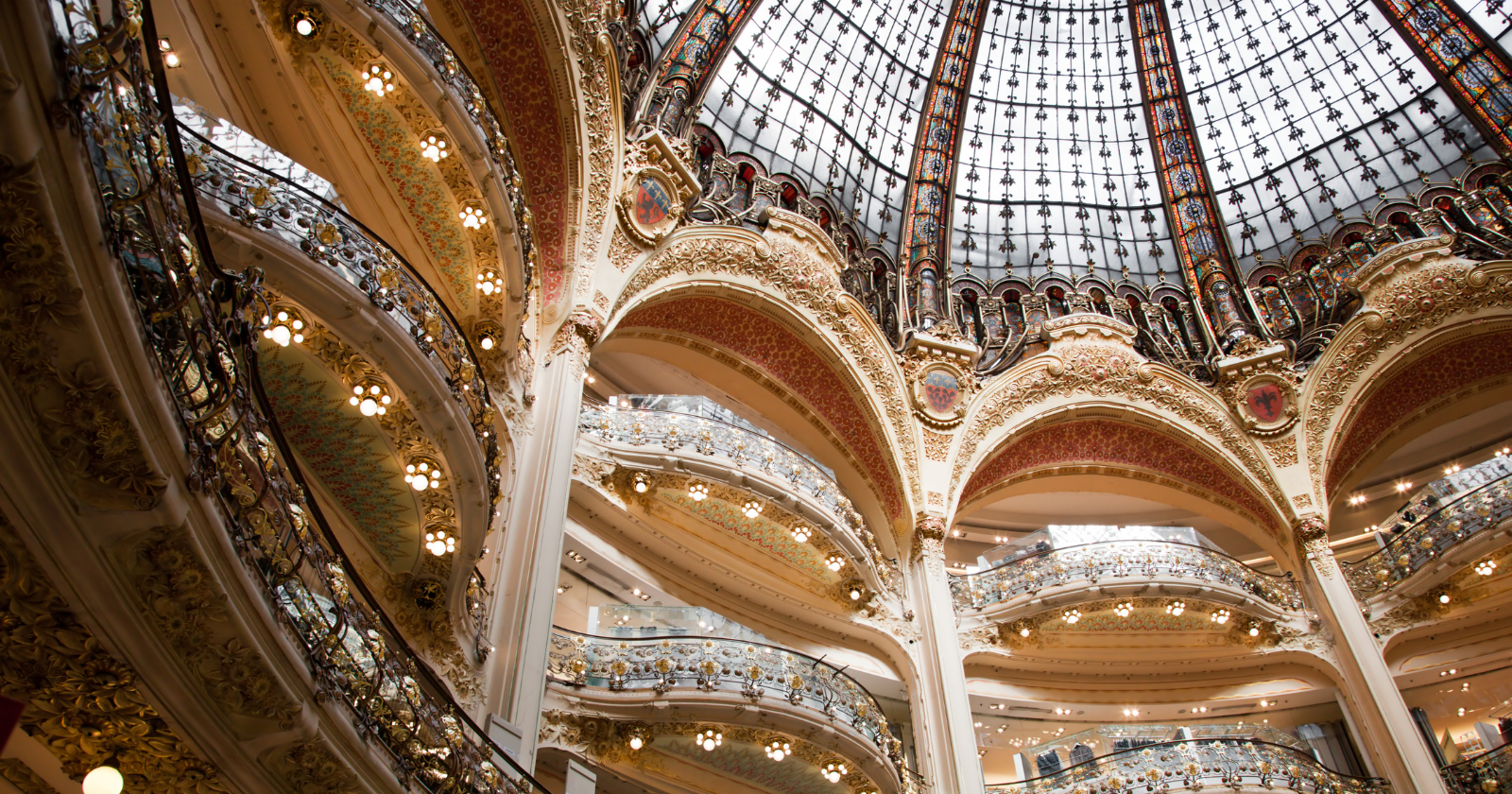
The story of Estée Lauder’s perfume spill at a Parisian department store is part of cosmetics-industry folklore, often retold in business retrospectives. The tale goes that she “accidentally” spilled perfume on the floor, the scent captivated shoppers, and the resulting demand opened doors across Europe. However, the timeline presents problems: Youth Dew, the perfume most commonly associated with this story, wasn’t launched until 1953, making the 1948 date impossible. The details of when and where this incident occurred—or whether it happened at all—remain unverified. What’s clear is that Lauder built an empire through unconventional marketing tactics, and examining why such a maneuver would work reveals principles that still drive sales today.
Whether the spill was truly accidental is the wrong question. The interesting question is why it would work — and why a version of the same maneuver still moves product on TikTok Shop in 2026.
The spill was a distribution hack disguised as a mistake
Lauder had no advertising budget that could compete with Revlon or Helena Rubinstein. She had no celebrity endorsement. What she had was a product people liked once they smelled it, and a buyer who would not let her demonstrate it. The spill collapsed the funnel. Discovery, trial, and purchase all happened in the same ninety-second window, in the same square meter of floor space, triggered by a sense that bypasses the rational comparison shoppers were trained to perform at a perfume counter.
Olfactory triggers route around deliberation. A shopper who smells something pleasant and unfamiliar doesn’t open a mental spreadsheet of competitor brands. She turns her head, walks toward the source, and asks what it is. Sensory marketing describes this as bypassing the cognitive filters consumers build up against visual advertising. Lauder understood it intuitively.
What the staged accident actually did
Three things happened on that floor at once, and each of them is a documented mechanism in consumer behavior literature.
First, the spill manufactured social proof in real time. Other shoppers saw a small crowd gathering. They smelled what the crowd smelled. They asked the same question. A line formed. The line itself became evidence that something worth lining up for was being sold. Analysis of consumer purchase behavior consistently shows that observed behavior of other shoppers compresses the consideration phase dramatically — often to nothing.
Second, the sellout created retroactive scarcity. By the time a shopper arrived at the counter and was told the bottles were gone, the product had been transformed from an unknown American brand into something that had just been validated by everyone who got there first. The scarcity principle describes how perceived rarity intensifies desire and shifts perception of value upward — the same mechanism that makes a sold-out sneaker drop more coveted than the one still on the shelf.
Third, the buyers at Galeries Lafayette now had a data point they could not ignore. They had refused to stock the cream based on category logic — another American hopeful, another small line, no brand recognition in Europe. The spill gave them sales velocity. Sales velocity is the only argument retail buyers actually listen to.
Why the cream came along with the perfume
Youth Dew was a bath oil that doubled as perfume, priced low enough that women could buy it for themselves without waiting for a husband to gift them perfume. But the spill wasn’t really about the perfume. The perfume was the wedge.
Once the counter went in, the face creams went with it. Lauder had understood something her rivals missed: department stores didn’t sell products, they sold floor space, and floor space was allocated by what moved. Get one fast-moving SKU into the building and the rest of the line travels with it. The same logic explains why brands are created by visionaries who treat distribution as a creative problem, not a procurement one. The caretakers who came later inherited the counters. Lauder had to invent them.
The same play, repeated for decades
Lauder repeated variations of the spill her entire career. She handed out samples in elevators. She sprayed customers on the wrist as they walked past, then watched them turn around when the scent caught up to them a few steps later. She pioneered the gift-with-purchase promotion, which department stores initially resisted — giving away product to people who were already buying — and which now drives a significant share of prestige cosmetics revenue worldwide.
Each of these tactics has the same underlying shape. Compress the distance between discovery and purchase. Use a sensory or emotional trigger to skip the comparison step. Manufacture a moment in which the product is already being chosen by someone visible, so the next person doesn’t have to make the choice from scratch.
The 2026 version runs on a phone
The mechanism didn’t change. The surface did. Forbes reported this month that Gen Z has collapsed the traditional marketing funnel, with discovery, validation, and purchase happening in the same place at the same moment — often inside a single TikTok video. According to industry observers, beauty retailers like Ulta have expanded to platforms like TikTok Shop to reach consumers where they’re already engaging with content. That is the perfume spill, rebuilt for a feed.
A creator opens a tube of foundation on camera. The comments fill with people saying they just bought it. The product sells out by the end of the livestream. The brand’s email list grows by twenty thousand overnight. None of this is awareness, consideration, then purchase. It is one motion, performed in public, where the visible act of other people buying becomes the reason to buy.
The PwC 2026 Alpha Survey cited in the same Forbes piece found that 97% of children ages 7 to 14 make purchasing decisions independently at least some of the time, with 61% pointing to social media as the main driver. Lauder would have recognized the dynamic immediately. The kid watching a haul video is the woman at Galeries Lafayette turning her head toward the scent.
What sellers can actually take from this
The lesson is not “stage an accident.” The lesson is that buyers — both retail buyers and end consumers — almost never respond to a pitch in the abstract. They respond to evidence that other people are already responding. Lauder’s genius was understanding that she could create that evidence herself, in a public place, in a way that was impossible to ignore.
For a modern seller without a budget, that means seeding the product where it will be used visibly. It means designing the unboxing, the first sip, the first spray, the first scroll-stopping frame, so that the moment of use is the moment of marketing. It means treating the demo as the distribution. Studies of consumer decision-making show that elevating mental imagery of use lifts purchase intent more than feature lists ever do.
It also means understanding that the gatekeeper who says no is not the audience. The audience walking past the gatekeeper is the audience. Lauder couldn’t convince the Galeries Lafayette buyer with a meeting. She convinced the buyer by performing for the shoppers the buyer was paid to please. The counter went in because the customers demanded it, not because the pitch improved.
Youth Dew became one of the best-selling prestige fragrances of the twentieth century. The cream Lauder couldn’t initially get on department store shelves grew into a company that her family took public in 1995 at a multibillion-dollar valuation. The whole arc started with unconventional marketing tactics — and a woman who knew that creating demand among customers would carry farther than any sales pitch she could give upstairs.
