
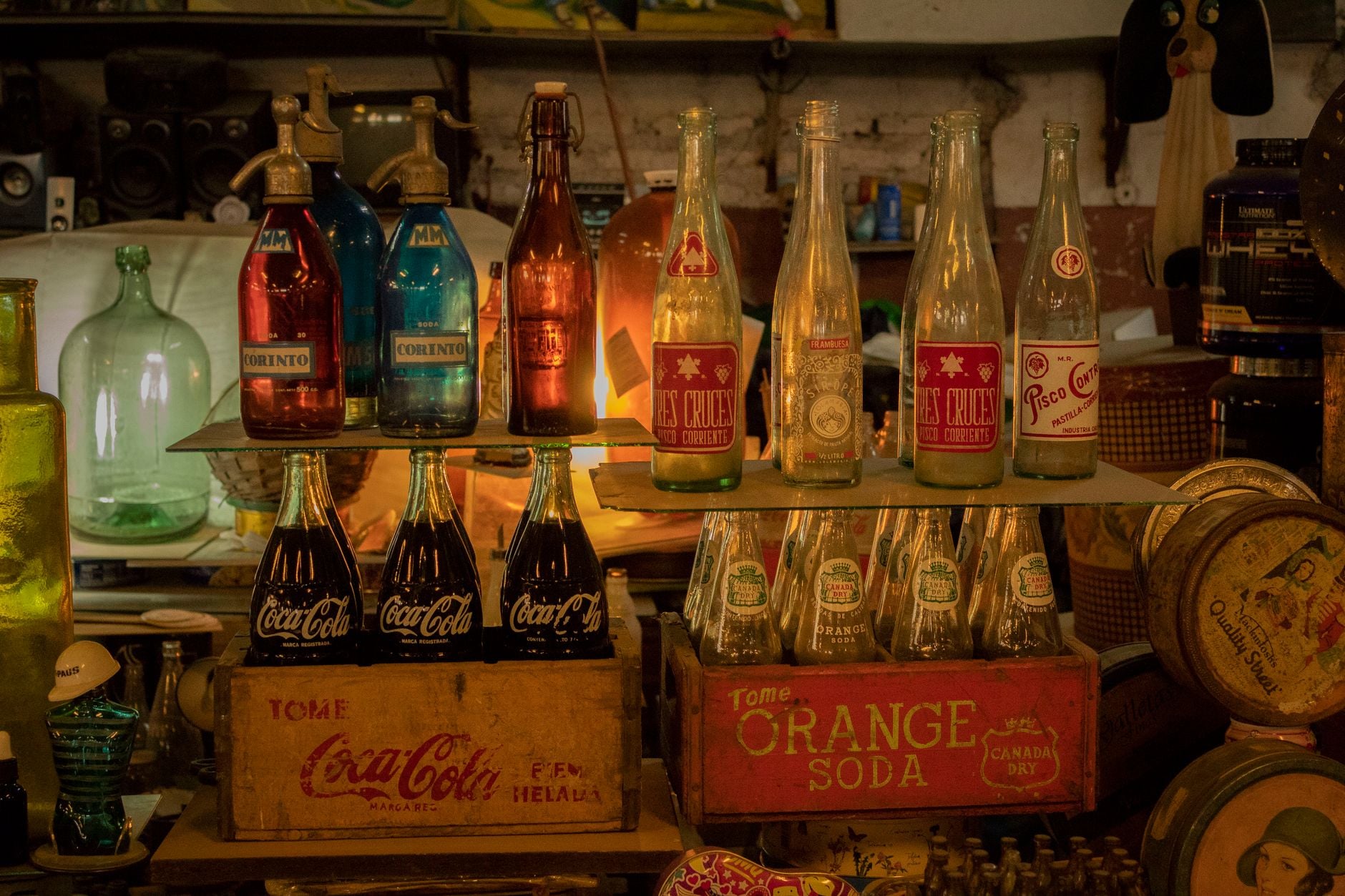
In 1888, Atlanta pharmacist Asa Griggs Candler acquired the rights to a brown syrup invented by John Pemberton, a former Confederate veteran. Pemberton’s formula for Coca-Cola had seen modest sales in its early days. Candler, who had no marketing department, no refrigeration network, and no distribution beyond Georgia, then did something nobody in American business had ever done at scale: he printed paper tickets that said the bearer could walk into any drugstore and get a glass of Coca-Cola for free, and he mailed them to strangers.
By 1913, millions of coupons had been redeemed. A significant portion of Americans had tasted Coke on Candler’s dime.
The math nobody else was doing
Candler was not a generous man. He was a Methodist accountant who tracked every penny. The coupon program looked like financial suicide on paper — give away your only product, in unlimited quantity, to people who had never asked for it. Drugstore owners were paid back in free syrup for every redeemed ticket, which meant Candler was effectively buying his own product at full retail to hand it to strangers.
The math worked because Candler understood something most of his contemporaries did not. The cost of the syrup in a glass of Coke was minimal. Pemberton’s formula was almost entirely sugar, water, caramel coloring, and cheap flavorings. The free glass cost Candler very little. The customer who came back a second time paid full freight — and a person who liked the taste rarely came back only twice.
Why give the product away instead of advertising it?
In 1888 there was no radio. Newspaper advertising existed but reached fragmented urban audiences who already had a hundred competing sodas — Moxie, Hires Root Beer, Dr Pepper, Vernor’s, and a thousand local fountain syrups. Telling someone Coca-Cola tasted good was useless. Soda fountains were the social media of the era, and every fountain had its own house specialty. Description didn’t sell. Taste sold.
Candler’s bet was that the bottleneck wasn’t recognition — it was trial. Awareness campaigns spend to be seen while acquisition strategies invest to create movement. Candler, 130 years before that essay was written, refused to pay for being seen. He paid for the first sip. The coupon converted curiosity into behavior in a single step, and behavior — not memory — is what compounds.
A reader of an 1890 newspaper ad for Coca-Cola might remember the name for an afternoon. A reader who walked into Jacobs’ Pharmacy with a coupon, set it on the marble counter, and watched a soda jerk draw a glass of cold syrup and seltzer had a sensory memory the brand could rent for life.
The coupons did something cleverer than create customers. They created shelf space.
A pharmacist in Knoxville or Birmingham who had never heard of Coca-Cola would suddenly receive customers waving paper tickets demanding a drink he didn’t stock. The pharmacist would write to Atlanta. Candler’s team would ship a gallon of syrup, a Coca-Cola-branded urn, and instructions. The free glass had pulled the product through the distribution chain backward — the demand created the supply, not the other way around.
Coca-Cola expanded rapidly across the country. The company spent almost nothing on traditional distribution muscle because the coupons had built a pull system. Pharmacists begged to carry Coke. The same mechanism that drove Hoover’s door-to-door demonstration tactics a generation later — get the prospect physically interacting with the product before the sale — Candler had industrialized through paper.
What the modern data says about the same idea
Candler’s instinct lines up almost exactly with what activation-focused marketers argue today. A 25% increase in activation yields a 34% increase in recurring revenue, while a comparable lift in pure acquisition delivers only 25% growth. Activation — the actual first use of the product — compounds because it produces evidence, not impression.
Candler’s coupon was an activation event disguised as a promotion. The free glass was not an ad for Coca-Cola; it was Coca-Cola. The redemption rate was the only metric that mattered, and unlike modern brand-recall surveys it could be counted in stamped paper tickets returned by pharmacists for syrup credit. He had a closed loop two centuries before attribution software existed.
Approximately 40% of marketing budgets produce no attributable return, and only 44% of digital ad spend reaches real users. Candler’s number was different. Every coupon either came back or didn’t. There was no impression fraud, no view-through window, no half-second mobile view counted as engagement. A drink poured was a drink poured.
The compounding nobody saw coming
Coca-Cola sales grew dramatically in the decades following the coupon program. The coupon program was not the only reason — Candler also bought aggressive newspaper ads, painted the side of every barn he could lease, and gave away thousands of branded clocks, calendars, and serving trays. But the giveaway was the load-bearing beam. It produced the first generation of repeat drinkers whose habit advertised the product for free at every fountain in America.
By the time refrigeration arrived in middle-class American homes, Coca-Cola was already the default soda. The brand had been planted in a country that was still drinking warm sarsaparilla. The category leader was decided before the category technically existed.
That sequencing matters. Candler did not wait for the infrastructure to catch up to the product. He used the giveaway to create demand that would force the infrastructure into being. A similar pattern emerged in Joe Coulombe’s reinvention of Trader Joe’s — finding the audience before the market admitted the audience existed.
What founders still get wrong about it
The standard misreading of the Candler story is that free samples build awareness. They don’t, or at least that’s not why his version worked. A free glass of Coke in 1890 didn’t make anyone aware of Coca-Cola — it made them a customer of Coca-Cola. The distinction is the entire game.
Modern startups burn through seed rounds running brand campaigns that produce impressions nobody can connect to revenue. Candler’s coupon worked because the giveaway was the product, not a message about the product. A trial that requires the customer to physically consume what you make is a different financial instrument than a billboard.
The other misreading is scale. The coupon program was not a stunt — it was an industrial commitment from a company whose entire first-year syrup sales had been measured in single-digit glasses per day. Candler bet the company on trial, not on visibility. He spent the equivalent of a year’s profit putting his product into the actual mouths of strangers because he had calculated that taste would do the work that no amount of telling could.
By the early twentieth century, a significant portion of Americans had tried Coca-Cola, because Asa Candler had paid for the first sip personally.
- How Much Is Your Website Really Worth?
- The story goes that when Estée Lauder couldn’t get department stores to carry her face cream, she ‘accidentally’ spilled a bottle of perfume on the floor of the Galeries Lafayette in Paris — the scent sold out by closing time and became the lever that opened every counter in Europe
- Self Promotion in Sales: 13 Ways To Build Your Image Without Having to Brag
- Four Tips For Buying Car Insurance Online
- “Working Nine to Five, What a Way to Make a Living!”
- 5 Awesome Steps To Qualify A Client
