
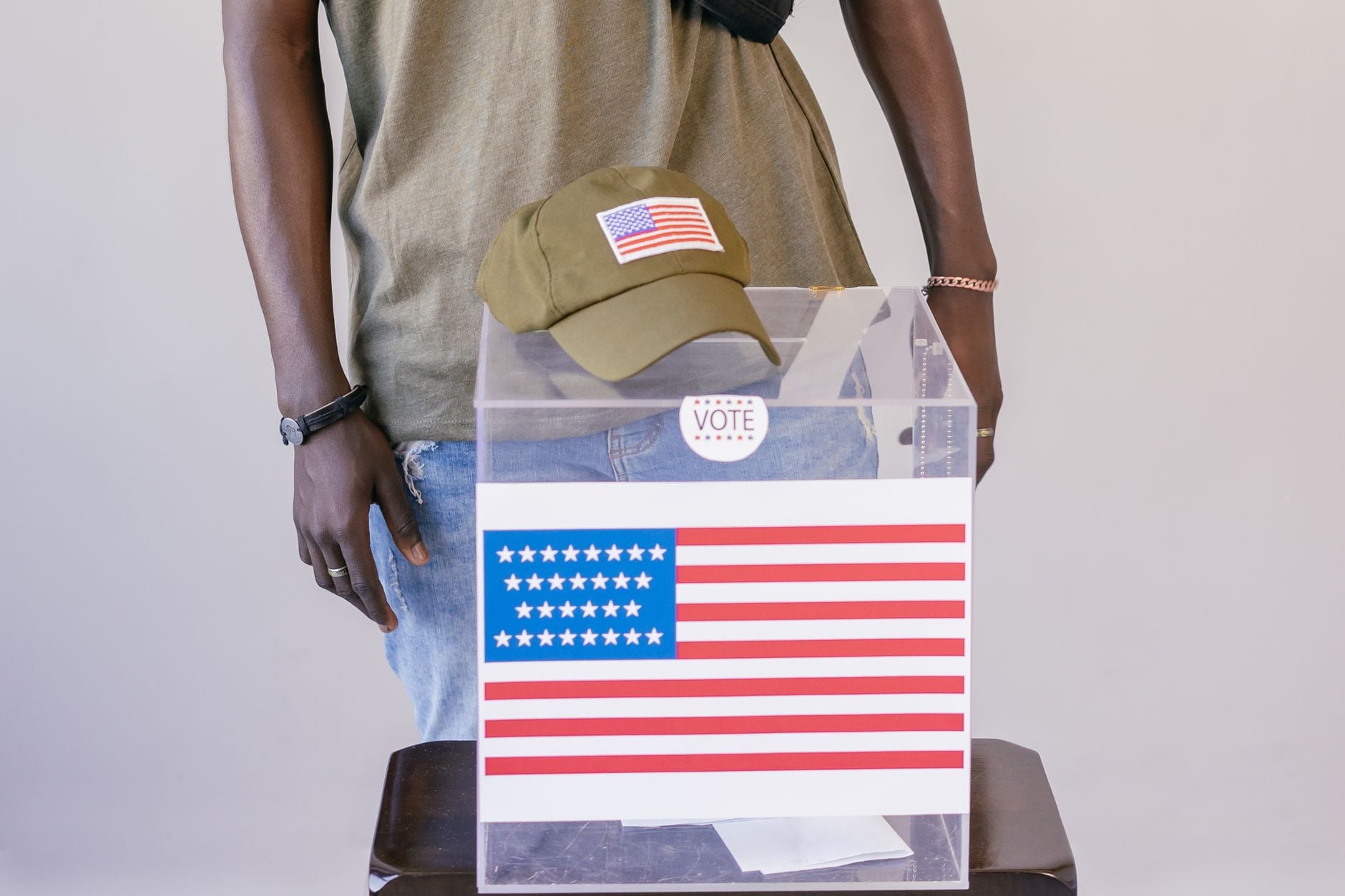
On November 8, 2016, Patagonia shut every door it owned. The Ventura, California headquarters went dark. All 29 of its U.S. retail stores flipped their signs to closed, along with the distribution and customer service center in Reno, Nevada. Roughly 2,000 employees stayed home — and every one of them got paid for the full day. The reason printed on the locked storefronts was simple: it was Election Day, and the company wanted its workers to vote without choosing between a paycheck and a polling line.
The decision wasn’t a one-off stunt. Patagonia closed the company again for the general elections in 2018, 2020, and 2022. In 2024 it kept the commitment but changed the form, shutting down on October 29 for “Vote Early Day” so employees could cast early ballots and volunteer at the polls. For a retailer, sacrificing a full day of operations — including a Tuesday that typically pulls steady foot traffic before the holiday rush — is not a small line item. The company has never publicly disclosed the revenue hit.
What the closure actually involves
The mechanics are straightforward. On voting days, Patagonia pauses its U.S. operations and pays employees for the time. Full-time staff are paid the equivalent of a full eight-hour day; part-time workers receive the equivalent of four hours. That reaches across the company’s footprint — the corporate staff at the Ventura headquarters, the warehouse workforce in Reno, and retail employees across its U.S. stores.
The company also runs internal programming around voter registration deadlines and ballot research, and in 2018 it co-founded Time to Vote with Levi Strauss & Co. and PayPal — a nonpartisan coalition of employers committed to giving workers time to vote, which has since grown to more than 2,000 participating companies.
Time to Vote was the scaling mechanism. Patagonia didn’t want to be the only retailer doing this. The pitch to other CEOs was straightforward: closing or freeing up time on Election Day costs less than you think, and the talent math works in your favor. Most member companies don’t close entirely the way Patagonia does — they offer paid time off to vote, or shift schedules — but the floor was set by the company that went furthest first.
Why a retailer would willingly close on a Tuesday
The conventional read is that this is corporate social responsibility theater. The more deliberate read is that it’s integration. Companies that weave a stated commitment into daily operations — rather than treating it as a marketing campaign — tend to send a clearer signal to their own workforce. The closure isn’t a press release; it’s a payroll line.
The retention angle is the part managers tend to underweight. Workers notice the difference between a values poster in the breakroom and a locked store on a Tuesday in November. Companies that hold onto people longest tend to be the ones willing to absorb a visible operational cost in service of a stated principle, and Patagonia has long enjoyed a reputation for unusually low turnover among frontline retail employers.
Closing on a voting day is a signal that the company means what it writes in its mission statement. The signal compounds. A one-time closure is an event; a closure repeated every election cycle becomes part of how the company describes itself.
The consistency is the point
Plenty of companies give workers a few hours off to vote. California law requires it, and so do roughly thirty other states. What separates Patagonia’s version is the scope and the repetition: a full company-wide shutdown rather than a couple of hours of leave, repeated at every general election since 2016.
That consistency is the part competitors find hardest to copy. Anyone can issue a one-cycle gesture in a heated election year. Treating it as a standing expectation — the company will arrange the calendar around voting, every time — reframes civic participation as a workplace norm rather than a seasonal campaign.
The CSR shift this fits into
Patagonia’s closure lands inside a broader change in how companies approach social commitments. The 2025 State of Corporate Purpose report from Benevity, based on a survey of more than 500 corporate impact professionals, found that 92% of respondents said their organizations keep investing in social impact because it’s good for business, and 88% said that investment is future-proofing them on talent acquisition and retention, customers, and regulatory readiness.
The same report described a quieter posture: about 70% of corporate impact leaders said they would talk less publicly about DEI and climate while continuing the underlying programs. Patagonia’s voting-day closure sidesteps that tension by being procedural rather than partisan. The company isn’t telling anyone how to vote. It’s giving them the time to do it.
Worker expectations push in the same direction. Many employees, particularly those under 35, now expect large employers to act on the issues they say they care about — and a closed store communicates that more credibly than a statement does.
What other companies took from it
The Time to Vote coalition Patagonia co-founded grew from three companies in 2018 to more than 2,000 by the 2024 cycle, including large employers such as Walmart. Most coalition members don’t fully close — Walmart operates thousands of stores nationwide — but they offer paid time off, flexible scheduling, or shift adjustments that didn’t exist before 2018.
The replication pattern is worth watching for managers thinking about their own civic policies. The companies that adopt the fullest version of this tend to share three traits: private ownership or founder control, a customer base that already buys the brand partly for its values, and a younger workforce for whom civic participation reads as a recruitment signal rather than a political stance. Patagonia has all three. Founder Yvon Chouinard transferred the company’s ownership to a trust and a nonprofit in 2022, in a deal that valued the company at roughly $3 billion, specifically to lock in this kind of decision-making against pressure from outside shareholders.
The math of a closed Tuesday
The closure is a useful test case for any manager weighing a values-driven operational decision. The cost is visible and immediate — a day of payroll plus a day of forgone revenue. The benefit is diffuse and shows up over years in retention, applicant quality, and customer loyalty. Patagonia’s bet is that the diffuse benefit outweighs the visible cost.
What’s instructive is that the policy hasn’t been frozen in place. When Election Day itself became a less useful target in 2024, the company moved the closure to early-voting day rather than dropping it. The specific date is negotiable; the commitment to clearing the calendar for voting is the part that has stayed constant. For a manager, that’s the more transferable lesson: the gesture works because it’s repeated and adapted, not because of any single Tuesday in November.
- How To Streamline the Project Documentation Process?
- Inventory Insights: Managing Stock and Demand in the Wholesale Sector
- 6 Lessons Businesses Can Learn By Conducting Exit Interviews
- How Social Anxiety Plagues The Modern Workforce
- 10 Reasons Why A Project Manager Is Like Batman
- Understanding the Basics of Remote Monitoring and Management
