
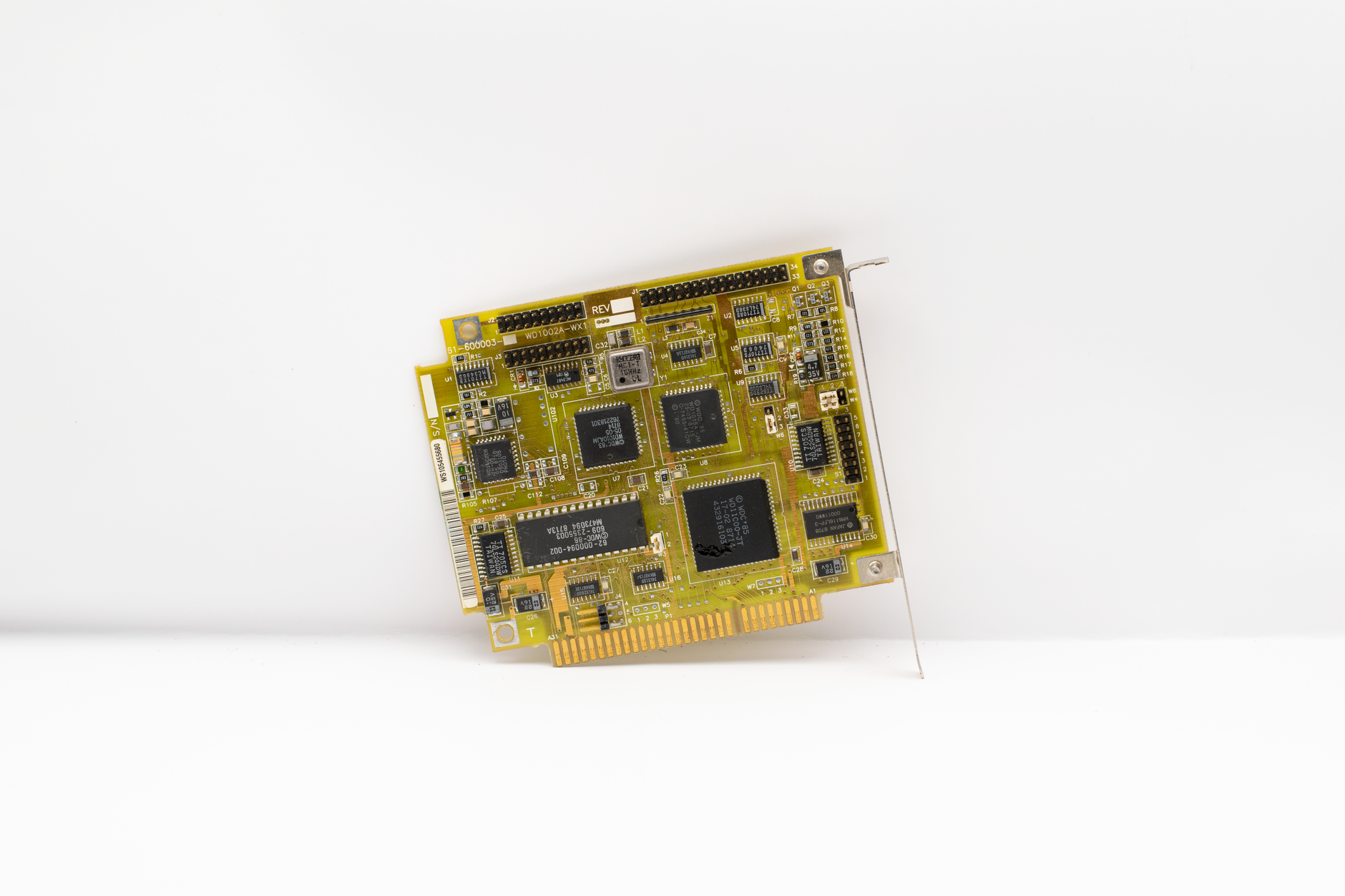
Andy Grove’s question to Gordon Moore in 1985 is one of the cleanest management thought experiments ever recorded: If we got kicked out and the board brought in a new CEO, what do you think they would do? Moore answered without hesitation. He would get Intel out of memories. Grove stared at him and said, Why shouldn’t you and I walk out the door, come back in, and do it ourselves? That conversation, recounted by Grove in his 1996 book Only the Paranoid Survive, ended Intel’s identity as a memory chip company and launched its identity as the microprocessor company that would define personal computing for the next thirty years.
The detail people miss is how brutal the math already was. Japanese manufacturers — Hitachi, NEC, Toshiba, Fujitsu — had taken Intel’s DRAM market share from a dominant position in the early 1970s to a small fraction by 1984. Prices had collapsed. Intel was losing money on memory by 1985. And memory was still, internally, considered the company’s soul. Intel had invented the DRAM. Engineers had built their careers on it. The annual planning process still allocated R&D dollars to memory by default, even as microprocessors quietly generated most of the profit.
The question that worked because it removed the person asking it
What makes the Grove-Moore exchange a permanent case study in business schools isn’t the decision itself. It’s the framing device. Grove didn’t ask Moore what should we do. He asked what a stranger would do. That single rhetorical move stripped out every sunk-cost loyalty, every founder ego, every career built on memory chips, every promise made to engineers in Oregon and California fabs. The hypothetical CEO had no history with the product. The hypothetical CEO could see the income statement clearly.
Behavioral economists have a name for what Grove and Moore did. It’s a forced perspective shift designed to defeat the endowment effect — the tendency to value what you already own more than what you could buy at the same price. Intel didn’t own the memory business because it was profitable. Intel owned it because it had always owned it. The 1985 conversation made that distinction visible in about ninety seconds.
Why most leadership teams can’t ask this question
The Grove technique gets quoted constantly in management writing, and almost never used. The reason is psychological, not strategic. Leadership research on change management describes how successful leaders have to actively avoid clinging to rigid goals or attachment to prior paths that are no longer relevant. The paths feel like identity. Walking away from them feels like a kind of death.
Grove had an unusual advantage here. He wasn’t Intel’s founder. Robert Noyce and Gordon Moore were. Grove had joined early and run operations for a decade, but he didn’t carry the inventor’s pride about the 1103 DRAM chip the way Moore did. By making Moore answer the hypothetical, Grove got the founder to say the words out loud — and then converted the founder’s own logic into permission to act.
That’s a management technique worth isolating. Don’t argue against the founder. Make the founder describe what an outsider would see, and then act on the founder’s description. Intel’s exit from DRAM was, structurally, Moore’s idea. Grove just made the room safe enough to hear it.
The implementation was uglier than the decision
Announcing the exit was one Monday morning. Executing it took time. Intel closed fabrication facilities, laid off thousands of employees, and took substantial write-offs. Engineers who had spent fifteen years designing memory architectures were told to either retrain on logic design or leave. Internal resistance was severe enough that some product managers continued allocating wafer capacity to DRAM for months after the public announcement, hoping the decision would reverse.
This is the part of strategic pivots that gets sanitized in retellings. The Lego turnaround under Jørgen Vig Knudstorp, covered previously by Tweak Your Biz, also required cutting thousands of employees and forcing designers back to a small core brick library they had emotionally abandoned. Big pivots are not clean. They are funerals followed by construction.
Grove understood the human cost in a way that’s visible in his later writing. He called the period between recognizing the need to change and acting on it the valley of death. The phrase wasn’t metaphorical for the people working in the fabs Intel closed.
What the decision actually unlocked
Free of memory, Intel poured engineering capacity into microprocessors, which became the foundation of the IBM-compatible PC explosion. Intel became the largest semiconductor company in the world by revenue, a position it would hold for years. The microprocessor business generated substantially higher gross margins than memory ever managed at its peak.
The strategic lesson is often framed as focus beats diversification. That’s true but incomplete. The deeper lesson is that the company Intel became after 1985 wasn’t a pivot from memory to logic. It was a pivot from competing on manufacturing cost to competing on architectural design. Memory chips were a commodity. Microprocessors, because of the x86 instruction set and the software ecosystem locked to it, were the opposite of a commodity. Grove and Moore didn’t just exit a bad business. They exited a business model.
The framing tool, generalized
Grove’s hypothetical-CEO question is now taught in MBA programs as a debiasing technique. It works because it forces a separation between the decision-maker and the decision. Understanding of commitment and consistency patterns shows that humans escalate investment in failing paths largely because reversing course feels like an admission of personal failure. Imagining a stranger making the same call removes the personal stake.
The technique also surfaces a quieter dynamic that organizational decision-making work has documented for years. A 2025 study in Humanities and Social Sciences Communications on peer effects in government investment decisions found that organizations under uncertainty tend to imitate rather than independently judge — a pattern the authors describe as self-reinforcing path dependence. Intel was path-dependent on memory. The Grove question was a deliberate interruption of that dependence.
Why this matters now more than in 1985
The Grove story keeps resurfacing in management writing for a reason. Most companies in 2026 face some version of the 1985 Intel question, usually involving AI. Forbes coverage of workforce psychology describes the current environment as one of continuous disruption rather than discrete events — meaning the moment to ask Grove’s question doesn’t arrive once a decade. It arrives quarterly.
Leaders who can’t make themselves ask the hypothetical version of the question end up running businesses that look exactly like the ones they inherited, slowly losing share to companies that did ask it. Analysis of AI-era decision-making increasingly emphasizes the same skill Grove demonstrated — the ability to treat the current strategy as a hypothesis rather than an identity. Saying no to the existing path, as Psychology Today notes in its work on leadership refusal, is among the hardest organizational acts because organizations are built to reward yes.
Other founders have done versions of the same move. Joe Coulombe rebuilt a failing convenience store chain into Trader Joe’s by abandoning convenience-store logic — a shift Tweak Your Biz has examined in detail. Ingvar Kamprad turned a furniture catalog into IKEA by watching a designer unscrew table legs and recognizing the answer to a question he hadn’t yet asked, as covered previously. Each of these pivots required someone in the room to verbalize the obvious thing nobody wanted to say.
Grove died in 2016. The memory business he walked Intel out of had become, by then, a roughly $100 billion global industry — and Intel’s absence from it was still considered the smartest move the company ever made. The Monday morning conversation took maybe ten minutes. The implementation took years. The framing device — what would a new CEO do? — takes about four seconds to ask, and most executives still can’t make themselves do it.
- Managing Change: What Neuroscience Teaches Us About Burning Platforms
- Dealing With Other People’s Data
- Inventory Management Tips to Keep Your Business out of Trouble
- Home Business: Concentrate On The Why, Not The How
- 3 Personalities To Prepare For When Firing An Employee
- How To Choose The Target Audience For Best ROI
