
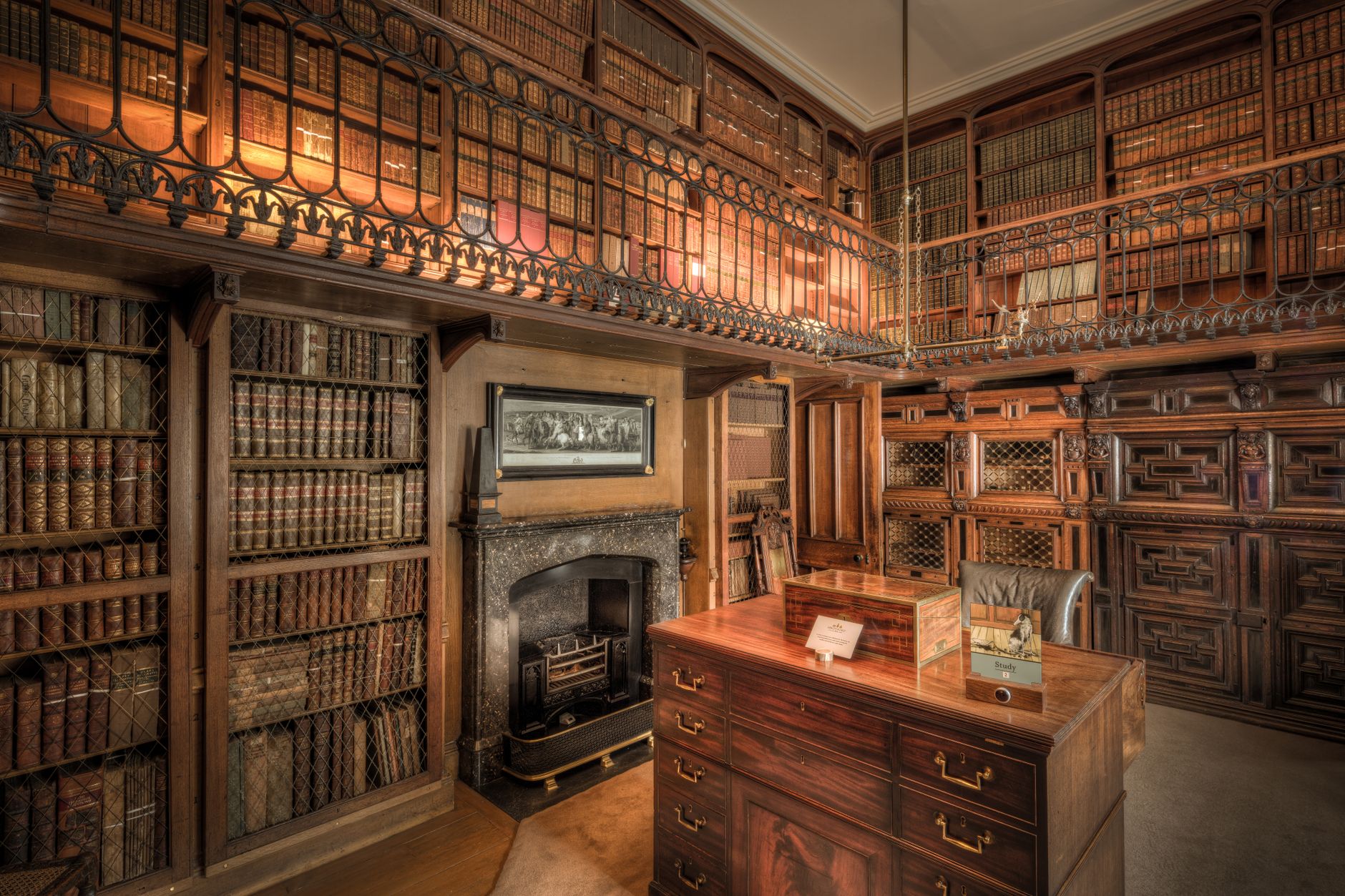
At 4:45 a.m. on a Sunday morning in early November 1907, the doors of J.P. Morgan’s private library on Madison Avenue finally swung open. Inside, New York’s most powerful bankers and trust company presidents staggered out, exhausted, eyes burning from cigar smoke, having just pledged $25 million to halt a run that was hours from collapsing the Trust Company of America. Morgan had kept them there all night. He had, by several accounts, locked the door and pocketed the key.
The detail sounds apocryphal. It is not. The Morgan Library & Museum, which now occupies the building, records that Morgan summoned the trust company presidents and quietly locked the front doors, determined to resolve the crisis that evening. Other accounts — including HISTORY’s retelling, which draws on the Library’s own director — describe the same scene: a seventy-year-old private citizen ordering the most powerful men in American finance to open their books and refusing to let them leave until they paid up. What happened in that library — a marble-floored sanctum at the corner of Madison Avenue and 36th Street — did more than stop a panic. It exposed a vulnerability that would, six years later, produce the Federal Reserve Act of 1913.
The shock that started the run
The Panic of 1907 did not begin with a bank. It began with copper. Two speculators, F. Augustus Heinze and Charles W. Morse, tried to corner the stock of the United Copper Company in mid-October. The corner failed spectacularly. Heinze’s brokerage went under, and depositors at banks linked to him began pulling their money.
Panics never spring from nothing. They follow real shocks layered on top of buoyant booms. In 1907, the underlying shock had arrived eighteen months earlier: the San Francisco earthquake of April 1906 drew gold out of the world’s money centers to pay insurance claims, draining liquidity from New York banks just as the economy was overheating.
By Monday, October 21, the run had jumped from commercial banks to trust companies — institutions that held far thinner cash reserves than national banks and were not members of the New York Clearing House. The Knickerbocker Trust Company, the third-largest trust in the city, suspended payment on Tuesday. Lines formed around the block. The Trust Company of America was next.
Morgan returns from Richmond
Morgan was seventy years old, in Virginia at an Episcopal church convention, when the wires reached him. He boarded his private Pullman car, had it hitched to a steam engine, and rode through the night to Manhattan. He arrived Sunday, October 20, settled into the brownstone at 219 Madison Avenue, and began summoning men.
The setting mattered. Morgan’s library — completed in 1906 by architect Charles McKim — was a working temple. Renaissance manuscripts behind grilled doors. A Gutenberg Bible on display. Two stories of red damask walls. Morgan worked from the West Room, with its painted ceiling and red velvet chairs. The bankers were ushered into the East Room, the larger book gallery. Between them sat the marble rotunda, where Morgan could pace, smoke his black cigars, and decide who got money and who did not.
Over the next two weeks, he ran what was effectively a private central bank. Teams of accountants combed through the books of teetering trusts. Morgan personally decided which institutions were solvent and worth saving and which were already dead. The Knickerbocker, judged insolvent, was allowed to fail. Morgan determined that the Trust Company of America was worth saving and became the focus of rescue efforts.
The all-night meeting
By Saturday, November 2, the crisis had a new shape. Moore & Schley, a major brokerage house, was about to fail because it held loans collateralized by stock in the Tennessee Coal, Iron and Railroad Company — stock that was suddenly unsellable. Morgan’s solution was audacious: U.S. Steel, which he had assembled in 1901, would buy Tennessee Coal at par, rescuing Moore & Schley and removing the bad collateral from the market. President Theodore Roosevelt, despite his trust-busting reputation, agreed not to block the deal.
But the trust companies still needed $25 million among themselves to stop their own bleeding. Morgan called the trust presidents to the library that Saturday night. According to multiple contemporary accounts, he placed a subscription paper on a table in the East Room, told the men what each was expected to contribute, and walked out. The story that he locked the door — repeated in contemporary accounts and later historical coverage — fits the man. He was an operator who understood that giving people a way out meant they would take it.
The bankers stalled. They argued. Some wanted to limit their exposure. Morgan smoked. At one point, the presidents tried to leave and found they could not. Around 4:45 a.m. on Sunday morning, the last signature went onto the paper. Twenty-five million dollars had been committed. The Monday morning opening would hold.
Why one man should not have had to do this
The library meeting saved the system. It also terrified everyone who thought about it afterward. The United States had just been rescued from financial collapse by a seventy-year-old private citizen with a marble rotunda and a key. There was no central bank. There was no lender of last resort. There was Morgan, and Morgan would not live forever.
He died in March 1913. The Federal Reserve Act was signed by Woodrow Wilson nine months later, on December 23, 1913. The connection is not folklore. The National Monetary Commission, chaired by Senator Nelson Aldrich, was created in 1908 specifically to study what had nearly happened and how to prevent it. Its report ran to more than twenty volumes. The Fed’s twelve regional reserve banks, its discount window, its capacity to inject liquidity in a crisis — every structural feature traces back to the question of what would happen the next time, with no Morgan in the room.
What the library reveals about decisions under pressure
The Panic of 1907 is studied in business schools as a case in crisis decision-making, and the details of that night repay close reading. Morgan did three things that executive coaches still teach. He gathered the facts before acting — sending accountants into the trust company books while the public was still queueing on Wall Street. He sorted ruthlessly between what could be saved and what could not. And he forced a binding commitment in a room where the alternative was worse than the cost.
The hardest part of leadership decisions is often not choosing between options — it is overcoming the hesitation that ambiguity creates. Morgan removed ambiguity from the room by removing the option of leaving it. The trust presidents had been hedging for days. By Saturday night, the choice was reduced to two outcomes: sign, or watch Monday’s opening destroy them all.
That style of leadership has a darker edge worth naming. Leaders who get rapid results through coercion and dominance often display behaviors that work in crises and become poisonous in calmer times. Morgan was unquestionably coercive that night. He was also, by every account from inside the room, the only person capable of stopping what was happening. The Federal Reserve exists, in part, so that no future crisis will require that trade-off.
The legacy of one locked door
The library meeting is a case study in both decisive action and institutional response. Morgan acted. The institutions watching him acted too — but on a longer timeline. They spent six years building the machinery that would mean nobody ever had to do what he did again.
The library still stands on Madison Avenue, now the Morgan Library & Museum, open to the public. Visitors can walk into the East Room where the trust presidents sat that Saturday night. The red damask is original. The books behind the grilles are real. The marble rotunda where Morgan paced is unchanged. What is missing is the key — and the man who carried it, and the world in which one man with a key was the difference between an ordinary Monday and a collapse.
- 4 Factors That Will Balloon Your Total Loan Balance
- 5 Tools To Keep Your Business Financially Stable
- How to Prevent your Online Business from Bleeding Money
- Overcoming Financial Hardships: A Guide for Small Business Owners
- When to Hire a Financial Planner for Business
- Cash Flow Management Doesn’t Have To Be Hard Read These 6 Tips
