
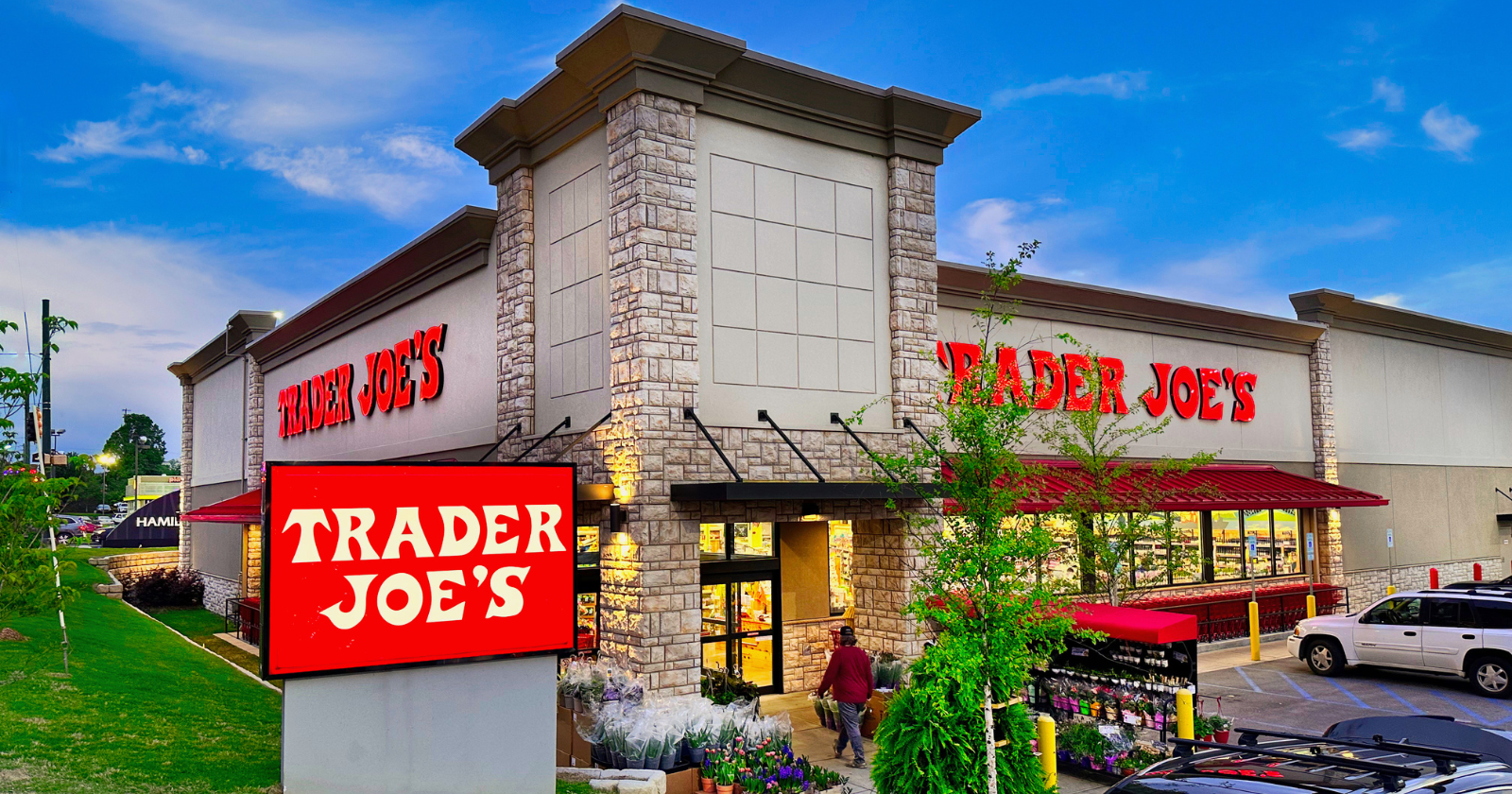
By the mid-1960s, Joe Coulombe was running a small chain of Southern California convenience stores called Pronto Markets, and the formula was running out of road. 7-Eleven — what Coulombe later called the “800-pound gorilla of convenience stores” — was pushing into his territory, and competing on cigarettes and soda was a losing game. So he looked at the country instead of the cooler aisle. The GI Bill had pushed American education levels to historic highs, and Coulombe bet that a growing class of well-read, well-traveled, but modestly paid adults would buy good food and wine if someone finally sold it to them at a price they could justify. He built the chain on a vision that college-educated but poorly paid people would buy healthy food if they could only afford it — a bet that eventually became a roughly $16 billion grocery business.
That insight is the entire Trader Joe’s playbook. Strip away the Hawaiian shirts and the cedar plank signage and what remains is a financial thesis about a specific kind of shopper. A shopper with taste calibrated above their income. A shopper who reads labels. A shopper who would rather drink a $3 bottle of decent Chardonnay than a $12 bottle of mediocre one — and who feels clever, not cheap, doing it.
The educated, underpaid Californian was the proto-Trader Joe’s customer
Coulombe saw something the rest of the grocery industry missed. The GI Bill had pushed college attendance to historic highs, and Southern California in particular — with its universities, hospitals, and aerospace and high-tech employers — had produced a dense population of technically trained, culturally curious adults who were, by professional standards, not particularly well paid. They wanted brie. They could afford generic cheddar. The gap between their cultural appetites and their budgets was the entire market opportunity, and Pasadena, where he opened the first store in 1967, was as good a place as any to find them.
So Coulombe rebuilt Pronto Markets around that gap. He renamed the chain Trader Joe’s in 1967 and, over the next several years, began importing wine directly from small producers to dodge distributor markups and steadily shifted the assortment toward a curated, mostly private-label selection. The guiding idea never changed: college-educated but modestly paid people would buy good food if they could only afford it. That sentence is the whole company.
Why private label was the unlock
Private label is the financial engine underneath the cultural performance. When a grocer sells Kellogg’s cereal, it earns a thin margin and competes on price with every other store carrying the same box. When it sells its own brand, it controls the supplier relationship, the cost structure, the shelf placement, and the story. Coulombe figured this out decades before the rest of American retail caught on.
The numbers now back him up at scale. U.S. private-label sales reached $330 billion in 2024, accounting for 24% of unit share, according to Circana. Store brands have gained significant market share in Europe as well. Trader Joe’s runs at a particularly high private label ratio — a business model that would have looked insane in 1967 and looks visionary now.
The reason it works is margin arithmetic. A bottle of Charles Shaw wine — the famous Two-Buck Chuck — could be sold profitably because Trader Joe’s bought directly from wine producers, skipped the distributor layer, and used its own shelf as the only marketing channel. There was no ad budget. There was no slotting fee dispute. There was just a bottle and a story told by a cashier in a loud shirt.
The psychology of feeling smart at checkout
What Coulombe understood — and what most grocers still get wrong — is that the overeducated, underpaid shopper is not buying cheap food. They are buying the feeling of having figured something out. The cookie butter, the frozen mandarin orange chicken, the cauliflower gnocchi — these are not just products. They are conversation pieces. They turn the grocery run into a discovery exercise, which is exactly what a literate, curious, budget-conscious customer wants.
This is why packaging matters more than retailers admit. A 2024 Forbes piece by packaging executive Steen Tjarks pointed out that private-label packaging design heavily influences purchasing decisions, with American shoppers responding to bold visual cues and clear health claims. Trader Joe’s hand-lettered signs and quirky product names accomplish something similar through a different aesthetic. They signal that a human made a choice. That choice flatters the shopper who picks it up.
Compare this to Aldi, Trader Joe’s German cousin under the Albrecht family ownership that acquired the chain in 1979. Aldi sells the same private-label logic to a different psychological customer: the shopper who wants efficiency, not discovery. Same financial model. Completely different emotional product.
The demographic that built the chain is now everyone
Here is the part that should interest anyone watching the grocery business in 2026. The overeducated-and-underpaid demographic Coulombe targeted in Pasadena has expanded into something close to a generational baseline. Adjuncts. Nonprofit staff. Graphic designers. Therapists in private practice. Software engineers at startups that pay in equity. The financial pressure on educated households has only intensified, and younger shoppers are increasingly turning to private-label products as high-quality alternatives to name brands.
The cultural conditions that made Trader Joe’s work in 1967 — taste outpacing income — are now the default condition for tens of millions of American adults. Which is why the chain quietly opens stores to lines around the block and why competitors from Aldi to Whole Foods’ 365 line to Target’s Good & Gather have copied the architecture without quite capturing the affect.
What the model teaches the rest of retail
The Trader Joe’s case is studied in business schools, but the lesson usually gets flattened into simplified narratives about private label success. The real lesson is more specific. Coulombe did not start with a product strategy. He started with a customer he could describe clearly — the educated adult whose appetites outran their paycheck — and reverse-engineered a store that served that customer better than any other store in America.
That kind of granular customer focus is rarer than it sounds. Most chains build assortments around category logic: dairy, produce, frozen, snacks. Trader Joe’s builds around a person. The same instinct shows up in other unlikely retail successes — identifying a customer nobody is serving on their own terms, then building the entire commercial apparatus around them.
For startups and emerging brands, the private-label playbook has even become a distribution strategy. FoodNavigator reported on Mamame Whole Foods, a startup that views private label as a tool for consumer education rather than a competitive threat. The retailer becomes the trusted voice. The product becomes the experience. The margin stays inside the building.
The bet that keeps paying
Coulombe died in 2020 at age 89. By then, Trader Joe’s was running hundreds of stores across dozens of states, with sales per square foot well above the industry average. The chain still does not sell online. It still does not run loyalty programs. It still does not advertise in any meaningful way. It still operates on the assumption that the right customer will walk in the door, recognize the place as built for them, and come back next Tuesday.
The grocery business has gotten more complicated since 1967 — delivery apps, dark stores, the whole online grocery question. But the underlying Coulombe insight is more durable than any of it. Find the customer whose taste exceeds their budget. Build the store they would build for themselves. Charge a fair price. Keep the margin by owning the brand.
Nearly six decades later, a generation raised on that same arithmetic is still walking into Trader Joe’s on a Thursday evening, picking up a $4 bottle of Spanish wine and a bag of frozen dumplings, and feeling — correctly — that someone designed this place with them in mind. By most estimates, that feeling is worth around $16 billion a year.
- What Is The Future Of Digital Wallets And How Can You Use One
- Strategies For Driving Revenue Growth With SaaS Payments
- 6 Amazing Business Ideas You Can Start With $5000 Or Less
- Profit And Loss Statements 101 For Your Mortgage Business
- Best Peer-To-Peer Lending Sites for Borrowers and Investors
- Mastering Market Trends: How to Read and Interpret the DJIA Chart
