
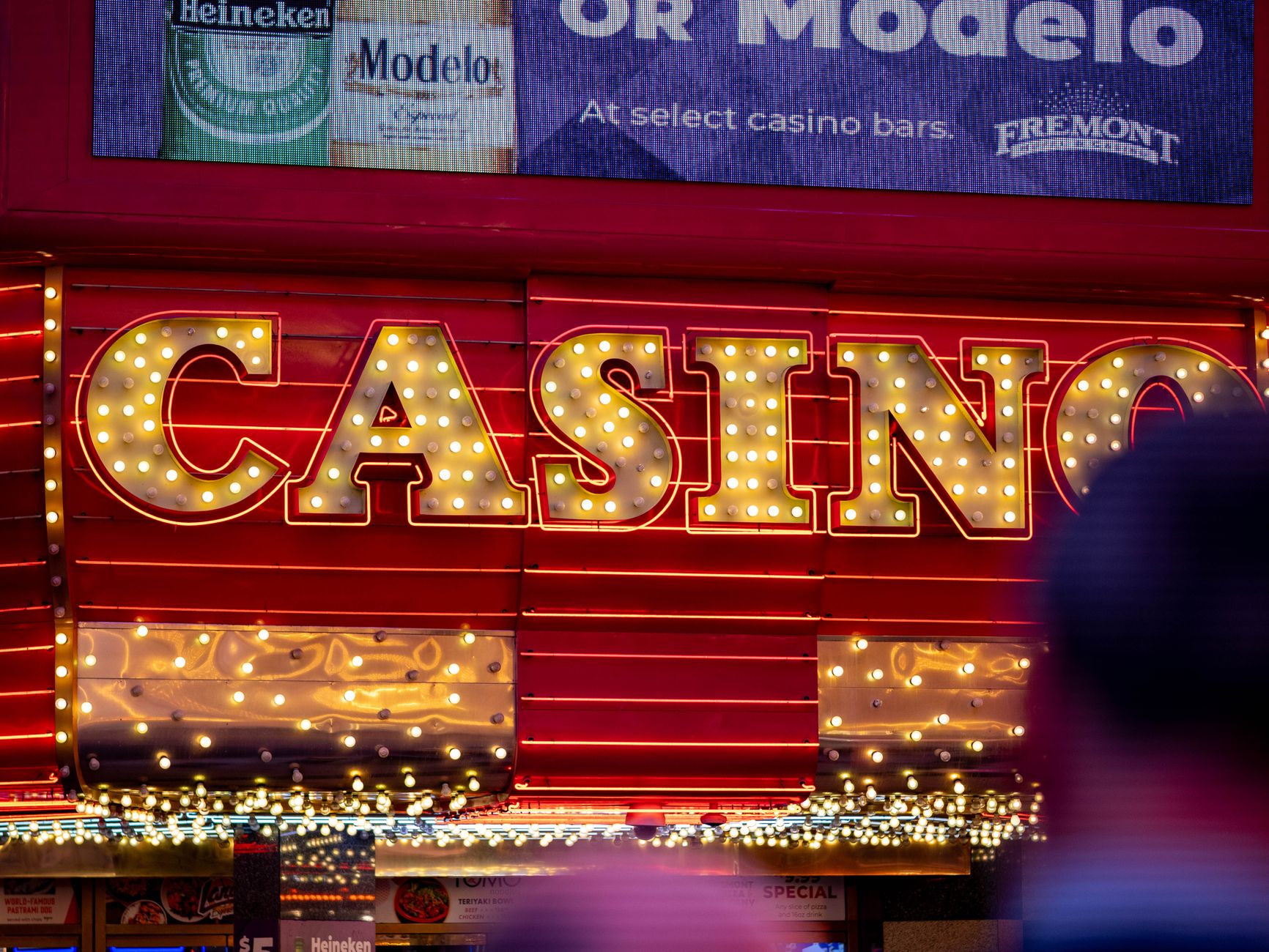
The $27,000 that Fred Smith won at a Las Vegas blackjack table in 1973 did not save Federal Express. It bought a week. The actual save came over the weeks that followed, when Smith closed an additional $11 million from investors who had previously turned him down. Without that raise, the blackjack winnings would have been a footnote in a bankruptcy filing. The casino bought time. The fundraise bought a company. That is the part of the story founders should remember, and almost never do.
Smith, the founder of a faltering air-cargo startup, walked into the casino one weekend with the company’s last $5,000 in his pocket and walked out Monday morning with enough to cover the fuel bill a creditor had just denied. Without jet fuel, the planes did not fly. Without flying planes, there was no company. Smith played blackjack with the cash, won, and bought his fledgling overnight delivery service another seven days of life — long enough to keep pitching investors who had already said no.
The story is told and retold inside FedEx as a piece of company scripture. Roger Frock, the company’s first general manager and chief operating officer, recounted the now-famous exchange in his book Changing How the World Does Business: he asked Smith where the funds had come from, and Smith answered that the General Dynamics board had been a bust, that the company needed money for Monday, and that he had taken a plane to Las Vegas and won $27,000. When Frock pressed him on having gambled the last $5,000, Smith reportedly shrugged and noted that without fuel money, the planes couldn’t have flown anyway.
The math of a man with nothing left to lose
That last sentence is the entire psychology of the decision. Smith was not gambling against a normal expected-value calculation. He was gambling against zero. The company was hours away from grounding its fleet, and a grounded fleet meant the end of Federal Express before its first real customer base existed. The choice was not between $5,000 in the bank and $5,000 at a blackjack table. The choice was between $5,000 that would vanish into a fuel invoice the company couldn’t fully cover anyway, and $5,000 with a non-zero chance of becoming enough to matter.
Financial planners spend their careers warning clients against exactly this logic. A piece in Psychology Today on financial risk-taking lays out the standard questions every investor should ask before a high-stakes move: What is the worst case? Who is impacted? Can you live with the regret? Smith had already answered all of them. The worst case was bankruptcy on Monday instead of bankruptcy on Friday. Everyone was already impacted. The regret was priced in.
The blackjack choice was not actually irrational
Blackjack, played with basic strategy, has one of the lowest house edges in any casino — roughly 0.5% against a skilled player. That is not a winning game. But it is a slow-bleed game, which means a player with a few thousand dollars can sit at a table for a long weekend and produce a wide distribution of outcomes. Some of those outcomes are catastrophic. Some are mildly bad. And a non-trivial slice of them are wins of five or six times the original stake.
For a founder whose expected value of doing nothing was effectively zero, a probability distribution with any meaningful upper tail was rational. There is a useful distinction here between logical and rational financial decisions — logic says don’t gamble company money, but rationality, in the strict expected-utility sense, can sometimes say the opposite when the alternative is guaranteed loss. Smith’s gamble looked reckless. The math says it was closer to a coin flip between two flavors of failure with one of them carrying a survival lottery ticket.
And critically, even a winning coin flip would have meant nothing without the work that came next.
What founders take from the story — and what they shouldn’t
The FedEx blackjack story gets passed around startup circles as proof that bold moves win. That is the wrong lesson. The right lesson is narrower and more useful. Smith did not gamble company money on a Tuesday with six months of runway left. He gambled when the alternative was certain death within days. The decision was constrained by a specific window where the expected value of inaction had collapsed to zero — and even then, the gamble only mattered because there was a fundraise still in motion on the other side of it.
Most founders never face that window. Most cash crunches have a third or fourth option that looks less dramatic than a casino floor — a bridge loan, a payment delay, an emergency raise at a brutal valuation, a layoff. Treating the Smith story as a template for general behavior produces founders who make catastrophic bets when ordinary discipline would have worked. Worse, it produces founders who skip the unglamorous follow-through that actually closes the gap between buying a week and building a company.
For anyone trying to build a company that survives long enough to matter, the cleaner takeaways live in less glamorous territory — disciplined cash management, clean books, honest projections, and the kind of project management discipline that prevents you from ending up at a blackjack table at all. A CFO who watches burn rate weekly. A founder who knows which invoices can be delayed without breaking a vendor relationship. A team that has practiced the conversation about what happens if the next round slips by 60 days. And, when the worst does come, a founder who has spent months building enough investor trust that a rescue raise is actually on the table.
The part of the story that gets left out
Smith had been turned down by dozens of investors before that weekend. He had personally guaranteed loans. He had watched the company burn through capital faster than projections. The reason the next round closed at all was that he had spent the preceding months on the phone, on planes, and in rooms with people who had already said no, keeping the door open just enough that one more conversation was possible.
The dramatic move kept the lights on for seven days. The unglamorous work of pitching investors for the hundredth time built a company that, by 2025, was moving roughly 17 million packages a day. The blackjack table is the part that makes the legend. The fundraise that followed is the part that made FedEx. Founders who internalize the first half of that sentence and skip the second half tend not to be around long enough to tell their own version of the story.
- 10 Best Project Management Software for Organizing Tasks and Teams
- A Non-Programmers Guide to Using APIs
- 10 Industries That Can’t Afford to Ignore Backup As A Service
- Is a medical courier business profitable?
- 7 Signs it is Time to Sell Your Business
- ‘Buy Now Pay Later’ |The Rise of Online Loans for Digital Layaway
