
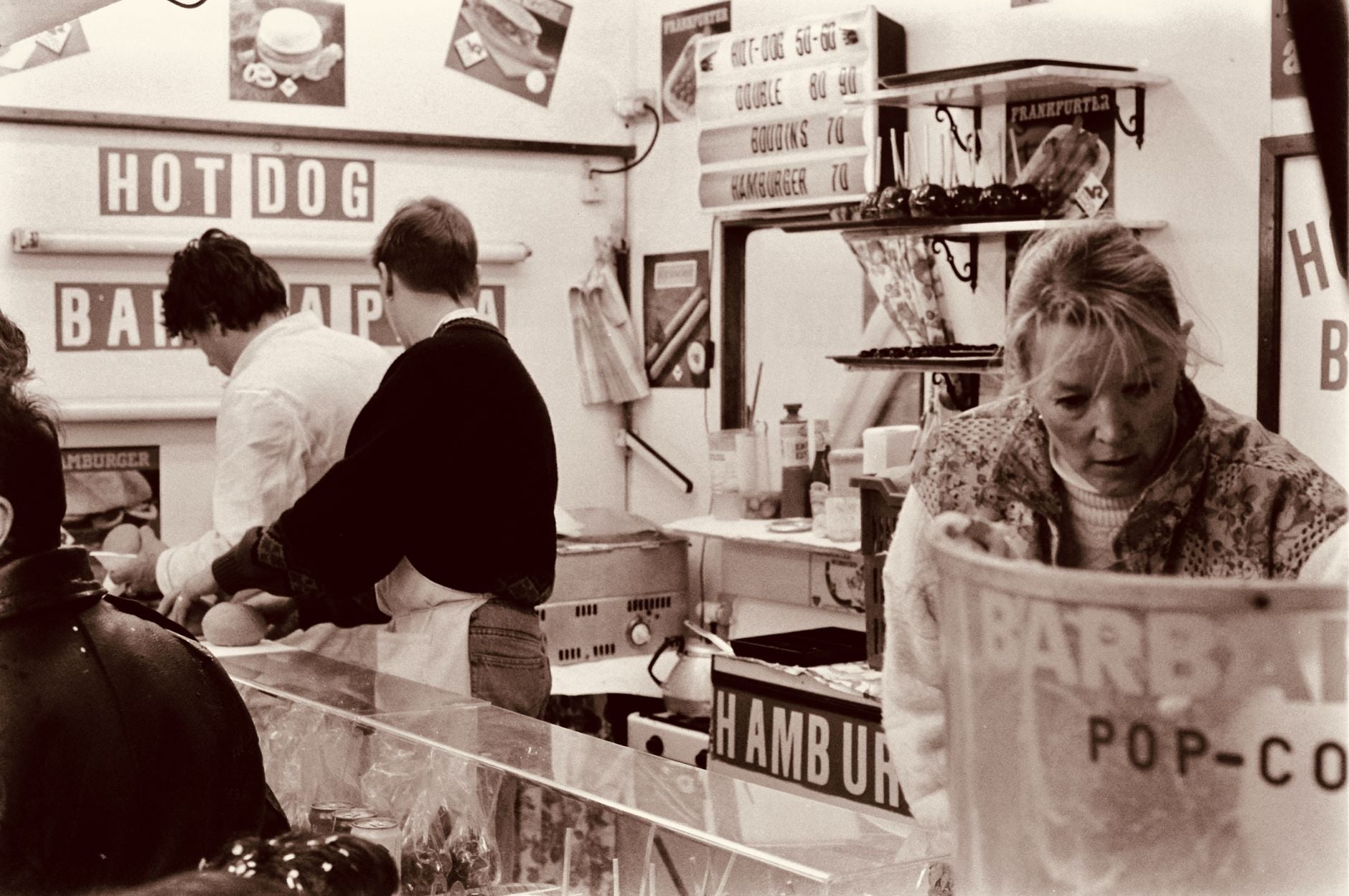
The receipt at any Costco food court still reads $1.50 for a quarter-pound all-beef hot dog and a 20-ounce soda with free refills — the same price the chain reportedly set in 1985, the year Ronald Reagan started his second term. Four decades of inflation have eaten through almost every other price in American retail. The hot dog combo has not moved a penny.
That stubbornness is not an accident of pricing software. It is a deliberate, founder-enforced policy that has survived multiple CEOs, two recessions, a pandemic, and severe supply-chain inflation. According to widely-reported accounts, when then-CEO Craig Jelinek approached co-founder Jim Sinegal about raising the hot dog price, Sinegal reportedly responded emphatically that the price should not change, telling Jelinek to find other ways to manage costs.
A Price Anchored Into the Brand’s Identity
The $1.50 combo is the most visible application of price anchoring in American retail. Behavioral economists describe anchoring as the use of a salient reference figure that shapes how consumers judge every other price they see. Walk into a Costco warehouse, see the hot dog sign, and every other price inside the building — the $4.99 rotisserie chicken, the bulk olive oil, the tires — gets evaluated against a benchmark that says: this place does not gouge you.
The combo is a loss leader in the strictest sense. Costco does not break out food court margins, and the actual cost of producing the hot dog and soda is reported to be well above $1.50 once labor, refrigeration, condiments, and napkins are included. The chain absorbs that loss across hundreds of warehouses worldwide as a marketing expense — cheaper, in Sinegal’s view, than a Super Bowl ad and far more memorable.
Why a Founder Would Threaten His Own CFO
The Sinegal quote reads as a joke, and it was partly a joke. But it also captures something organizational psychologists have studied for decades: founder-driven companies inherit their leader’s non-negotiables, and those non-negotiables become the spine of the culture. Research on the science of workplace behavior argues that consistent behavior across an organization usually reflects system conditions rather than individual choices. At Costco, the system condition is a founder who treated one menu item as a sacred contract with members.
Sinegal stepped down as CEO in 2012. He has continued to attend shareholder meetings and weigh in on operational questions, and the hot dog price has continued to hold. When Ron Vachris took over as CEO in early 2024, one of the first questions he faced from analysts was whether the combo would survive. His answer was that it would. The price held again in 2025. It is holding now.
This is what happens when a founder’s personal commitment becomes a load-bearing wall in the corporate identity. Recent analysis of leadership influence during uncertain times has noted that visible leader behavior carries disproportionate weight when external conditions are chaotic. The inflation spike between 2021 and 2023 was among the most disruptive consumer-price events in recent decades. Costco’s response was to absorb the cost and keep the sign unchanged.
The Math Costco Refuses to Do
A simple inflation calculation puts the 1985 price of $1.50 at over $4 in 2026 dollars. If Costco raised the combo to even $2.50, the difference per unit would generate tens of millions in additional revenue annually. The chain reportedly sells well over 100 million hot dog combos a year. The money on the table is real.
The reason the math stays undone is that Costco’s leadership treats the combo as a customer acquisition cost, not a menu item. Members renew at rates exceeding 90% in the United States. Membership fees generate the bulk of Costco’s operating profit. The hot dog is a billboard for the proposition that justifies the annual membership fee. Raise the price, weaken the proposition, and the renewal rate moves a fraction of a percent. That fraction is worth far more than any food-court margin gain.
Successful businesses protect certain operational foundations before scaling, and Costco’s discipline around its loss leaders is a textbook example. The chain expanded from a single Seattle warehouse in the early 1980s to hundreds of locations across more than a dozen countries without diluting the single most recognizable price point in its catalog.
The Behavioral Economics of Refusing to Change
Customers form emotional bonds with brands through repeated, predictable experiences. Research on consumer attachment behaviors describes how symbolic touchpoints — a familiar price, a familiar package, a familiar ritual — generate emotional ties that survive long after the original transaction. The hot dog combo functions as that touchpoint. A parent who bought it in 1995 buys it for their kid in 2026 at the same price. The continuity itself becomes the product.
This is also a nostalgia play, though Costco rarely talks about it that way. The nostalgia economy has become a major force in consumer behavior, and many consumers say they are more likely to buy something tied to a memory. Most brands manufacture nostalgia by reviving discontinued products or rebooting old packaging. Costco achieves the same effect by never discontinuing the experience in the first place. The 1985 price is a time machine you can taste.
What Other Companies Get Wrong About Loss Leaders
Most retailers treat loss leaders as tactical, quarterly tools — a doorbuster TV at Black Friday, a 99-cent breakfast sandwich for a limited window. The promotion ends, the price snaps back, and the customer is reminded that the discount was a manipulation. Costco’s approach is the opposite. The price never snaps back. The loss leader becomes a permanent fixture, which converts it from a tactic into a trust signal.
The difficulty for competitors is that copying this requires accepting a structurally lower margin on a high-volume item forever. Most public companies cannot defend that decision through four quarters of analyst questions, let alone four decades. It takes a founder willing to threaten a CFO — even jokingly — and a successor culture willing to treat the threat as policy.
Leadership behavior shapes organizational culture in ways that often outlast the leader. Sinegal has not run Costco for over a decade. His hot dog rule still does.
The Cost of the Promise
Costco has made small adjustments around the edges to protect the price. The chain switched its hot dog supplier to its own Kirkland Signature brand in 2009, vertically integrating production to control input costs. It built its own beef and bun supply chain. It absorbed soda price increases by negotiating directly with Pepsi and, in some markets, switching suppliers entirely. The $1.50 has held because the company has been willing to redesign its entire supply chain rather than touch the sign.
The cost is real but containable. The annual subsidy has been estimated at tens of millions of dollars — a rounding error against Costco’s revenue in the hundreds of billions, and a fraction of what the chain would spend buying equivalent brand recognition through traditional advertising. Costco does minimal paid advertising. The hot dog does the work.
Walk into any of the warehouses next weekend and the line at the food court will be roughly what it was a decade ago, and two decades ago, and three. The price on the menu board will read $1.50. Somewhere in a corporate office in Issaquah, Washington, a finance team will be running the numbers on whether the math still works. It will. And the sign will not change.
- Conveyancers: What They Do and Why You Need One
- How To Build A Social Media Business Strategy That Delivers Traditional Business Returns
- What is the Residence by Investment Visa Program in Australia?
- 4 Important Pieces Of Advice To Stay Healthy And Strong While Growing A Business
- How to Start a Cleaning Business in 9 Steps
- The Best Things In Life Are Free
