
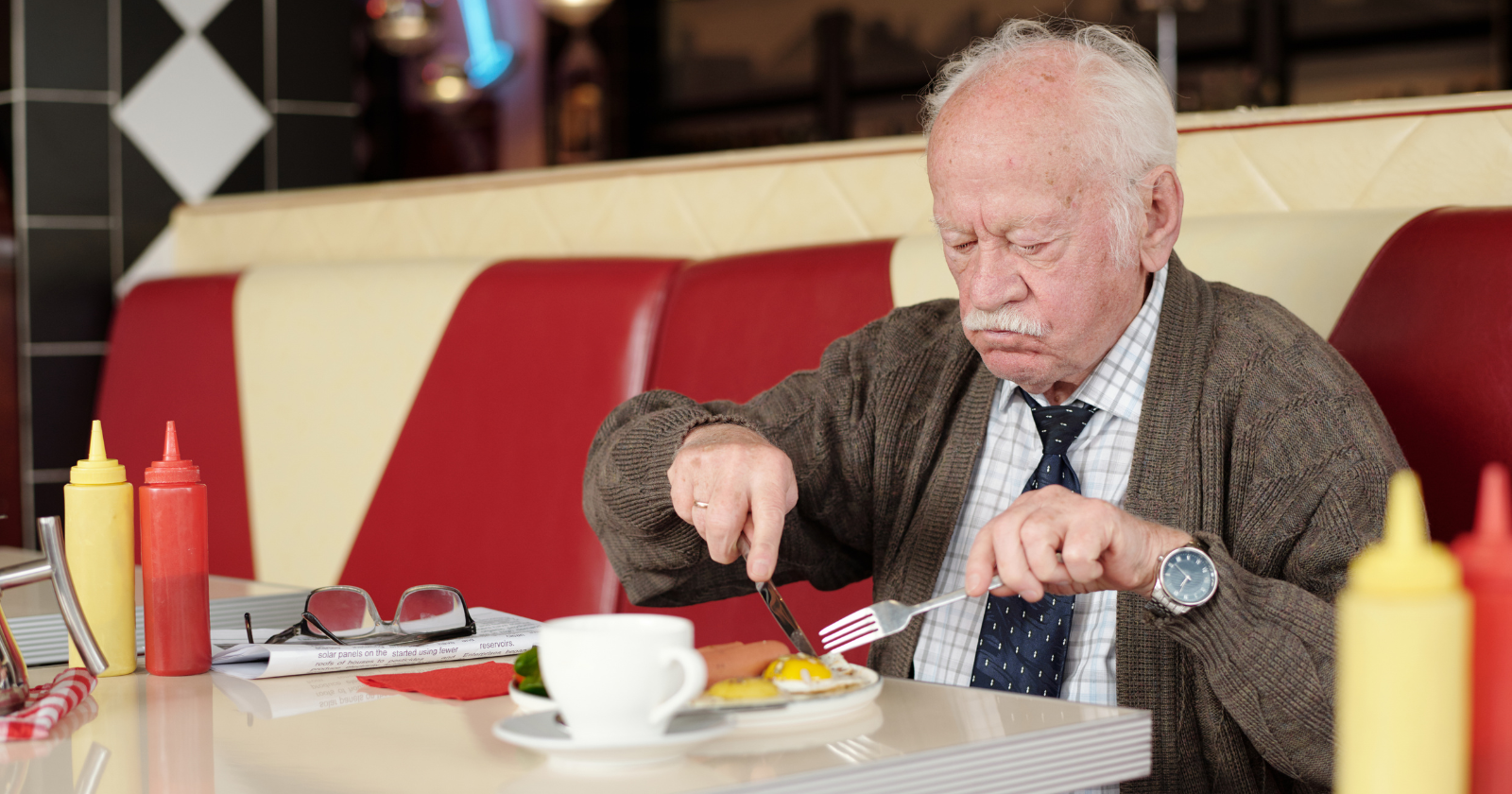
The coffee was still too hot to drink when he said it. Steam rose between us at the diner counter, and I watched him carefully tear open three sugar packets with hands that had clearly done decades of manual work. His wedding ring caught the fluorescent light, worn thin but still there.
“You know what nobody tells you about eating alone?” He didn’t look at me when he spoke. Just stirred his coffee with the same methodical precision. “It’s that after the first year, you stop feeling guilty about enjoying it.”
I’d been sitting there reviewing my notes about social isolation in retirement, preparing for an article about loneliness among older adults. This 91-year-old former factory worker had just dismantled my entire premise in one sentence.
“My wife passed four years ago,” he continued, spreading butter on his toast with deliberate care. “Fifty-seven years together. First year, I kept her place set at the table. Felt wrong to enjoy anything without her. But then something shifted.”
What he described next made me close my notebook and really listen. Because he wasn’t talking about moving on or healing. He was describing something our culture has no acceptable language for: the unexpected freedoms that come with profound loss, the ones we’re never supposed to acknowledge, much less appreciate.
The conversation nobody wants to have
He told me he eats dinner at 4:30 now because that’s when he’s hungry, not at 6:00 like they always did. He has cereal for dinner sometimes, or just cheese and crackers if that’s what sounds good. No negotiation. No consideration. No performance of a proper meal.
“I loved my wife,” he said, and I believed him. The way he touched that worn wedding ring made it clear. “But you spend fifty-seven years checking with someone else before you do anything, and then suddenly you don’t have to check anymore.”
This is the part where we’re supposed to say how sad that is. How he must miss those little negotiations, those small compromises that make up a shared life. But he wasn’t sad. He was matter-of-fact. He was describing reality, not tragedy.
In my years of corporate negotiations, I learned that the most powerful truths are often the ones nobody’s allowed to voice. The executive who admits they’re relieved their difficult boss retired. The manager who’s secretly grateful when a problematic employee quits. We all know these feelings exist, but we perform the expected emotions instead.
Why we can’t admit the relief
The social pressure to view all loss as purely negative runs deep. When someone loses a spouse, we expect perpetual grief, endless missing, a life forever diminished. Anything else feels like betrayal.
But here’s what my diner companion understood: human emotions don’t follow social scripts. You can simultaneously grieve someone deeply and feel liberated by their absence. You can honor a marriage while acknowledging that being alone has its own value.
He told me about his routine now. Up at 5:00 AM because he likes the quiet. News on loud because there’s no one to wake. Breakfast at the diner every morning at the same counter seat, where he knows the waitress and she knows his order. No discussion about where to go, what to eat, what time to leave.
“People think I come here because I’m lonely,” he said. “I come here because I want eggs over easy and someone else to cook them. Then I go home to my quiet house and that’s exactly where I want to be.”
The weight of constant consideration
What struck me most was his description of decision fatigue in marriage. Not the big decisions, but the thousand tiny ones. What to watch on TV. When to turn the heat up. Whether to open the windows. How loud to play music. When to go to bed.
“You don’t realize how much energy goes into considering another person until you don’t have to do it anymore,” he said. “Every choice, even small ones, required negotiation or at least consideration. Now I just do what I want.”
This resonated with something I’ve noticed in my own retirement. The relief of not managing workplace relationships, of not constantly calculating how decisions affect others.
But we’re not supposed to say that out loud either. We’re supposed to miss the collaboration, the teamwork, the human connection. And maybe we do. But we can also be relieved it’s over.
The guilt of unexpected freedom
He admitted the guilt was overwhelming at first. How could he enjoy choosing his own TV shows when his wife would never watch anything again? How could he appreciate the quiet when it came from her absence?
“My kids worried I was depressed because I didn’t want to join a grief support group,” he said. “But I wasn’t depressed. I was adjusting to being able to hear my own thoughts again.”
This is perhaps the cruelest irony of long marriages that end in death. The survivor often feels guilty for experiencing any relief or freedom, as if appreciating solitude somehow diminishes the marriage that preceded it. But these feelings aren’t mutually exclusive. You can honor what was while also embracing what is.
He’d developed strategies for managing others’ expectations. He lets people assume he’s lonely if that makes them more comfortable. He accepts dinner invitations occasionally to reassure his children. He performs just enough social engagement to avoid concern while protecting his actual preference for solitude.
What this means for the rest of us
Watching him eat his eggs with perfect contentment, alone at a diner counter, I thought about all the ways we perform connection when what we really crave is solitude.
The meetings we attend to appear engaged. The social obligations we fulfill to avoid judgment. The constant consideration of others’ needs that becomes so automatic we forget it’s even happening.
His honesty gave me permission to examine my own relief at aspects of retirement nobody talks about. Not having to manage difficult personalities. Not moderating my own opinions to maintain workplace harmony. Not performing enthusiasm for projects I don’t care about.
These aren’t character flaws or signs of depression. They’re normal human responses to the genuine burden of constant social negotiation. But we’ve created a culture where admitting to this burden, especially after loss, is taboo.
Closing thoughts
As I paid my check and prepared to leave, he offered one final thought that’s stayed with me: “Everyone talks about dying alone like it’s the worst thing that could happen. But living alone, really alone, where every choice is yours? That’s something people who’ve never experienced it can’t understand.”
He’s right. We’ve constructed such powerful narratives around partnership, connection, and social engagement that we’ve made solitude suspect, especially for older adults. But what if some people genuinely prefer their own company? What if the absence of negotiation is its own form of peace?
The freedom he described isn’t for everyone. Many people genuinely need and want constant companionship.
But for those who find themselves unexpectedly alone, maybe it’s okay to discover that solitude has its own gifts. Maybe it’s okay to eat dinner at 4:30, watch the news too loud, and find peace in the absence of perpetual consideration.
The most radical act might be admitting that sometimes, being alone isn’t just bearable. Sometimes, it’s exactly what we want.
