
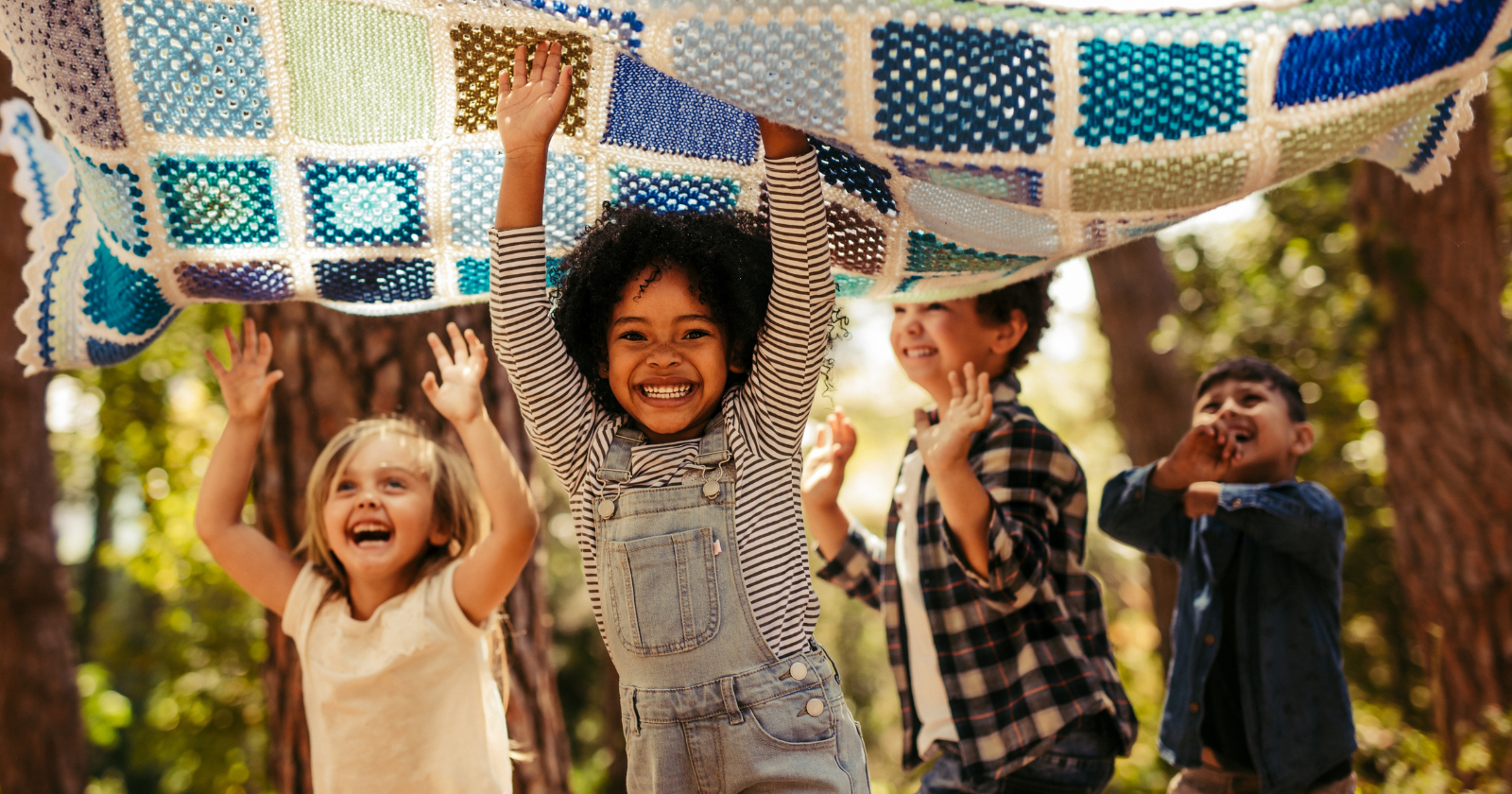
My children look at me with polite confusion when I try to explain how different childhood felt in 1960.
They nod when I describe playing outside until dark, but I can see they don’t really understand what I’m trying to tell them.
The magic wasn’t in the games we played or the places we went.
It was in those long stretches of absolutely nothing: When adults were busy elsewhere, when no one had planned anything for us, and when entire afternoons stretched out like blank pages we got to fill however we wanted.
I’ve spent years trying to articulate this to them, but words keep failing me.
How do you explain the feeling of owning time itself? Of having hours that belonged to no one but you and your imagination?
The architecture of empty time
What strikes me most about those childhood summers is how much space existed between things.
No scheduled activities, no enrichment programs, no adults hovering with suggestions.
Just time, spreading out in all directions.
We’d wander into the backyard or down the street, not because we had plans, but because movement felt natural.
Sometimes we’d build forts out of old boxes; sometimes we’d lie in the grass watching clouds.
Often, we did absolutely nothing productive at all, and that was perfectly fine.
Amanda Shaneberger, LPC, Limited Licensed Psychologist, captures something essential when she notes: “Free play is unstructured, child-initiated and spontaneous—preferably with minimal or, with children who can be trusted, no supervision.”
That lack of supervision was trust.
Adults trusted that we could handle boredom, solve our own disputes, and find our own entertainment.
They were around if something serious happened, but they weren’t orchestrating our every moment.
When boredom was a feature
I remember the specific texture of childhood boredom, like lying on the living room carpet, staring at the ceiling, and complaining that there was nothing to do.
My mother would barely look up from whatever she was doing.
“Find something,” she’d say, or sometimes just, “Go outside.”
That forced creativity shaped us in ways I’m only now beginning to understand.
When you can’t instantly access entertainment, when no adult swoops in to solve your boredom, you develop an internal resourcefulness that stays with you forever.
We made up elaborate games with rules so complex we’d forget them by next week, we assigned personalities to rocks and sticks, and we created entire worlds in the space between lunch and dinner, worlds that dissolved the moment someone’s mother called them inside.
The absence of structure forced us to become architects of our own time.
We learned to read our own moods, to sense when we needed action versus quiet, company versus solitude.
These weren’t lessons anyone taught us. They emerged naturally from having unhurried time to ourselves.
The invisible curriculum of unstructured play
Looking back with decades of perspective, I see now what those empty hours were teaching us.
We were learning negotiation when we argued over game rules, we developed risk assessment climbing trees and jumping from heights that would horrify today’s parents, and we discovered our own limits without anyone telling us what they should be.
However, more than skills, we were developing a relationship with ourselves.
Those long afternoons taught us how to be alone with our thoughts, how to move through the world without constant validation or stimulation.
Research confirms that unstructured play is critical to child development, fostering social skills, persistence, and neural development in higher brain areas.
Yet, we didn’t need studies to tell us this because we lived it.
The beauty was in the mundane moments: Sitting on a curb throwing pebbles at a puddle, walking along a fence trying not to fall, and lying under a tree watching leaves move in the wind.
They were barely memories, yet they built something fundamental in us.
A capacity for presence, for finding richness in simplicity.
Why this matters now
When I watch young people’s scheduled lives—soccer practice, piano lessons, coding camp—I see wonderful opportunities I never had.
But I also see what’s missing: the gift of unstructured time, the freedom to be bored, the chance to discover what emerges from nothing.
They’re never alone with their thoughts because there’s always a screen available.
They rarely experience true boredom because entertainment is instantly accessible, and they don’t wander because there’s always somewhere specific to be.
I’m not romanticizing the past or dismissing the present. There were plenty of problems with how we grew up, and today’s children have advantages we couldn’t dream of.
However, in our rush to optimize childhood, to fill every moment with enrichment and safety, we’ve eliminated something precious.
Those empty hours weren’t empty at all.
When time belongs to you completely, when no one is watching or directing or documenting, you learn things about yourself that no structured activity can teach.
Closing thoughts
I’ve finally figured out how to explain this to my children, though I’m not sure they’ll fully understand until they’re my age.
The best part of childhood was that we got to decide what to do. It was having time that stretched endlessly before us, unmarked and unmeasured.
Those hours between breakfast and lunch, lunch and dinner, dinner and bed; they seemed infinite then.
We had no idea how rare and precious that sensation of unlimited time would become, and we didn’t know we were rich with the one currency that matters most: Time that truly belonged to us.
Maybe that’s why I struggle to explain it because how do you describe wealth to someone who’s never been poor? How do you explain the luxury of empty time to someone who’s never experienced it?
All I can do is try to preserve this memory, this truth: Once upon a time, children owned their own hours, and in that ownership, they discovered who they were meant to be.
