
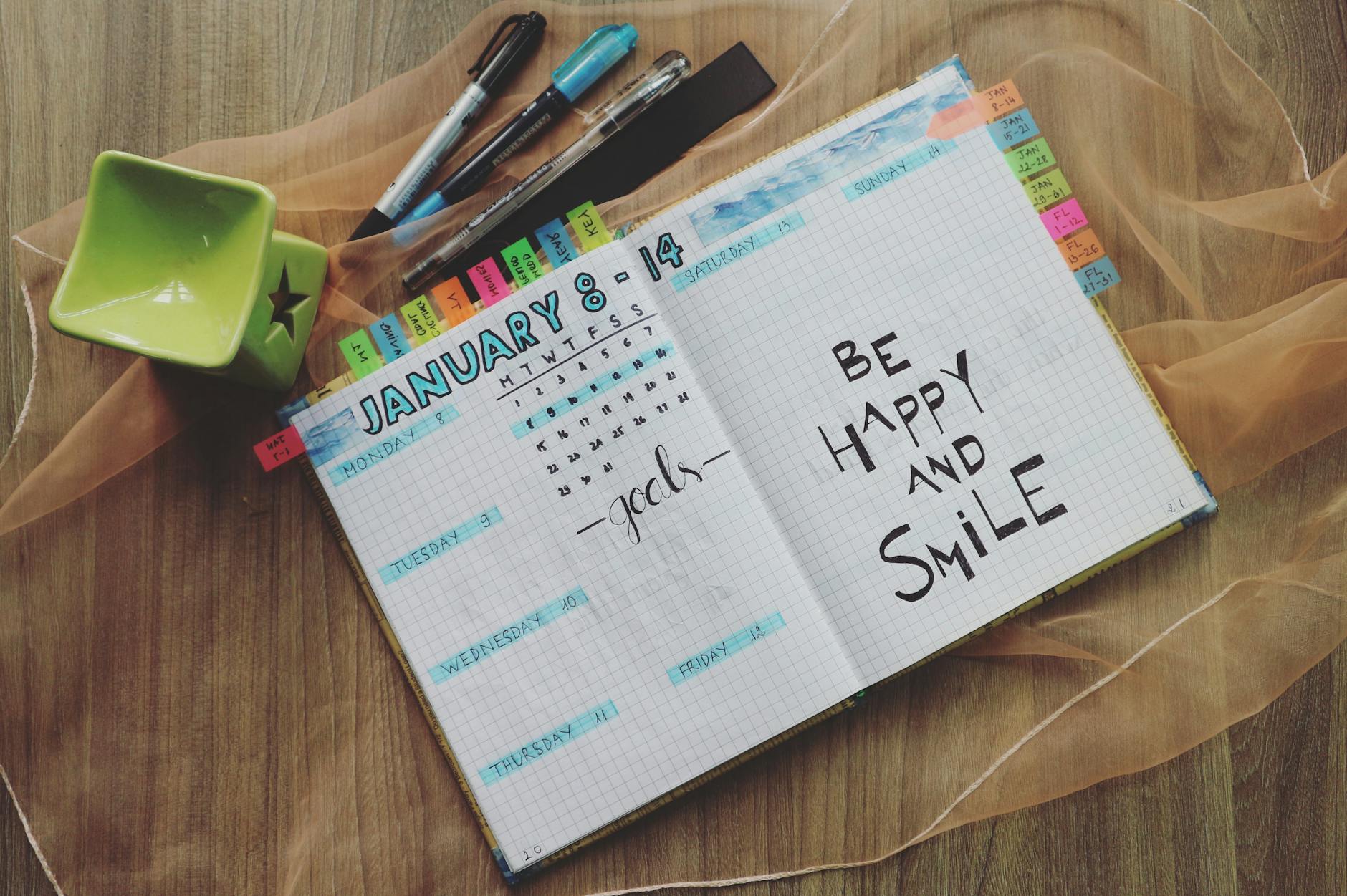
Gerald Ennis, 62, spent thirty-one years as a regional operations director for a logistics firm outside Cleveland. He kept a leather-bound planner until 2014, then switched to a digital calendar he color-coded with the precision of a man who believed that time, once allocated, became meaningful by definition. Green for client meetings. Blue for internal reviews. Orange for the calls he took while walking the parking garage so nobody overhead. When I sat across from him at a diner last November, eight months into his retirement, he pulled out his phone and showed me his calendar. It was white. Every square, every week, blank. “I thought this was the goal,” he said, turning the phone face-down on the table like he didn’t want to look at it anymore.
I knew what he meant. For decades, I treated my own calendar the same way. Like it was a scoreboard. A full day meant a productive day. A packed week meant I was needed. I guarded open slots the way some people guard savings accounts, releasing them only when the return justified the cost. If someone wanted thirty minutes, they had to earn it. I was proud of that discipline. I wrote about some of what happened next in my piece on the uncomfortable truths of the first year of retirement. But the calendar part, I hadn’t unpacked fully until Gerald said what he said.
The calendar wasn’t just a tool. It was an identity document.
When every day is claimed by someone or something, you never have to ask the harder question: what would I do with this hour if no one needed me? You don’t have to face that question because the answer, for most of us, is genuinely unsettling. The answer isn’t a hobby or a nap. The answer is: I don’t know. And for people who spent decades being the person with the plan, “I don’t know” feels less like freedom and more like a slow leak.
There’s a woman named Diane Cho, 58, who runs a small HR consulting practice in Portland. She told me she started blocking fake meetings on her calendar after her last child left for college. Two-hour blocks labeled “strategy session” or “vendor review” that were actually just time she sat in her home office reading or staring out the window. She didn’t want her husband to see the gaps. She didn’t want to see the gaps herself. “If I looked at an empty afternoon, I felt like I was failing,” she said. “Like the world had moved on without telling me.”
Diane’s instinct wasn’t irrational. There’s a growing body of conversation in psychology about boundary-setting that becomes a defense mechanism rather than a healthy practice. When protecting your time stops being about focus and starts being about avoidance, you’re no longer managing a calendar. You’re managing an identity. The boundary isn’t keeping the wrong things out. It’s keeping you from seeing what’s left when everything else is removed.
I’ve been thinking about this pattern for months now, partly because I keep running into it. At a coffee meetup for retired professionals in January, I counted nine people who described some version of the same experience: the first few weeks of open time felt luxurious. Then came the creeping discomfort. Then the quiet dread. One man, Rick Saldana, 67, a former high school principal from outside Detroit, said he started volunteering at a food bank not because he was passionate about hunger relief but because he needed somewhere to be at 8 a.m. “I needed a reason to set an alarm,” he said. The honesty in that sentence was startling, and completely recognizable.
Rick’s response points to something specific. The alarm, the drive, the arrival, the being expected somewhere. These aren’t just logistics. They’re signals. They tell you that you exist in a structure, that someone is counting on your presence, that the world has a slot with your name in it. When those signals disappear, you don’t just lose a routine. You lose a form of evidence. Evidence that you matter.
This connects to something Tweak Your Biz explored in a piece about women over 65 and what they miss most about their pre-retirement identity. It wasn’t the work itself. It was the walk from the parking lot to the front door, that daily crossing into a version of themselves that had purpose baked in. The calendar, I think, functions the same way. It’s not the meetings you miss. It’s the proof they provided.
I spent years with notebooks full of scribbled agendas, arrows pointing from one talking point to the next, margins annotated with “real issue:” followed by the thing nobody said out loud in the room. Those notebooks are stacked in a closet now. Sometimes I flip through them, and what strikes me isn’t the content. It’s the density. Page after page of someone who was deeply embedded in the current of other people’s decisions. That density felt like meaning. Now I understand it was also a wall. A very effective wall between me and any space quiet enough to hear my own thoughts.
There’s a reason therapists encourage people to set boundaries around their time. Healthy boundaries are genuinely protective. They keep burnout at bay, preserve energy for the people and projects that matter most. But like any good tool, boundaries can be repurposed. When “I’m protecting my time” becomes a reflex rather than a choice, when every open hour triggers anxiety instead of relief, the boundary has quietly shifted from a fence into a fortress. And fortresses, by design, keep you from seeing what’s outside.
Gerald told me something else that day at the diner. He said the hardest part wasn’t the boredom. He’d expected boredom. The hardest part was realizing he didn’t know who he was outside of a schedule. “I kept waiting for the real me to show up,” he said. “Turns out, the real me was the guy who needed a 2 p.m. call to feel alive.” He laughed when he said it. But it wasn’t a joke.
I recognize that laugh. I’ve given that laugh. The one that covers the moment where an insight lands too close and you need to create a little distance before you can look at it straight. I wrote about a version of this feeling in my piece about how aging changes the way people receive your experience. The world doesn’t stop respecting you overnight. It just starts treating your relevance as past tense. And your calendar, once a daily record of your present-tense relevance, becomes the clearest evidence of that shift.
Diane eventually stopped creating fake calendar blocks. She told me the turning point was when her husband walked into her office during a supposed “vendor review” and found her reading a novel. She braced for embarrassment. Instead he said, “You know you’re allowed to just read, right?” She said the sentence hit her like cold water. Not because it was profound, but because she genuinely hadn’t given herself that permission. The calendar had been her justification system for so long that doing something without a calendar entry felt unauthorized.
This is where it gets personal. I have a habit, when someone is circling a point without landing on it, of repeating their own words back to them. Slowly, so they hear what they actually said. I do it because people are remarkably good at hiding their real meaning inside comfortable language. “I’m just adjusting” means “I’m lost.” “I’m enjoying the flexibility” means “I don’t know what to do with myself.” “I’m keeping busy” means “I’m terrified of the silence.”
An empty schedule isn’t freedom. It’s a mirror. And most of us spent decades arranging our calendars specifically so we’d never have to look into it. The meetings, the calls, the obligations, they weren’t just productive. They were reflective surfaces pointed outward. As long as you could see yourself in the context of other people’s needs, you didn’t have to see yourself alone.
Rick from Detroit eventually found his footing. Not at the food bank, which he left after two months. He started tutoring math at a community center three mornings a week. When I asked what changed, he said something I wrote down immediately: “I stopped trying to fill the calendar and started trying to fill the morning.” Smaller unit. More honest. One morning at a time, rather than trying to reconstruct the architecture of a life that had already served its purpose.
There’s a pattern Tweak Your Biz identified in people who reinvented themselves after 60. The first steps almost never look like reinvention. They look random, small, disconnected. A morning walk. A conversation with a stranger. A book picked up for no strategic reason. These small acts don’t fill a calendar. They don’t color-code. They just exist. And that’s the point.
Gerald texts me occasionally. Last week he sent a photo of his calendar app. Still mostly white. But there were a few entries scattered through the month. A lunch with an old colleague. A dentist appointment. A note that just said “walk the towpath.” No color coding. No system. He wrote underneath the screenshot: “Getting used to the white.”
I sat with that for a while before responding. Getting used to the white. Getting used to looking at an open day and not feeling the pull to justify it, fill it, defend it. Getting used to the mirror.
That’s the work now. Not protecting the calendar. Not filling it. Just being able to look at it and recognize the person who has nowhere to be, and finding that person worth the time.
