
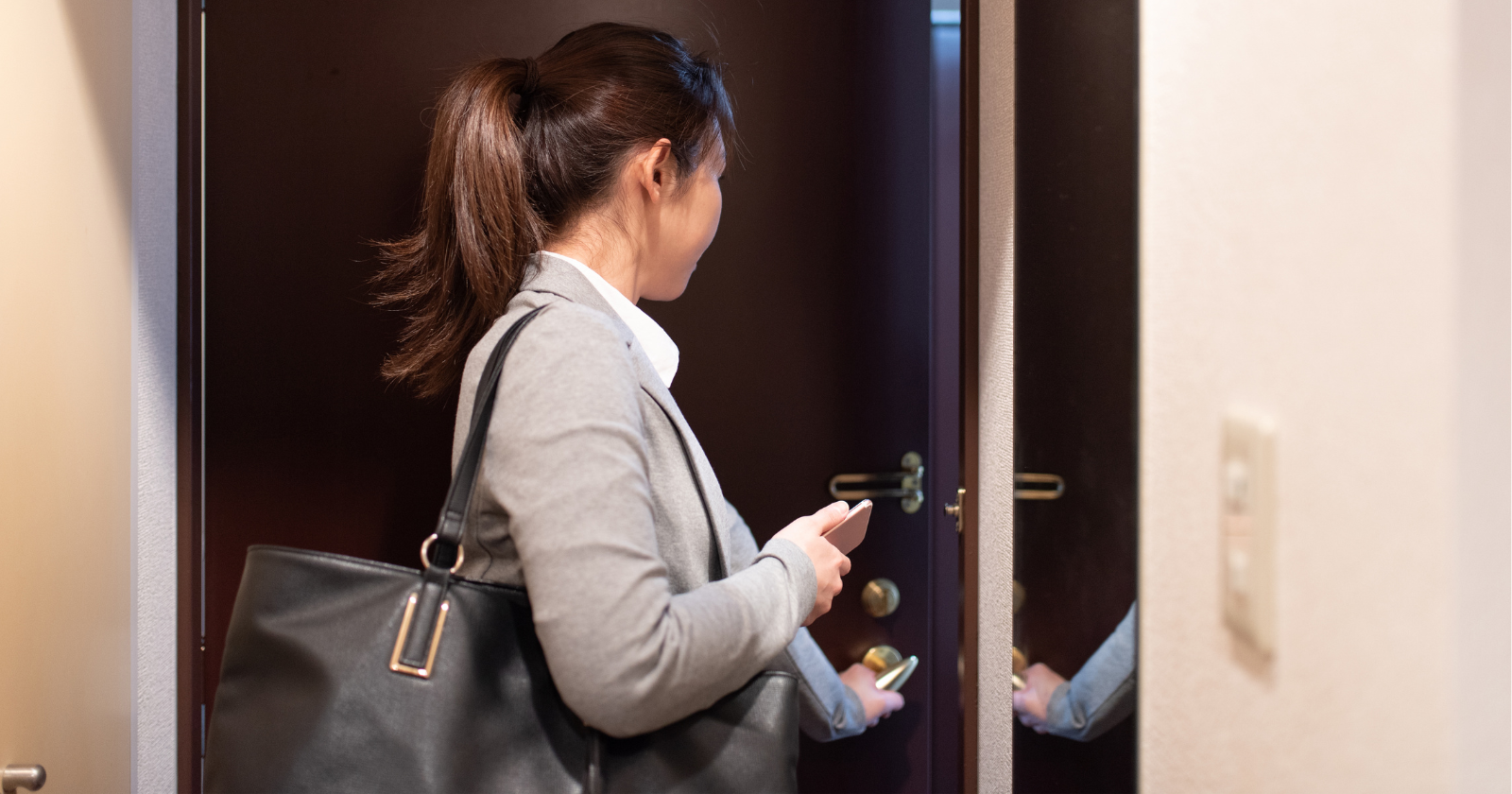
You know that quick triple-tap before leaving anywhere? Keys, wallet, phone. I’ve done it for decades, and I bet you have too. Started when I was maybe twelve, the kid who’d forgotten his lunch money one too many times and learned that nobody was going to bail me out.
Turns out there’s psychology behind this habit. People who reflexively check their pockets aren’t just being careful—they’re displaying specific traits that often trace back to childhood experiences where forgetting meant consequences, not rescue.
I’ve spent years observing high performers, and the pocket-tappers stand out. They’re the ones who show up prepared, rarely scramble, and somehow manage to avoid the small disasters that derail everyone else’s Tuesday.
But here’s what’s interesting: most of them can pinpoint exactly when this habit started, usually tied to being the kid who couldn’t afford to forget.
1) They build physical routines to manage mental load
The pocket-tap isn’t about the items. It’s about creating a checkpoint that clears mental bandwidth.
Cottonwood Psychology puts it clearly: “Routines give your day a steady shape. They reduce the number of choices you have to make, which saves energy.”
Think about it. Every time you leave a room, you’re transitioning between contexts—home to car, office to meeting, gym to grocery store. Each transition carries a risk of leaving something behind. The pocket-tap creates a physical moment that forces a mental inventory.
I learned this the hard way in my early career. Rushing between meetings, I’d regularly leave notebooks, chargers, even my laptop once. The stress of constantly backtracking was exhausting. The pocket-tap became my circuit breaker—a two-second investment that saved hours of recovery time.
People who develop this habit early usually had to manage their own logistics young. No parent double-checking their backpack. No safety net for forgotten homework. They learned that systems beat memory every time.
2) They’re hyper-responsible (sometimes to a fault)
Pocket-tappers carry invisible weight. They’re the ones who remember birthdays, follow up on promises, and actually read the contract before signing.
This responsibility often started as survival. Maybe they were latchkey kids, or the oldest sibling, or just had parents who expected self-sufficiency early. Forgetting your house key meant sitting outside for three hours. Losing your bus pass meant walking home.
The trait serves them well professionally. They’re reliable. They deliver. They don’t make excuses. But here’s the shadow side: they often can’t delegate because they’ve never trusted anyone else to remember the details. They’ll triple-check everyone else’s work because they know what happens when things slip through cracks.
I still fight this. Growing up in a “handle it yourself” household made me capable but also made me believe that asking for help meant failing. The pocket-tap is just one symptom of a deeper pattern—constant vigilance against dropping balls that, honestly, someone else could be juggling.
3) They anticipate problems before they happen
Watch a pocket-tapper plan anything. They’ve already thought through the parking situation, the backup route, what happens if the restaurant is closed. They live three moves ahead because they’ve been burned by not thinking ahead before.
This isn’t anxiety—it’s pattern recognition. They’ve forgotten their wallet enough times to know it ruins lunch. They’ve been locked out enough to check for keys automatically. Each mistake got coded into muscle memory.
Research from psychology studies confirms that individuals who habitually double-check their belongings often exhibit future-oriented thinking and a strong sense of responsibility, aiming to prevent potential issues and ensure preparedness.
The downside? They can overthink simple situations. A casual coffee meeting becomes a logistics exercise. They arrive everywhere ten minutes early because being late once in seventh grade led to detention, missed basketball tryouts, and a cascade of consequences they’re still avoiding thirty years later.
4) They use physical cues to quiet mental noise
Here’s what non-tappers don’t understand: it’s not about forgetting. It’s about shutting down the “did I forget?” loop that would otherwise run in the background all day.
Daniel L. Schacter, Professor of Psychology at Harvard University, explains it: “You have to do a little bit of cognitive work. At the time of encoding, you have to focus your attention.”
The tap creates that moment of focused attention. Keys—check. Wallet—check. Phone—check. Done. Now you can actually focus on the meeting instead of wondering if your car keys are on your desk.
I keep my travel system stripped down for the same reason. One carry-on, permanently packed dopp kit, everything in designated pockets. Not because I’m obsessive, but because it eliminates decision fatigue. The physical organization creates mental space.
5) They learned early that small mistakes have big consequences
Most pocket-tappers have a story. The time they forgot their house key and Mom didn’t get home until 9 PM. The presentation that failed because they left the USB drive at home. The relationship that ended over too many forgotten anniversaries.
These weren’t dramatic moments. Just small failures that taught a harsh lesson: nobody’s coming to save you from your own carelessness.
This creates a specific kind of competence. They handle details others miss. They remember the small stuff that matters. But it also creates a specific kind of exhaustion—always being “on,” never fully trusting that things will work out if they relax their grip.
6) They turn anxiety into action
Every pocket-tapper knows the feeling: that spike of panic when your pocket feels wrong. Too light. Wrong shape. Something’s missing.
But here’s what separates them from chronically anxious people: they do something about it immediately. Feel the wrong weight? Stop and check. Can’t remember locking the door? Walk back and verify. They’ve learned that thirty seconds of action beats thirty minutes of worry.
This trait usually developed young, often in unpredictable environments. Maybe Dad’s mood depended on whether you’d done your chores. Maybe forgetting homework meant more than a bad grade—it meant a parent-teacher conference that would make home life worse for weeks.
They learned to manage uncertainty with preparation. Check everything twice now to avoid consequences later.
7) They understand that trust is built on reliability
Pocket-tappers are the people you want on your team. They show up. They bring what they promised. They don’t make you wait while they run back for forgotten materials.
But this reliability often came from learning that trust was conditional. They were the kid who had to prove they were responsible enough for house keys, mature enough to walk to school alone, organized enough to manage their own schedule.
Every forgotten item was evidence they weren’t ready. Every successful week of not forgetting built their case for more freedom. The pocket-tap became their quality control—a promise to themselves and others that they had their act together.
Bottom line
The pocket-tap isn’t just a quirk. It’s a window into how someone learned to navigate the world—usually as a kid who figured out early that forgetting meant consequences, not rescue.
If you’re a tapper, recognize what it gives you: reliability, preparedness, the ability to manage complexity. But also recognize what it costs: mental energy spent on vigilance, difficulty delegating, the weight of feeling responsible for everything.
The goal isn’t to stop checking. It’s to recognize that the same trait that kept you safe as a kid might be overworking now. You can keep the tap—just remember that not everything requires the same level of vigilance you needed when you were twelve and nobody was coming to bring your forgotten lunch money.
Your pockets know where everything is. Maybe it’s time to trust that the rest of you does too.
