
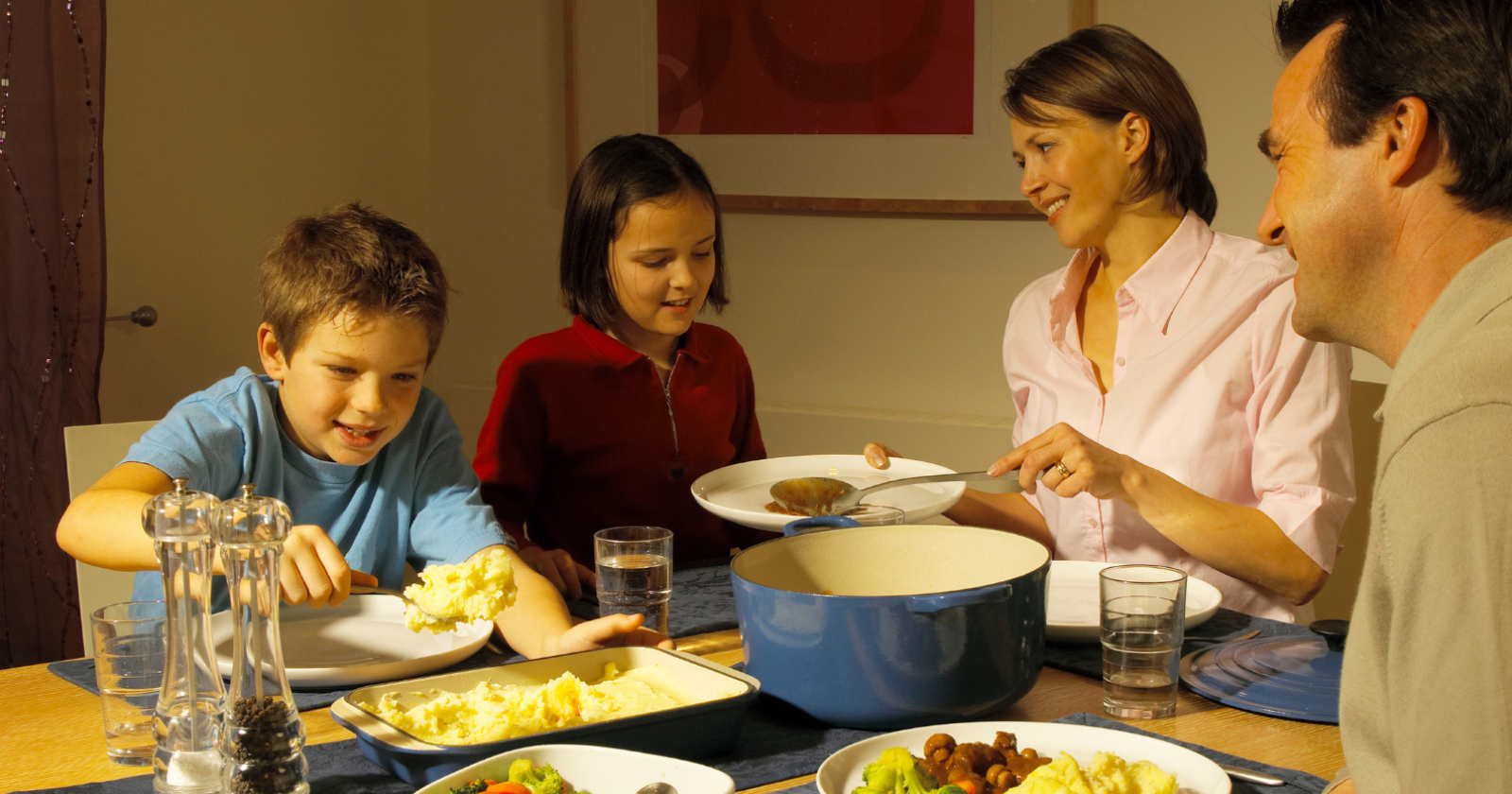
The dinner table tells you everything about where you stand in a family.
Not through the seating arrangement or who gets served first, but through the small sacrifices that become invisible habits.
The ones where you automatically take less so others can have more. Where you develop a sixth sense for scarcity before anyone mentions it out loud.
If you’ve ever claimed fullness when your stomach was empty, you already know this truth: Families teach us our worth through portion sizes and permission.
Growing up, I became an expert at reading the room before I could properly read books. That quick scan of how much food was left, how many people still needed to eat, the slight tension when someone reached for seconds.
You learn to calibrate your hunger to what’s available, not what you need.
This isn’t just about food. It’s about the lessons that stick to your bones long after you’ve left that table.
1) Your needs were negotiable, theirs weren’t
Here’s what nobody tells you about being the one who goes without: You were trained for it.
Somewhere along the way, you learned that your hunger could wait but theirs couldn’t. Your wants became flexible while others’ stayed firm.
Maybe it was a parent who always ate last, modeling sacrifice as love. Maybe it was siblings who were louder, needier, or just better at taking up space.
You developed a peculiar talent—shrinking your needs to fit whatever room was left. Not because anyone explicitly told you to, but because keeping peace felt safer than claiming your share.
I watch this play out everywhere now. In meetings where certain people automatically defer. In relationships where one person’s preferences mysteriously disappear.
In friendships where someone always picks the restaurant but never admits they’re hungry.
The thing about negotiable needs? They don’t stay at the dinner table. They follow you to job negotiations, relationships, everywhere you’re supposed to advocate for yourself but hear that old voice saying “there might not be enough.”
2) You became fluent in emotional weather patterns
Kids who give up their portions develop supernatural sensing abilities.
You knew tension was building before voices changed. You could feel scarcity in the air before anyone checked the fridge.
That hypervigilance that made you say “I’m full” before anyone had to ask? It turned you into an emotional meteorologist.
This is exhausting work that nobody acknowledges. Being the family member who tracks everyone’s moods, who knows when to disappear, who smooths things over before they explode. You became the shock absorber, the buffer zone, the one who could read micro-expressions like tea leaves.
Later, you realize this made you valuable in every dysfunctional workplace. You’re the one who senses layoffs coming.
Who knows which coworker is about to snap. Who manages up, down, and sideways because you’ve been doing it since you were seven.
But here’s what I’ve learned: Not every environment requires a weather forecaster. Some places just have better climate control.
3) Love looked like sacrifice
The most damaging lesson might be this one: Love means going without.
When you watch someone you love take the last piece while you pretend you didn’t want it, you’re learning that care means self-erasure. That being good means needing less. That the highest form of love is disappearing your own desires.
This creates adults who can’t receive. Who deflect compliments, refuse help, and feel physically uncomfortable when someone tries to give them something. Because deep down, we learned that taking up space meant taking from someone else.
I see it in how people apologize for existing. How they preface requests with lengthy explanations about why they wouldn’t ask unless absolutely necessary. How they’d rather suffer silently than risk being seen as needy.
But love without reciprocity isn’t love—it’s just depletion with a pretty name.
4) You learned to perform satisfaction
“I’m not hungry” is just the beginning of the performance.
You mastered the art of appearing content with less. The grateful smile when you got the smaller piece. The enthusiasm for leftovers. The insistence that you actually preferred it this way.
This performance becomes so convincing that you start believing it yourself.
You tell yourself you have simple needs, that you’re low-maintenance, that wanting more would be greedy. You curate an identity around needing less than everyone else.
The problem? Nobody can sustain a performance forever. Eventually, the resentment leaks out.
Maybe through passive aggression. Maybe through sudden explosions over seemingly small things. Maybe through a gnawing emptiness that no amount of self-sacrifice seems to fill.
Authenticity means admitting you’re hungry. Even when—especially when—there might not be enough.
5) Boundaries felt like betrayal
When you’re raised to be the family shock absorber, boundaries feel like abandonment.
Saying “no” means someone else has to manage their own feelings. Taking your fair share means someone might go without. Having needs means risking the delicate balance you’ve spent years maintaining.
So you become boundaryless. The friend everyone trauma-dumps on. The employee who takes on extra work without extra pay. The partner who bends until they break. Because disappointing others feels like a moral failure.
I spent years mistaking boundary-lessness for kindness. Thinking that being good meant being endlessly available, endlessly accommodating, endlessly willing to make myself smaller.
But boundaries aren’t walls—they’re the difference between choosing to give and having things taken from you.
6) Invisible labor became your currency
The kids who give up their food become adults who give up their credit.
You learned that your value came from what you provided, not who you were. From keeping things smooth, not making waves. From the thankless work of holding everything together while staying invisible.
This is why so many of us end up in roles where we’re essential but unrecognized.
The office manager who actually runs everything. The friend who plans all the gatherings but never gets to relax at them. The family member who handles the difficult relatives so everyone else can enjoy the holidays.
We become addicted to being needed while being allergic to being seen. Because being seen means risking the thing we fear most: Being told we’re taking up too much space.
Final thoughts
That dinner table taught you more than you realized. It taught you that some people’s needs matter more. That love means shrinking. That peace is worth any price, including your own hunger.
But here’s what I know now: The table can be rebuilt.
You can learn to stay present with your own hunger instead of rushing to deny it. To state your needs without apologizing. To take your portion without calculating everyone else’s first.
The family system that required your sacrifice won’t thank you for changing. Systems never thank you for refusing to be their shock absorber anymore.
But your hunger is not negotiable. It never should have been.
The next time you’re about to say “I’m not hungry,” pause. Ask yourself: Is this true, or is this just the old training kicking in? Are you choosing to give, or defaulting to disappearing?
Because the truth is, there’s a difference between chosen generosity and trained self-denial. One comes from abundance. The other comes from the belief that you’re only worthy when you’re useful.
You were always worthy of being fed. Even when there wasn’t enough. Even when someone else was hungrier. Even when keeping the peace meant going without.
That’s the lesson that should have been taught at the table all along.
