
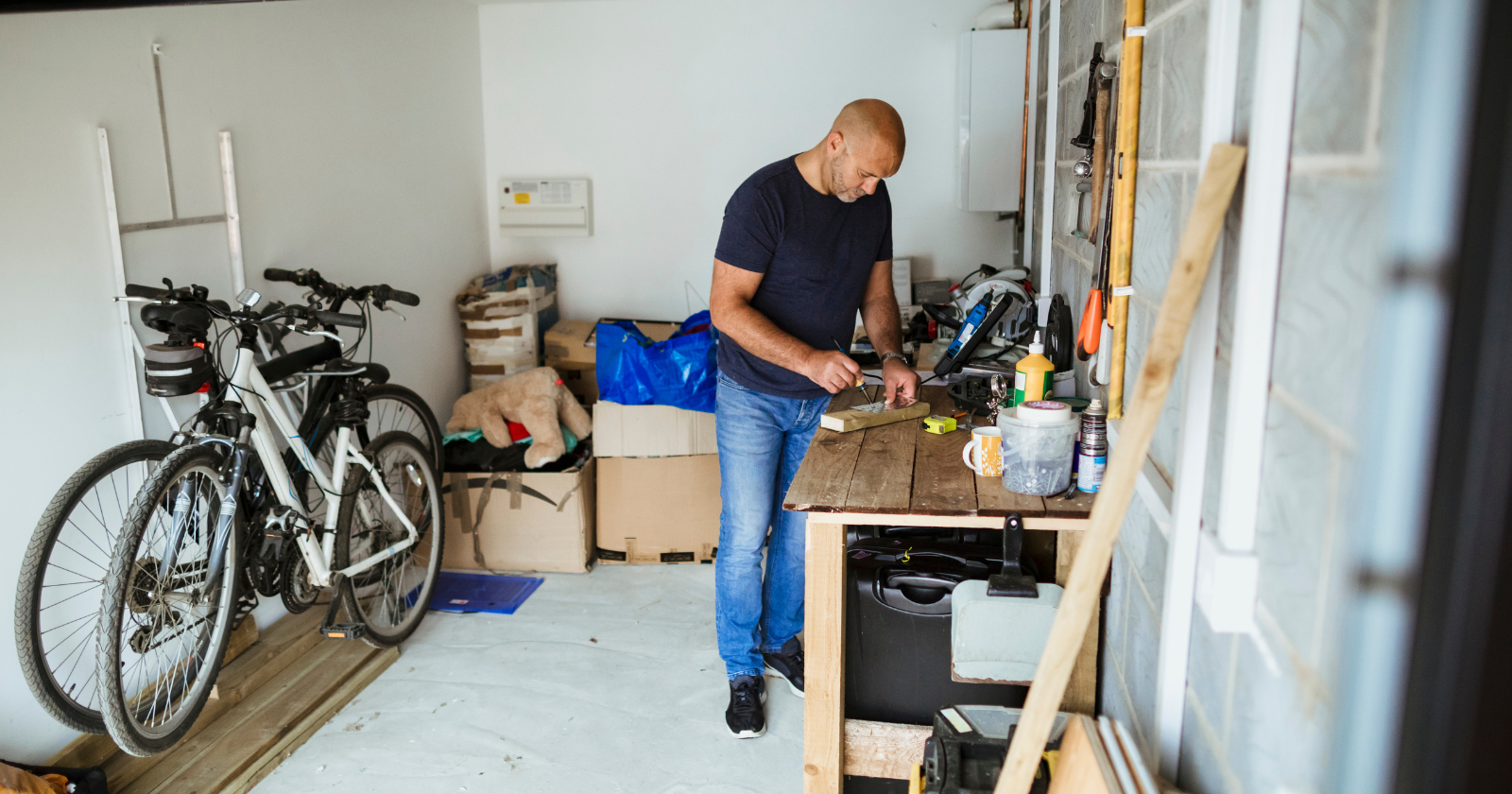
The smell hit me first. That specific blend of sawdust, motor oil, and WD-40 that meant Dad’s garage. Except this time, I was there to clean it out.
Three days after the funeral, I stood surrounded by forty years of accumulated potential. A router still in its box. Premium chisels wrapped in plastic. A complete set of carving tools he’d bought for “when things slow down.”
Each tool represented a project that would never happen, a skill that would never be learned, a creation that would never exist.
My father spent decades preparing to live. He died having never started.
That afternoon in his garage broke something loose in me. At 41, I’d been following the same script: accumulating resources for some future version of myself who’d finally have time.
Training materials for courses I’d teach “eventually.” Books on skills I’d develop “when work calms down.” Equipment for hobbies I’d pursue “after this next deadline.”
I was living in permanent preparation mode, and that garage showed me exactly where it leads.
1. The future self is a terrible investment advisor
Here’s what nobody tells you about postponing life: you’re betting everything on a person who doesn’t exist.
Your future self isn’t sitting around waiting for you to deliver all these tools and opportunities. That person will have their own pressures, their own excuses, their own perfectly logical reasons to push things off another year.
I know because I’ve been having the same conversation with myself since my thirties. “Next quarter will be quieter.” “After this project ships.” “Once I hit this financial target.”
Meanwhile, the guitar sits unplayed. The workshop stays unbuilt. The trip remains unbooked.
We treat our future selves like they’ll be these enlightened beings with infinite time and zero obligations. But every future self I’ve met has been remarkably similar to my current self, just older and more tired.
After cleaning out that garage, I implemented a simple rule: If I wouldn’t start something this week, I don’t buy the equipment for it. No more investing in hypothetical hobbies. No more collecting tutorials for skills I’ll learn “someday.”
The result? I’m actually doing things instead of preparing to do them.
2. Waiting for perfect conditions is planning to fail
My dad wanted to build custom furniture. He had books on joinery, DVDs on technique, magazines with plans. He was waiting for the right workspace, the right tools, enough uninterrupted time.
He never made a single piece.
This perfectionist postponement shows up everywhere. People wait to start businesses until they have the perfect idea. They delay difficult conversations until they find the perfect words. They postpone fitness until they can afford the perfect program.
The perfect moment is a myth we tell ourselves to avoid the discomfort of starting badly.
I spent years believing I needed long blocks of uninterrupted time to write anything worthwhile. Then I started writing in twenty-minute windows between meetings. Turns out, consistency beats perfect conditions every time.
Now I use what I call “minimum viable attempts.” Want to learn something? Start with fifteen minutes today, not a weekend workshop next year. Want to build something? Make the crappiest possible version this afternoon.
Progress happens in the gaps between what you’re already doing, not in the mythical free time that never arrives.
3. Your capacity is shrinking while you wait
Here’s the part that stings: every year you wait, starting gets harder.
At 25, you’ll sleep on airport floors and think it’s an adventure. At 45, you need three days to recover from a red-eye flight.
At 30, you can pivot careers without blinking. At 50, the thought of learning new software makes you tired.
This isn’t about age discrimination. It’s about accumulated friction. Every year adds responsibilities, reduces risk tolerance, increases the cost of change. The window doesn’t close suddenly. It narrows so gradually you don’t notice until you’re trying to squeeze through.
My dad thought retirement would be his renaissance. He’d have time, money, and freedom. What he didn’t account for was diminished energy, health issues, and decades of ingrained routine that made starting anything feel impossible.
I see this with people I’ve trained. The ones who delay taking on challenging projects “until they’re ready” often never feel ready. Meanwhile, the ones who jump in too early figure it out through necessity.
Stop waiting for readiness. Start before you’re ready, while you still have the capacity to be bad at something without it destroying your ego.
4. The compound effect works on regret too
Every choice compounds. That’s not motivational fluff. It’s math.
Skip the gym today, and tomorrow’s skip becomes easier. Delay a hard conversation this week, and next week it feels impossible. Put off learning something new this year, and next year you’re further behind.
But here’s what I didn’t understand until that garage: regret compounds faster than missed opportunities.
Each unused tool in my father’s collection represented not just one missed project but dozens.
That router could have built furniture, taught skills to grandkids, started a small business, connected him with other craftsmen. One decision to wait eliminated hundreds of downstream possibilities.
I keep a list now. Not of goals or dreams, but of specific things I’ve decided not to wait for. Called my brother instead of “catching up soon.” Signed up for the workshop instead of “researching options.” Booked the trip instead of “when prices drop.”
Each action is small. Combined, they’re the difference between a life lived and a life rehearsed.
5. Nobody’s impressed by what you could have done
That garage full of tools was impressive. Probably $30,000 worth of equipment. Professional grade. Meticulously organized.
Completely worthless.
Tools don’t create value sitting on shelves. Knowledge doesn’t matter if it stays theoretical. Potential means nothing if it remains potential.
We live in a culture that celebrates preparation. We admire people who are “working on” things, “planning to” launch something, “thinking about” making changes. We mistake motion for progress, preparation for action.
But at the end, nobody cares what you could have done. Your obituary won’t list your intentions.
After the funeral, people shared memories of my dad. Not one person mentioned his tools, his plans, or what he was preparing to do. They talked about what he actually did: the help he gave, the projects he completed, the presence he provided.
Since then, I’ve shifted from optimizing decisions to optimizing action. Instead of researching the best approach, I start with any approach. Instead of planning the perfect project, I ship the imperfect one.
Bottom line
That garage taught me that life isn’t a dress rehearsal. There’s no perfect time coming when you’ll finally use all those resources you’re accumulating.
Start the project with wrong tools. Have the conversation with imperfect words. Take the trip before you can afford it. Learn the skill badly. Create something embarrassing.
The alternative isn’t patience or wisdom or preparation. The alternative is a garage full of unused potential and a life spent waiting for someday.
My dad died ready for everything and having done very little. I’d rather die unready, having tried everything.
The tools are meant to be used. The time is meant to be spent. The life is meant to be lived.
Today, not someday.
