
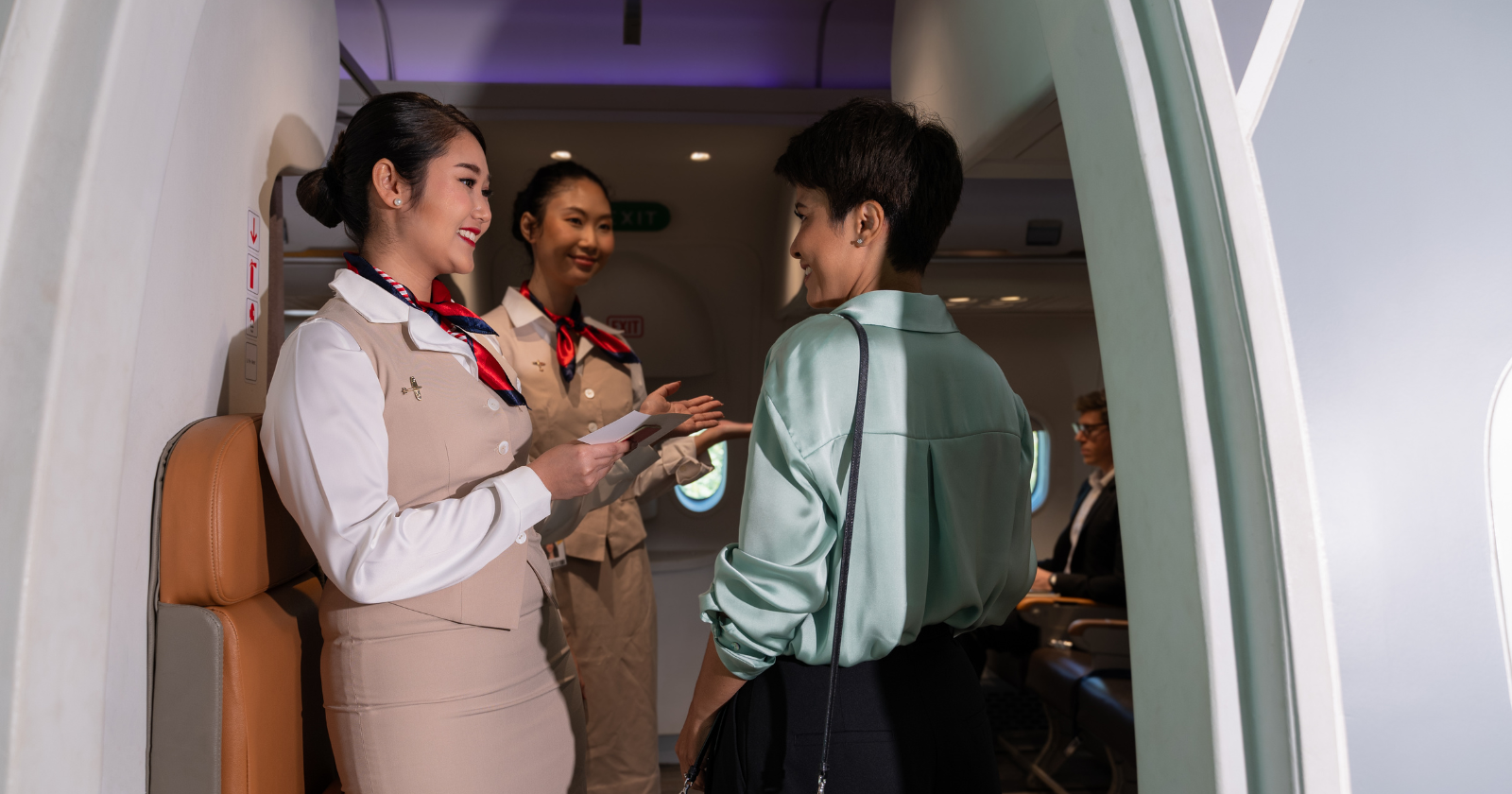
I spent six years consulting for an airline’s brand team, and here’s what shocked me most: flight attendants can predict exactly which passengers will cause problems, demand special treatment, or help during emergencies before those passengers even reach their seats.
They’re not psychic. They’re reading signals you don’t realize you’re broadcasting.
During my research phase, I shadowed crews on dozens of flights, interviewed veteran attendants, and watched them call passenger behavior with eerie accuracy.
One attendant with twenty years’ experience told me she knew within three seconds who would press the call button fifteen times versus who would help if turbulence got rough.
At first, I thought this was confirmation bias. Then I started tracking their predictions against actual flight outcomes. Their accuracy rate? North of 80 percent.
What are they seeing that the rest of us miss?
1) How you acknowledge them at the door
This isn’t about being friendly versus unfriendly. It’s about what your greeting style reveals.
The passenger who makes brief eye contact and gives a genuine nod? They’re signaling respect for shared space. The one who walks past like the attendant is furniture? They’ve just announced they view service staff as props in their personal theater.
But here’s where it gets interesting. The overly effusive greeting, the one that feels performed, sets off different alerts. Flight attendants know this passenger needs something: validation, special attention, or they’re compensating for anxiety about flying.
I watched an attendant correctly predict that a passenger who gave an elaborate greeting would later have a meltdown about overhead bin space. She was right.
The sweet spot is authentic acknowledgment. Not a performance, not invisibility. Just human recognition.
2) Your boarding energy
Are you moving with urgency or entitlement?
Flight attendants can instantly spot the difference between someone rushing because they’re late (urgency) versus someone rushing because they believe their time matters more (entitlement).
The urgent passenger usually looks apologetic, makes themselves smaller, tries not to inconvenience others. The entitled passenger? They barrel through like everyone else is an obstacle course.
One attendant told me she watches for what she calls “bulldozer energy.” These passengers don’t just move through space, they claim it. They’re the ones who will later demand seat changes, argue about policies, and treat delays like personal attacks.
3) How you handle your carry-on
This is a masterclass in reading someone’s relationship with rules and consideration.
The passenger struggling with an obviously oversized bag? They’re telling everyone they believe rules are suggestions. But it goes deeper. Watch how they react when it doesn’t fit. Do they problem-solve quietly or immediately look for someone to fix it for them?
I witnessed an attendant predict with perfect accuracy which passenger would later demand free drinks based solely on how they handled their bag situation. The tell? They made their spatial problem everyone else’s emergency.
The passengers who gate-check without drama when asked? They’re the ones who will help during medical emergencies.
4) Your phone behavior while boarding
This isn’t generational judgment about phone use. It’s about what your phone behavior signals regarding awareness and respect.
The passenger on a loud call while blocking the aisle? They’re announcing that their bubble of importance extends three feet in every direction. These are the passengers who will later act shocked when asked to follow basic safety protocols.
But here’s the subtle tell: how someone ends a call when they need to interact with crew. The abrupt “I’ll call you back” with eye contact shows adaptability. The person who keeps talking while mouthing “one second” to the attendant? They’ve just revealed their hierarchy of importance.
5) Your reaction to your seat
Everyone does a quick seat assessment. What matters is what happens next.
The immediate eye roll or audible sigh? That passenger will complain about everything from temperature to turbulence, as if the flight crew controls weather patterns.
The most telling reaction is entitlement masquerading as surprise. “Oh, I thought I booked an aisle seat.” No, you didn’t. You’re testing boundaries to see if you can upgrade through manipulation.
One veteran attendant told me she can spot the “seat shoppers” instantly. They scan the plane like they’re at an open house, already planning their move to that empty row.
6) How you treat the safety demonstration
Ignore it completely? You’re not necessarily a problem passenger, just someone who flies frequently.
But actively disrespecting it? Loud conversation, exaggerated eye rolls, making jokes? You’ve just identified yourself as someone who thinks rules are for other people.
The real tell is the passenger who makes a show of ignoring it. They’re not just tuning out; they’re performing their superiority. These passengers invariably have issues with service speed, drink options, and anything else that suggests they’re not receiving VIP treatment.
7) Your settling-in ritual
Some people nest, some people spread, some people disappear into their seats.
The spreaders are the ones to watch. Not because they take up space, but because of how they take it. Do they colonize the shared armrest immediately? Do their belongings creep into their neighbor’s floor space?
I watched an attendant accurately predict a passenger confrontation based on how one person arranged their items. The passenger who treats shared space like annexed territory will always cause friction.
The passengers who keep their space contained and organized? They’re usually the ones offering to switch seats so families can sit together.
8) Your response to minor inconvenience
The overhead bin above your seat is full. Someone’s already in your assigned seat. The flight is delayed five minutes for final boarding.
Your reaction to these micro-frustrations reveals everything.
The passenger who immediately escalates to the crew? They’ll be a problem for the entire flight. But the passenger who dramatically performs their frustration for other passengers? They’re recruiting allies for later complaints.
The telling response is problem-solving versus expecting to be solved for. One shows resilience, the other reveals someone who views every inconvenience as someone else’s failure.
9) Your bathroom timing
This sounds absurd until you understand the psychology.
The passenger who jumps up to use the bathroom the second the seatbelt sign turns off isn’t just dealing with a small bladder. They’re often the same passengers who will push boundaries all flight long. They’ve been waiting to assert their freedom.
The real indicator? The passenger who gets up during meal service or right when the cart blocks the aisle. They’re showing that their needs operate on a different timeline than everyone else’s.
One attendant called these passengers “chronological narcissists.” Their internal clock is the only one that matters.
Final thoughts
After months of observation, here’s what struck me most: flight attendants aren’t judging your worth as a person. They’re doing rapid threat assessment for a metal tube flying at 30,000 feet.
They’re identifying who will help if something goes wrong, who will make it worse, and who will need managing.
The passengers who get identified as problems aren’t bad people. They’re people who’ve forgotten that shared space requires shared consideration.
Want to be the passenger flight attendants appreciate? It’s simpler than you think. Acknowledge that you’re in a temporary community with shared goals: everyone gets there safely, everyone gets there sanely.
The signals you send in those first three seconds set the tone for whether you’re part of the solution or someone who needs to be managed around.
Choose wisely. The crew already knows which one you’ll be.
