
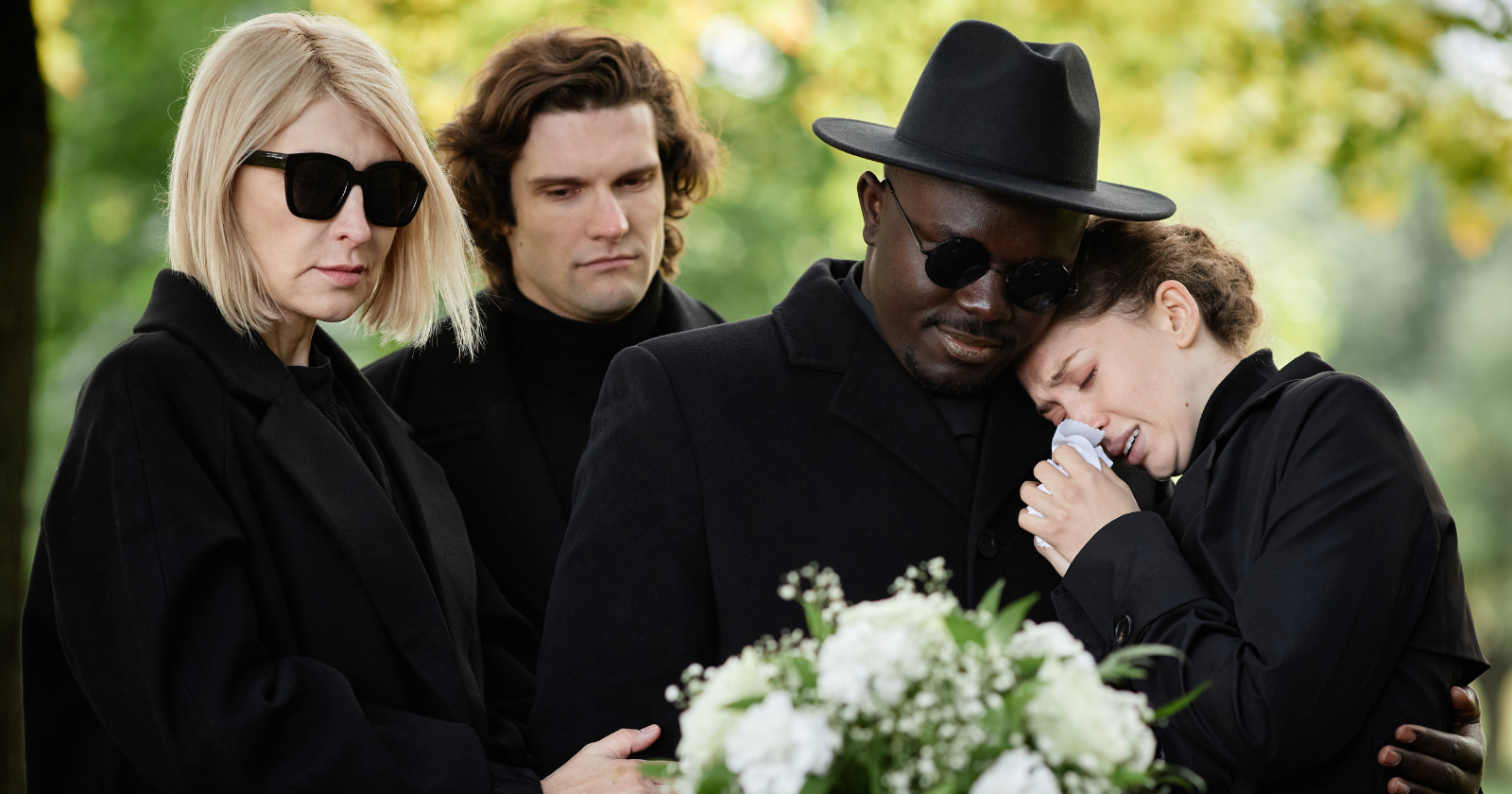
Funerals strip away our usual performances. I’ve been to enough of them now to see patterns that took decades to recognize.
Last month, at a former colleague’s service, I watched the same dynamics play out that I’d seen dozens of times before. The fascinating thing wasn’t the grief itself, but how people revealed their true character when they thought no one was watching.
After six decades of observing human behavior in boardrooms and break rooms, I’ve learned that funerals are where masks slip: The social pressure is different, and the usual rules feel suspended.
In that strange space between grief and social obligation, people show you exactly who they are.
The behaviors I’m about to describe aren’t about judging anyone’s grief.
Grief is personal and unpredictable, but how people navigate the social aspects of funerals?
That tells you everything about their character, their insecurities, and what really drives them when the spotlights are off.
1) They arrive exactly on time, not early
Watch who arrives when at a funeral. The genuinely grieving often arrive early, seeking quiet moments before the crowd.
The attention-seekers arrive precisely on time or just after the service starts, ensuring maximum visibility for their entrance.
I noticed this pattern years ago when a respected mentor passed.
Those who truly cared about him were there thirty minutes early, helping the family, adjusting flowers, or simply sitting quietly.
Then came the parade of people who needed to be seen arriving, who paused at the door to compose their “grief face” before walking in.
People who arrive exactly on time at funerals are often the same ones who treat relationships as transactions.
They’ve calculated the minimum acceptable gesture. They’re there because absence would be noticed, not because presence matters to them.
Watch them afterward; they’ll make sure key people see them, then slip out during the reception when no one’s looking.
2) They monopolize the grieving family
Nothing reveals narcissism quite like someone who corners the widow for twenty minutes at the viewing.
I’ve watched this happen repeatedly. While others wait patiently to offer brief condolences, there’s always someone who treats their moment with the family as their personal therapy session.
These are the people who make every conversation about themselves.
At funerals, they’re using grief as a stage.
They’ll tell long stories about their own losses, offer unsolicited advice about “moving on,” or worse, use the moment to network or gossip.
The truly compassionate understand that funerals aren’t about them.
They offer brief, sincere condolences and move on, allowing others their moment. They understand that the grieving family is exhausted, overwhelmed, and doesn’t need to comfort anyone else right now.
3) They police other people’s grief
Ever notice someone at a funeral who seems more concerned with how others are grieving than with their own feelings?
These self-appointed grief police reveal a deep need for control and superiority.
They’ll whisper about who’s crying “too much” or “not enough.”
They’ll judge the eulogy, critique the flower arrangements, or comment on who should or shouldn’t be there.
I watched one woman spend an entire service monitoring who was texting, then report her findings during the reception like she’d performed a public service.
People who police grief at funerals are the same ones who police everything else in life.
They’re so busy judging others that they never genuinely connect with anyone. Their need to feel superior overrides basic human compassion.
4) They use the eulogy as their moment
Some people can’t resist an audience, even at a funeral.
When they speak, it becomes less about the deceased and more about their own performance.
They’ll prepare elaborate speeches, complete with dramatic pauses and voice breaks at predetermined moments.
I remember one funeral where a distant acquaintance spoke for fifteen minutes, mostly about his own accomplishments and how the deceased had witnessed them.
The family sat there, too polite to intervene, while he turned their loved one’s memorial into his personal TED talk.
Genuine eulogies are brief, focused on the deceased, and come from the heart without calculation.
People who hijack eulogies reveal their desperate need for attention and their inability to recognize when something isn’t about them.
The phone comes out before they’ve even left the parking lot.
Sometimes during the service itself. They’re crafting the perfect post about loss, complete with photos from the funeral and long paragraphs about their feelings.
These people treat grief as content. They’re more concerned with appearing sensitive online than actually being present for the grieving family.
I’ve seen people take selfies at gravesides, post photos of the casket, and live-tweet eulogies.
What this reveals is a person who experiences life through the lens of how it will play to an audience.
They can’t have an authentic emotion without immediately packaging it for consumption.
Their need for validation overrides basic respect and dignity.
6) They make dramatic promises they won’t keep
“I’ll check on you every week.”
“Anything you need, just call.”
“I’ll help you go through his things.”
Funerals are full of these promises, made in the emotion of the moment, but watch who actually follows through.
The performers make the biggest promises, usually in front of others.
They need everyone to hear how caring they are. Two weeks later, they’ve disappeared completely.
The genuinely caring make smaller, specific offers and then actually show up.
I keep track of these things in my notebook. Not to judge, but to understand patterns.
The people who make grand public promises at funerals are usually the same ones who overpromise in every area of life.
They’re addicted to the immediate gratification of looking good, not the sustained effort of being good.
7) They gossip at the reception
The reception is where true character really emerges.
While some people share warm memories or comfort each other, others treat it as a networking event or gossip session.
They’re in the corner discussing the will, critiquing the service, or catching up on completely unrelated drama.
I once overheard two people at a funeral reception discussing their vacation plans in detail while the widow sat alone ten feet away.
They weren’t bad people, just completely unable to read a room or prioritize anything beyond their own interests.
People who gossip at funeral receptions are revealing their fundamental discomfort with genuine emotion.
They retreat to the familiar territory of small talk and scandal because sitting with grief, even someone else’s, is too uncomfortable for them.
Closing thoughts
Funerals reveal character because they’re one of the few occasions where our usual social scripts don’t quite apply.
We’re off-balance, uncertain of the rules, and our true priorities emerge.
The person who needs attention will find a way to get it, the person who avoids discomfort will flee to gossip, and the person who genuinely cares will show up without fanfare and stay without recognition.
My rule of thumb: At funerals, do the opposite of what would get you noticed.
Arrive early if you can help, or slip in quietly if you can’t.
Keep your condolences brief, put your phone away, and make specific, modest offers of help, then follow through.
Share a memory if asked, but keep it about the deceased.
Above all, remember that this day isn’t about you.
The measure of character is what we do when we think no one’s paying attention.
Funerals, in their strange way, reveal both.
