
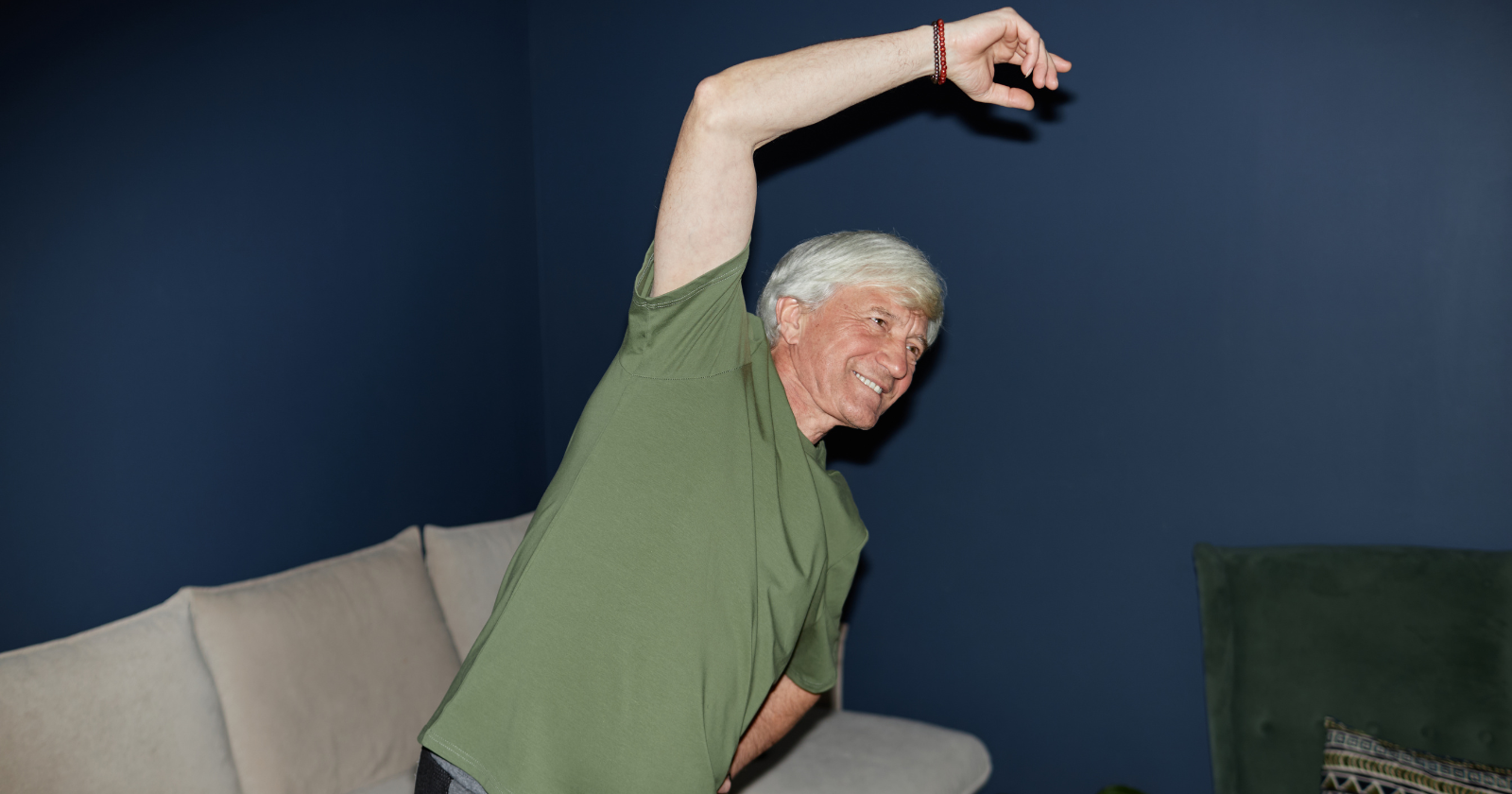
You know that afternoon slump that hits around 2 PM, when your back aches from hunching over your laptop and your brain feels like it’s running on dial-up?
Last week, I watched a colleague literally groan as he stood up after a three-hour meeting marathon. He’s 62, sharp as hell, but his body was staging a revolt. “Getting old sucks,” he muttered, doing that lower-back grab we all recognize.
Here’s what nobody tells you about aging: the real enemy isn’t time. It’s stillness.
After spending years training high performers and now working remotely, I’ve discovered something counterintuitive. You don’t need hour-long workouts or complicated routines to stay mobile and sharp. You need movement snacks.
Quick hits of motion that take less than a minute but compound into massive differences over time.
Think of these as micro-investments in your future mobility. Each one takes 45 to 60 seconds. String a few together throughout your day, and you’re essentially hacking your body’s aging process while everyone else is complaining about their stiff neck.
1) The desk prisoner’s escape
Every two hours, push your chair back and do ten slow, controlled stand-ups without using your hands. Just plant your feet shoulder-width apart and rise using only your legs.
This isn’t about building muscle. It’s about reminding your glutes and quads that they exist. Most of us sit so much that our largest muscle groups basically go dormant.
Those muscles control how you move through space, how stable you feel walking up stairs, and whether you can get up from the floor without looking like a turtle on its back.
I started doing this after realizing I was using my desk to push myself up after long writing sessions. That’s when it hit me: I was 39 and already compensating for weakness I didn’t know I had.
Count to three on the way down, pause, then stand. That’s it. Your future self will thank you when you’re still getting up from restaurant booths without the armrest assist.
2) The shoulder liberator
Stand in a doorway. Place your right hand on the frame at shoulder height, then slowly turn your body left until you feel a stretch across your chest. Hold for 30 seconds, switch sides.
This one’s non-negotiable if you work at a computer. Every hour you spend hunched forward tightens your chest muscles and weakens your back. It’s why so many people over 50 walk around looking like question marks.
The doorway stretch reverses that forward pull. You’re literally opening up the front of your body while giving your spine a chance to remember what neutral feels like.
3) The hip unhinger
Stand behind your chair, hands on the backrest. Step your right foot back about three feet, keeping both heels on the ground. Lean forward slightly until you feel a stretch in your right hip flexor. Hold 30 seconds, switch.
Your hip flexors are the hidden villain in most back pain stories. They connect your legs to your spine, and when they’re tight from sitting, they yank on your lower back like an angry toddler.
This stretch is stupidly simple but addresses the root cause of why getting out of cars becomes a production after 60. Keep those hip flexors mobile, and you maintain the ability to move fluidly instead of in segments.
4) The neck reset
Sitting or standing, slowly turn your head to look over your right shoulder. Hold for 15 seconds. Return to center, then left. After both sides, slowly tilt your ear toward your shoulder on each side.
Sounds basic? It is. That’s the point.
Most of us haven’t turned our heads fully in months. We pivot our entire torso to look behind us because our necks have forgotten they can move independently. This creates a cascade of compensation patterns that eventually make driving genuinely dangerous.
Forty-five seconds of intentional neck movement keeps you from becoming one of those people who can’t parallel park anymore because checking blind spots requires a chiropractor.
5) The balance challenge
Stand on one foot for 30 seconds while you’re waiting for coffee to brew or during a phone call. Switch feet. That’s it.
Balance is the first thing to go and the last thing we notice. By the time you realize you’re wobbly, you’ve already lost significant stability. Single-leg stands force all those small stabilizing muscles to fire, maintaining the proprioception that keeps you upright on uneven surfaces.
I do these during my morning coffee routine. Nobody needs to know you’re essentially doing physical therapy while checking emails.
6) The wall angel
Stand with your back against a wall, feet about six inches away from it. Press your lower back, shoulders, and head against the wall. Raise your arms to make a goalpost position, keeping everything in contact with the wall. Slowly raise and lower your arms ten times.
This move exposes every postural sin you’ve committed. Can’t keep your lower back pressed? Anterior pelvic tilt. Shoulders won’t stay back? Rounded shoulders from too much screen time.
The beauty is that just attempting this movement starts fixing these issues. It’s like a diagnostic and treatment in one 60-second package.
7) The ankle awakener
While seated, lift your right foot slightly and draw the alphabet with your toes. Takes about 30 seconds. Switch feet.
Ankle mobility determines whether you trip on sidewalk cracks or navigate them smoothly. It affects your knee health, your gait, and your ability to react when you step wrong.
Most people don’t think about ankles until they sprain one. Then suddenly, you realize these joints are the foundation of every step you take.
8) The spinal twist
Sitting in your chair, cross your right arm over to grab the left armrest. Turn your torso left, using your arm to gently increase the twist. Hold 30 seconds, switch sides.
Your spine is designed to rotate. When we stop asking it to twist, it forgets how. This is why picking something up from the backseat becomes a whole operation instead of a simple reach.
This twist maintains the rotational capacity that lets you play with grandkids on the floor without planning your exit strategy.
Bottom line
These movements aren’t exercise. They’re maintenance.
You wouldn’t drive a car for years without oil changes, yet most of us treat our bodies exactly that way. We sit for decades, then wonder why everything hurts when we hit 60.
Start with two or three of these movement snacks. Set phone reminders if you need to. The goal isn’t perfection but consistency. Do them while you’re on calls, between meetings, or during commercial breaks.
The difference won’t be dramatic next week or next month. But in five years, when your peers are shopping for grabber tools and you’re still touching your toes, you’ll understand the compound effect of 60-second investments.
Movement isn’t about the gym. It’s about refusing to let stillness win.
