
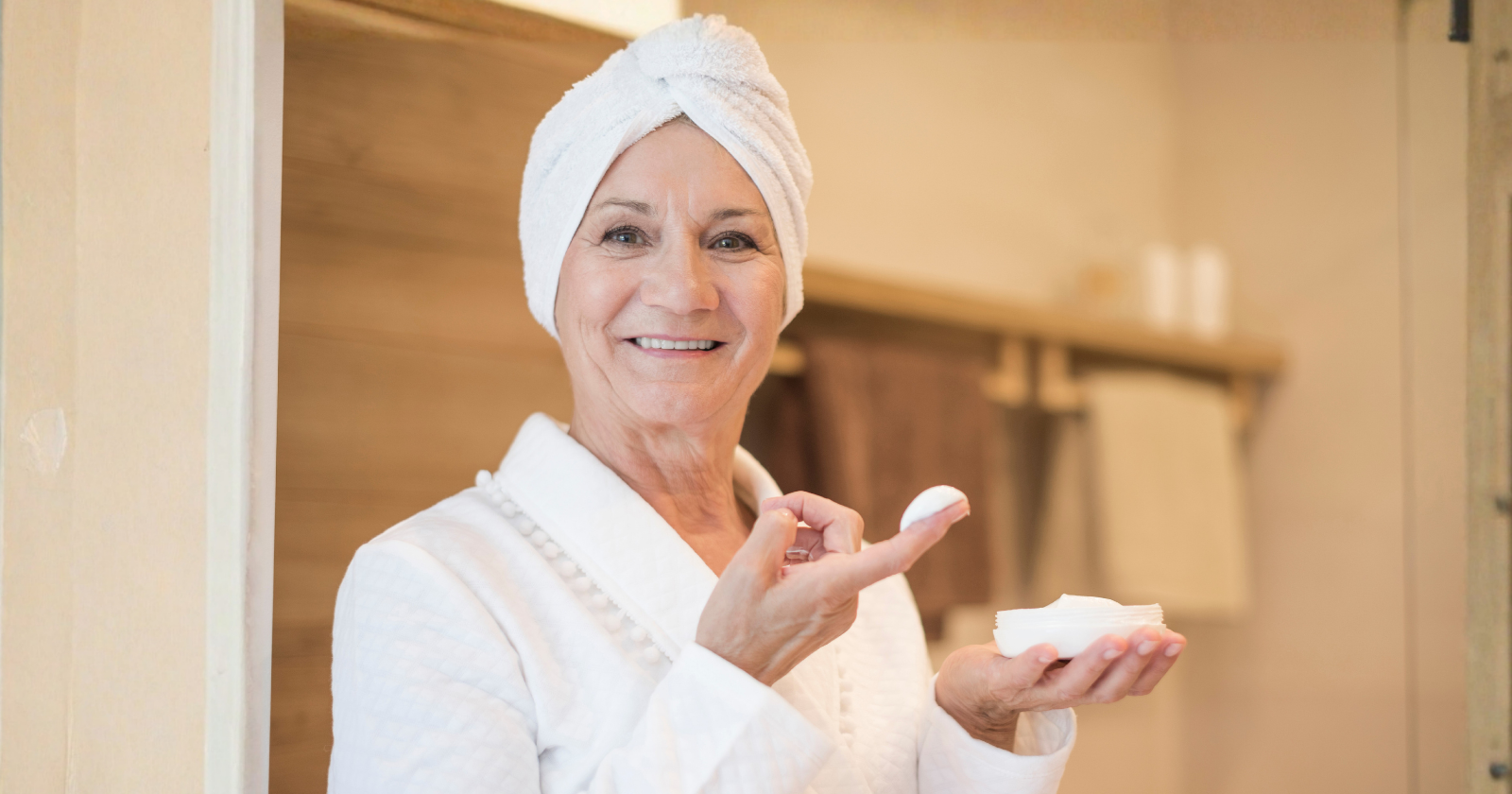
Every time I scroll past another 47-step skincare routine or watch someone layer six different serums, I think about my grandmother’s medicine cabinet. Three products, maybe four. A jar of cold cream, some rose water, and that blue tin of Nivea that seemed to last forever.
She died with better skin than most people have at 40.
Here’s what’s funny: while we’re out here chasing the latest K-beauty innovation or peptide complex, researchers keep validating what our grandmothers did naturally. Those simple habits they practiced without thinking twice? Turns out they were onto something.
I spent last month digging through studies and talking to dermatologists about this exact phenomenon. What I found was both validating and slightly annoying. All those “outdated” beauty practices we dismissed as quaint? Science is quietly proving them right.
1. They removed their makeup with cold cream
Remember those heavy white creams in glass jars? The ones that felt like spreading butter on your face? Our grandmothers swore by them, and we collectively decided they were too heavy, too greasy, too everything.
Except they weren’t wrong.
Cold cream works on a principle called “like dissolves like.” The oils in cold cream dissolve makeup and sunscreen better than most water-based cleansers. A 2019 study published in the Journal of Cosmetic Dermatology found that oil-based cleansers were significantly more effective at removing both makeup and sunscreen without disrupting the skin barrier.
My grandmother would slather it on, tissue it off, then rinse with warm water. No ten-step double cleanse. No micellar water followed by foam cleanser followed by toner. Just cold cream and done.
The kicker? Most dermatologists I spoke with said over-cleansing is one of the biggest mistakes they see. We’ve complicated something that was already working.
2. They used petroleum jelly for everything
Vaseline was the Swiss Army knife of beauty products. Dry lips? Vaseline. Rough elbows? Vaseline. Want your cheekbones to catch the light? Tiny bit of Vaseline.
Modern skincare culture has demonized petroleum jelly as pore-clogging and cheap. But dermatologists keep recommending it because it’s one of the most effective occlusive agents available. It reduces water loss from skin by up to 98%.
I watched women in my family use it as eye cream for decades. No fancy peptides, no retinol alternatives. Just a tiny dab of petroleum jelly patted around the eyes before bed. Their crow’s feet showed up about 15 years later than mine did.
The research backs this up. Petroleum jelly is non-comedogenic for most people and creates a protective barrier that allows skin to repair itself. It’s also one of the least likely substances to cause allergic reactions.
3. They kept their beauty routines incredibly simple
Three products. Maybe four on a fancy day. That was the whole routine.
Compare that to now, where the average woman uses 12 products daily. We’ve been sold on the idea that more steps equal better results, but research suggests otherwise. According to dermatologists, using too many products at once can irritate your skin and cause ingredient interactions that cancel out the benefits you’re trying to achieve.
The women I grew up around had one cream for day, one for night, and maybe something special for Sunday. They used the same products for years, letting their skin adapt instead of constantly introducing new ingredients.
There’s something to be said for this consistency. Every new product is a potential irritant. Every new routine is a disruption. Our grandmothers’ skin had decades to adjust to the same gentle formulas.
4. They protected themselves from the sun with physical barriers
Before SPF ratings and chemical sunscreens, women protected their skin the old-fashioned way. Big hats. Parasols. Staying in the shade during peak hours.
They weren’t being precious. They were being practical.
Physical sun protection is still the gold standard. Clothing and shade provide more reliable protection than any sunscreen. A wide-brimmed hat blocks about 50% of UV rays to the face. Add sunglasses and a scarf, and you’ve covered most vulnerable areas without worrying about reapplication.
My grandmother never left the house without her hat between April and October. She called it “keeping her complexion.” We called it old-fashioned. The dermatologists call it smart.
5. They got their beauty sleep (literally)
“Beauty sleep” wasn’t just a cute phrase. These women prioritized their eight hours like it was a religious obligation.
They were right. A 2013 study from University Hospitals Case Medical Center found that poor sleep quality accelerates skin aging and reduces the skin’s ability to recover from environmental stressors.
But here’s what they did that we don’t: they had actual bedtime routines. Not the Instagram version with 20 products and jade rollers. Real routines. Wash face, apply cream, maybe pin curls, lights out by 10 PM.
No screens. No scrolling. No “just one more episode.”
They treated sleep like the beauty treatment it actually is.
6. They drank water and ate real food
There were no beauty supplements. No collagen powders. No beauty gummies.
Just water, vegetables, and whatever was in season.
The connection between diet and skin health is now well-documented, but our grandmothers didn’t need studies to tell them that.
They saw the correlation between what they ate and how they looked. Pot roast might not be trendy, but the collagen from bone broth and the vitamins from root vegetables did more for their skin than most supplements do now.
They also drank water. Not vitamin water or alkaline water or whatever we’re calling it this week. Just water. From the tap. All day long.
Revolutionary, right?
7. They accepted aging as natural
This might be the most radical beauty habit of all: they expected to age.
Lines were normal. Gray hair happened. Skin changed texture. They worked with these changes instead of against them, adjusting their routines to support their skin at different life stages rather than trying to reverse time.
This acceptance might have been their secret weapon. Research shows that chronic stress accelerates aging at the cellular level. By not fighting every sign of aging, they might have actually aged more slowly.
There’s something profound about watching a woman who’s comfortable in her changing skin. My grandmother never apologized for her wrinkles. She earned them, she’d say. And somehow, that confidence made her more beautiful than any cream could have.
Final thoughts
After tracking “effortless” beauty signals for years, I’ve noticed something: the most expensive, strategic approaches often just recreate what used to be normal. We’re paying hundreds of dollars to achieve what our grandmothers got from drugstore cold cream and common sense.
I’m not saying we should abandon all modern skincare. Some innovations are genuinely helpful. But maybe we’ve overcomplicated something that didn’t need fixing.
These women understood something we’ve forgotten: skin is resilient when you let it be. It doesn’t need 15 products to function. It needs consistency, protection, and basic care.
The next time you’re tempted by another miracle serum or revolutionary routine, remember that the best skin of previous generations came from cold cream and patience. Sometimes the old ways aren’t outdated.
They’re just waiting to be rediscovered.
