
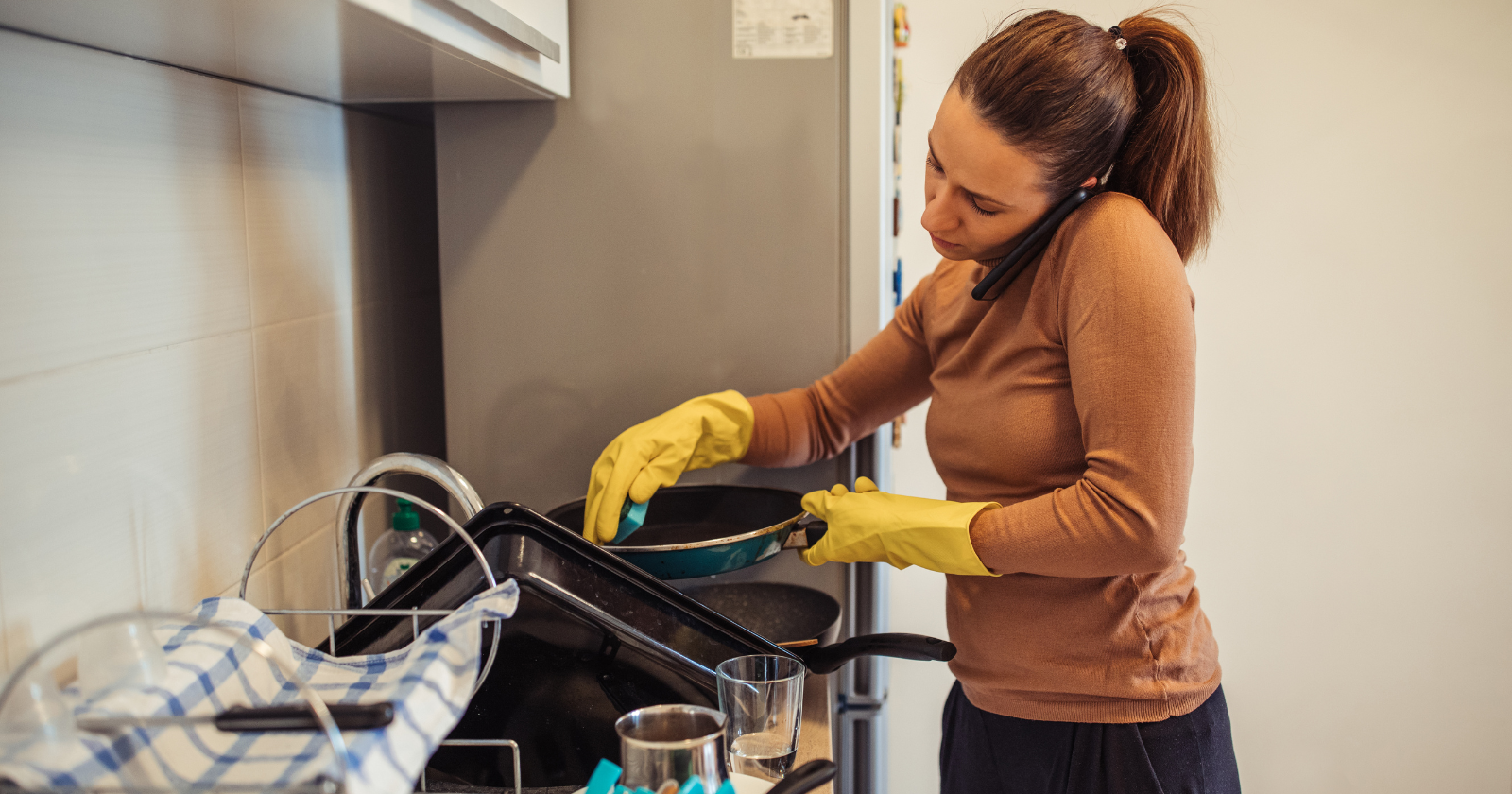
Two people make the same dish. Same kitchen, same recipe, same hour on a Sunday.
One finishes plating up with the counter wiped down, the cutting board already drying on the rack, and the spice jars back where they belong. The other finishes with the kitchen looking like a small natural disaster. Pans crusted, oil splattered, four bowls in the sink, garlic skins clinging to everything.
I noticed this pattern in my own home in Saigon, watching my wife cook with her mother. Their kitchen never looks like a battlefield, no matter how complicated the meal. And once I started paying attention to this behavior across the people I know, I realized the kitchen habit isn’t really about the kitchen at all. It’s revealing something about how a person is wired.
Psychology research backs this up. Here are five distinctive traits that tend to show up in people who clean as they cook.
1. They score high on conscientiousness
If you only know one personality trait, this is the one to know. Conscientiousness is one of the five major dimensions in the well established Big Five personality model, and it measures how organized, dependable, and goal directed a person is.
People high in conscientiousness create systems for managing their responsibilities. They think before acting. They consider long term consequences. They derive a small but real satisfaction from putting things back where they belong.
Cleaning as you cook is, in miniature, a perfect conscientiousness behavior. It requires you to value the future state of the kitchen more than the convenience of not breaking your flow. People high in this trait don’t have to force themselves to do it. They actively prefer it. The post dinner sink full of dishes feels worse to them than the small inconvenience of wiping down as they go.
This trait isn’t just about kitchens, by the way. Conscientiousness is also one of the strongest personality predictors of life outcomes including health, career success, and even longevity.
2. They have strong executive function
Cleaning while cooking isn’t a single task. It’s two tasks running in parallel, with constant low level switching between them. You’re stirring the sauce, washing the chopping board, turning the heat down, drying your hands, going back to the sauce.
This kind of fluid task switching is governed by what psychologists call executive function. Research on multitasking and task switching shows that holding multiple goals in mind and moving between them without losing track is a specific cognitive skill, and one that varies meaningfully between people.
Some people genuinely can’t do it. The moment they start cleaning, they lose track of the cooking. So they sensibly batch the work. Others can hold both threads with relative ease, and even find it pleasant.
If you instinctively wash the pan you just finished with while something simmers, that’s not just a habit. It’s a sign that your cognitive control machinery is humming along nicely.
3. They’re sensitive to environmental disorder
Here’s where it gets interesting.
People who clean as they cook aren’t necessarily more virtuous or disciplined than people who don’t. In many cases, they’re cleaning because they can’t comfortably ignore the mess. The disorder is genuinely bothering them.
This isn’t just personal preference. There’s research from UCLA psychologists Darby Saxbe and Rena Repetti showing that the way people describe their home environments correlates with their daily cortisol patterns. Women in their study who described their homes as cluttered showed flatter diurnal cortisol slopes, a pattern associated with chronic stress. Women who described their homes as restorative showed healthier cortisol profiles.
For some people, an accumulating mess in the kitchen isn’t just visually unpleasant. It registers in the body as low grade stress. Cleaning as they go isn’t a chore. It’s how they keep the cortisol down so they can actually enjoy cooking.
If you’ve ever felt your shoulders tighten as the counter fills with dirty bowls, you know exactly what I’m talking about.
4. They think about Future You
The single biggest mental shift behind cleaning as you cook is a small act of empathy directed at your future self.
The person who leaves everything for the end is, in effect, saying, “Future Me will deal with that.” The person who cleans as they go is saying, “I’d like to give Future Me a nice evening.”
This is what psychologists have studied for decades under the heading of delayed gratification. Walter Mischel’s famous marshmallow test research, in which preschoolers had to choose between one treat now or two treats after waiting, became one of the most cited paradigms in personality psychology. The ability to forgo a small immediate reward (in this case, plopping down on the couch the moment the cooking is done) for a larger delayed one (a clean kitchen and a relaxed evening) has been linked to a range of life outcomes.
It’s worth noting that more recent replications have shown that socioeconomic background plays a much bigger role in these life outcomes than originally thought. The trait of delaying gratification still matters. It just isn’t as deterministic as the early studies suggested.
What’s relevant here is the underlying orientation. People who clean as they cook have, somewhere in their wiring, a strong sense that Future Me is a real person whose evening is worth protecting. People who don’t have a more abstract relationship with their future self. That isn’t a moral failing. It’s a real cognitive style difference.
5. They have strong self-regulation
The final trait is the one that pulls the others together.
When you’re in the middle of cooking and the sauce smells good and the wine is poured and you’ve earned a minute on the couch, every part of you wants to stop. Washing the pan in that moment is not glamorous. It requires you to override an immediate impulse in service of a larger goal.
This is the basic muscle of self-regulation. It’s the capacity to choose what you do next based on something other than what you feel like doing.
People who clean as they cook are doing dozens of these tiny overrides a meal. None of them is hard on its own. But the cumulative habit reveals someone whose default operating system is “do the thing now, even when it’s slightly inconvenient.” This usually extends well beyond the kitchen. They tend to reply to emails the first time they read them. They tend to pay bills the day they arrive. They tend not to let small tasks pile up into one large dreaded one.
This isn’t because they’re naturally disciplined and you’re not. It’s because, somewhere along the way, they built a habit of finishing things in the same motion they started them. And the kitchen is one of the most visible places that habit shows up.
Final thoughts
None of this is to say that people who batch their cleaning are lazy or undisciplined. Plenty of brilliant, creative, productive people leave the kitchen looking like a crime scene. They’re just optimizing for a different thing. They want flow during the cooking, and they’re willing to pay for it at the end.
And if you’re a leave it all to the end cook, don’t worry. The traits above can be built, slowly, one wiped down counter at a time.
- People who reread the same text message five times before sending it aren’t being careful — they may be managing an old fear of being misunderstood
- 8 quiet signs someone has emotionally outgrown a friendship long before they’ve said anything about it
- Why some high performers feel emptier after a promotion than before — the milestone often arrives without the identity it was supposed to deliver
- 8 situations in life where a person’s true colors always come out, according to psychology
- Psychology says people who never post on social media but watch everyone else’s lives usually have these 8 characteristics
- 8 signs someone is genuinely classy (even if they don’t dress expensively)
