
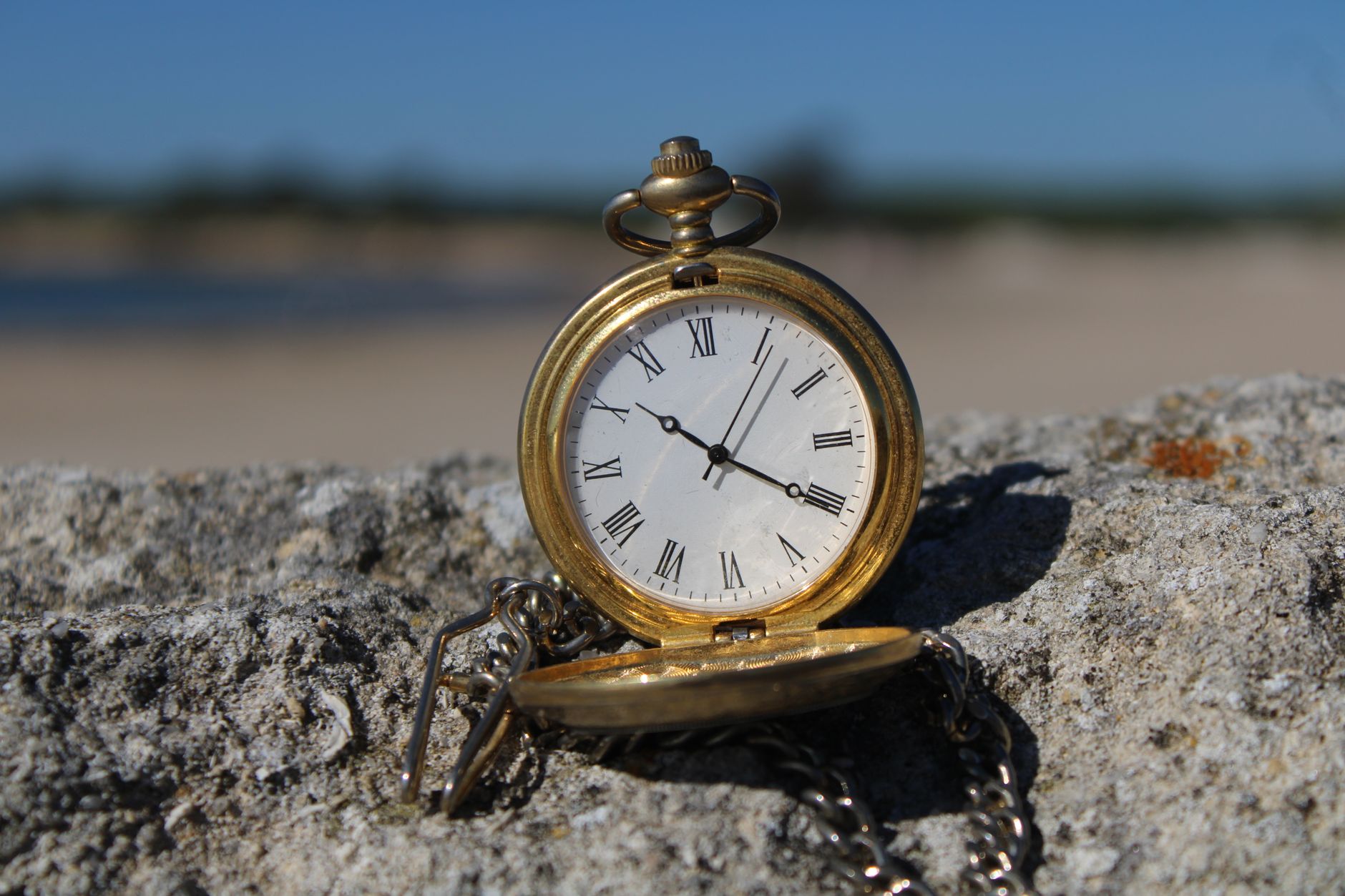
On October 21, 1927, British typist Mercedes Gleitze waded into the freezing Channel for a second time with a small gold watch tied around her neck on a ribbon. The water was punishing, and after more than ten hours she was lifted from the sea well short of the English coast — half-conscious, hypothermic, and still wearing a Rolex Oyster that was keeping perfect time. She never finished that swim. It didn’t matter. Weeks later, Hans Wilsdorf, the founder of Rolex, bought the entire front page of the Daily Mail to announce that the watch had survived. The advertisement, not the watch, is what built the modern luxury watch industry.
That single decision — to spend a fortune on a national front page instead of a trade-press notice — is one of the most studied moments in marketing history. It is also one of the least understood. Most people remember it as a clever stunt. It was something stranger: a calculated bet on how human attention, independently witnessed achievement, and physical proximity to a printed object combine to manufacture belief.
The swim nobody asked Rolex to sponsor
Gleitze had already crossed the Channel on October 7, becoming the first British woman to do so. Then a rival claimed a faster time, a claim quickly exposed as false. The scandal threatened Gleitze’s achievement by association, and she agreed to a second attempt — what became known as her “vindication swim” — to prove she could repeat the feat under witness. Wilsdorf, who had patented the waterproof Oyster case and was struggling to convince jewellers it was not a gimmick, saw an opening.
He sent a representative to Gleitze with an Oyster and a request: wear it. She did, tying it around her neck with a ribbon. The water was so cold that this second attempt was abandoned after more than ten hours, well short of the English coast — but a journalist in the support boat confirmed the watch was running when she was lifted out. That detail — a reporter, present, watching — is the entire mechanism. Without the journalist, there is no story. Without the story, there is no front page.
Why the front page mattered more than the watch
Wilsdorf understood something that behavioural researchers would only formalise decades later. A product claim made by the seller is discounted automatically by the buyer’s brain. A claim made by a third party, printed in a venue the buyer already trusts, is processed as fact. Buying the front page meant the proof of the Oyster’s waterproofing arrived inside the reader’s home, on the breakfast table, looking exactly like news.
A recent article on media psychology describes the way people live inside media environments rather than consume them. Framing influences perception. Repetition becomes truth. A front page is not a billboard — it is a context that tells the reader what counts as important today. Wilsdorf bought the context, not the column inches.
There is a more recent vocabulary for what he did. Brand strategists now describe it as predictive processing — the brain’s habit of building expectations from prior associations and treating new information as confirmation of what it already half-believes. By placing Rolex inside the visual language of hard news, Wilsdorf trained an entire generation of readers to file Oyster under verified fact, not advertiser’s claim.
The risk calculus he was actually running
Buying a national front page in 1927 was a bet that could have ended the company. Rolex was small. Wilsdorf had moved operations to Geneva to dodge British import duties on watch cases. Cash was tight. If the swim had gone unwitnessed, or if the watch had stopped, the ad money — and the credibility — would have evaporated together.
This is the kind of choice that analysis of cognitive biases in entrepreneurial decision-making describes as the productive edge of overconfidence. Founders who place oversized bets on unproven product claims tend to fail at high rates. The ones who succeed are remembered as visionaries. The survivor bias makes Wilsdorf look obvious in hindsight. He was not. He was a man with a new patent, a fragile reputation, and a swimmer who had nearly drowned proving his point.
What made the bet rational was the structure underneath it. The waterproof case actually worked. The journalist actually saw the watch ticking. Gleitze was a real athlete with a real record, not a paid model. Each layer of the story was independently verifiable, which meant the front-page claim could survive scrutiny. Building on the concept of effectuation in entrepreneurial ventures — the practice of building outcomes from the resources already at hand — Wilsdorf did not invent a campaign. He attached his product to something that was already going to be news.
What the campaign actually sold
The Oyster ad did not lead with the watch. It led with Gleitze. Her name, her record, her hours in the water. The watch appeared as a supporting witness — the object that had survived what she had survived. Customers were not being asked to admire a piece of engineering. They were being invited to associate Rolex with human endurance, with courage that had been independently witnessed, with the kind of achievement a serious newspaper would put on its front page.
This is the original template for what marketers now call experiential proof. A recent MarketingProfs piece on how experiential marketing creates lasting impact argues that emotional memory, not information, is what drives brand preference. Rolex did this in 1927 with a swimmer and a newspaper. The mechanism has not changed. The channels have.
The lesson modern brands keep half-learning
Every few years, a contemporary brand tries to repeat the Gleitze move. Extreme athletes at the edge of space, cameras mounted on anything that moves. The pattern is the same: find a real human doing a real difficult thing, attach the product as a credible witness, then buy distribution in a venue the audience already trusts. The brands that get it wrong skip the difficulty. They stage the event, hire the athlete, script the moment — and the audience smells it instantly.
The growth lesson sitting underneath the Rolex story is uncomfortable for most marketing teams. The campaign worked because the product worked. If the Oyster had leaked, no amount of front-page spend would have saved the company. Wilsdorf was not buying attention. He was buying amplification for a fact that already existed. Marketing teams that treat distribution as a substitute for product truth tend to discover the difference at scale.
Trust is the operating currency. The foundation of any new marketing technology is whether the audience believes the system is being honest with them. Wilsdorf’s front page worked because the implicit contract — newspaper as referee, swimmer as witness, watch as object under test — was honest. The reader could verify every link in the chain.
What the swim still teaches founders
The Oyster front page is studied in business schools as a marketing case. It is more usefully read as a case about product confidence. Wilsdorf bet the company on a claim he knew was true and arranged for the world to test it under conditions he did not control. That is a different posture from most modern launches, which try to manage every variable until the message arrives pre-chewed.
The operational discipline behind product fundamentals and the strategic use of sponsorship both trace back to the same insight Wilsdorf understood in the autumn of 1927. The story is the product. The product is the story. If one of them is fake, the audience will eventually find out, and the more famous the campaign, the harder the fall.
Gleitze recovered from the cold and continued her swimming career; her original October 7 record was upheld, confirming her as the first Englishwoman to swim the Channel. The Oyster she wore is now a prized piece of Rolex history. The Daily Mail front page Wilsdorf bought on November 24, 1927 is reproduced in marketing textbooks. And a small Swiss company that almost ran out of money became, within a generation, the most recognised watch brand on earth. Not because the ad was clever — because the watch was still ticking when they pulled her out of the water.
- 20 Easy Ways To Grow Your Company Facebook Page And Fans
- Smart Business: 20 Reasons To Review 2012 And Look Ahead To 2013
- Compete With The Big Guys: 5 Ways To Make Your Business Seem Larger Than It Is
- Service Ideas for eCommerce Customers
- Top 6 Reasons To Improve Your Cash Flow in 2018
- What You Need To Know Before You Export To The US