
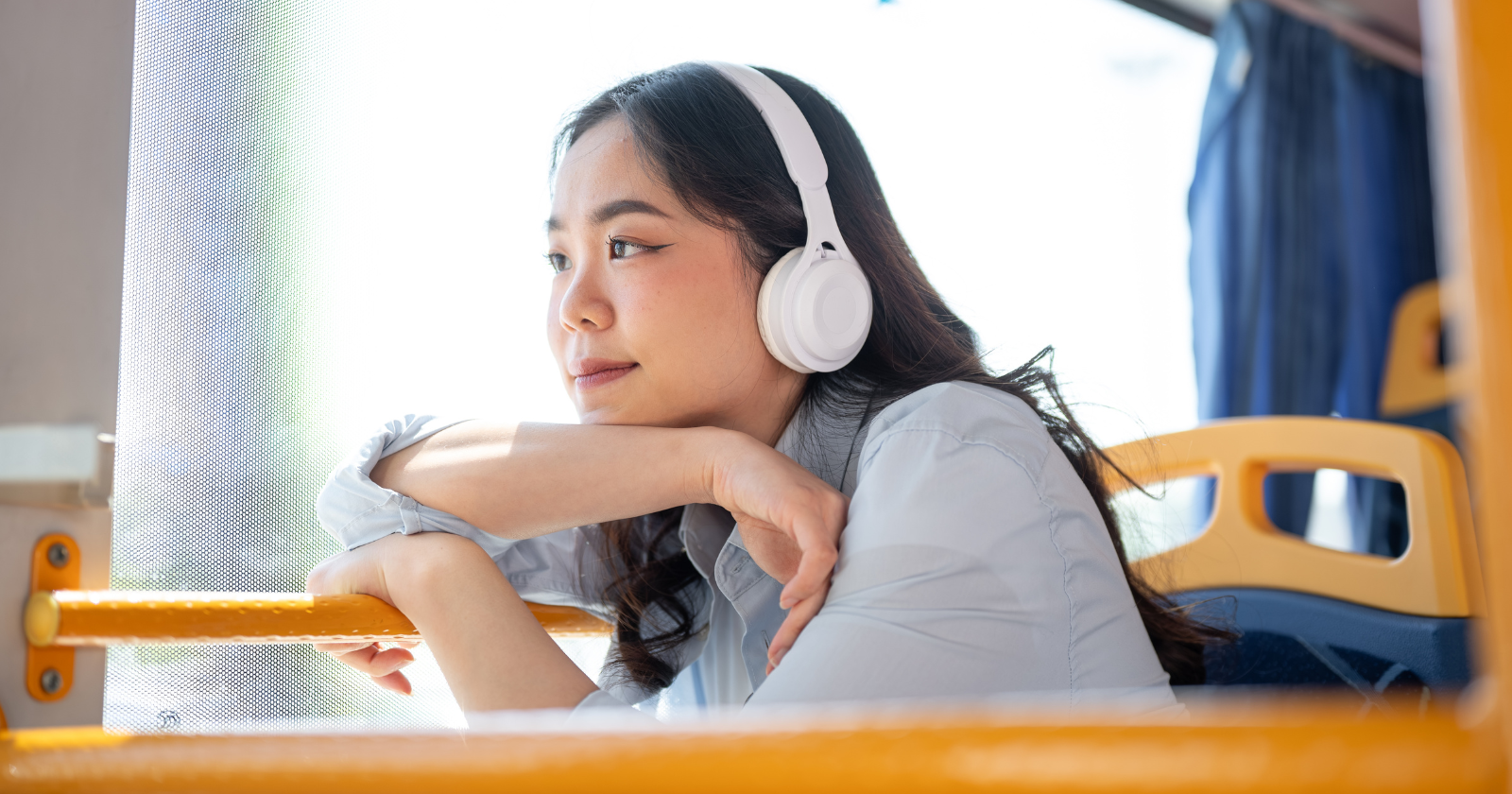
Growing up, I was the kid who sat in the back corner during family gatherings, watching my cousins compete for attention while uncles told the same stories louder each time.
In our house, the rule was simple: Don’t complain, so handle it instead.
So, I handled it by becoming invisible, which turned out to be the best seat in the house for understanding how people actually work.
I’d watch my aunt interrupt every conversation, then wonder why nobody wanted to sit next to her at dinner. I’d notice which cousin always had a “emergency” right before cleanup time. I’d see my grandmother’s face tighten when certain topics came up, even though she’d smile through it.
Back then, I thought being quiet meant I was missing out.
Turns out, I was developing a completely different operating system.
Introverted children and those who occupy observer roles in childhood often develop enhanced perceptual abilities and social cognition skills.
They become human pattern-recognition machines, picking up on micro-expressions, group dynamics, and unspoken rules that chattier kids miss while they’re busy talking.
Here are seven observation skills that quiet kids tend to develop, and why they matter more than you think.
1) Reading the room before anyone speaks
Walk into any meeting and I can tell you who’s threatened, who’s checked out, and who’s about to make a power play… all before the first agenda item.
This is pattern recognition built from years of watching instead of talking.
Quiet kids learn to assess emotional temperature through body language because they’re not focused on what they’re going to say next.
They notice who sits where, who’s leaning back with crossed arms, who’s mirroring the boss’s posture.
55% of communication is body language, 38% is tone, and only 7% is actual words.
Guess which percentage most people focus on? And guess who’s been unconsciously studying the other 93% since childhood?
When you grow up quiet, you become fluent in the language nobody’s speaking.
You know the meeting’s real outcome before the official vote. You sense relationship problems before couples admit them to themselves.
2) Spotting power dynamics instantly
In every group, there’s an official hierarchy and a real one. Quiet kids learn the difference early.
I watch who dominates conversations versus who people actually turn to for decisions, who laughs too hard at certain people’s jokes. Who asks real questions versus who performs intelligence, and who other people unconsciously orient their bodies toward.
This skill is pure survival when you’re quiet.
You need to know who has actual influence versus who just has volume. You learn that the loudest person rarely has the most power and are usually compensating for something.
People who accurately assess social hierarchies navigate groups more successfully. Quiet observers get years of practice mapping these invisible org charts.
3) Detecting emotional masks
Here’s something I always notice: who reaches for their phone the moment silence appears. That tiny gesture reveals more about someone’s internal state than an hour of conversation.
Quiet kids become experts at spotting the gap between what people project and what they feel.
We see the forced smile that doesn’t reach the eyes, the laugh that cuts off too sharply, and the compliment delivered through clenched teeth.
We develop this because we’re available to notice other people’s performances. We see when someone’s “I’m fine” means “I’m drowning” and when “That’s interesting” means “Please stop talking.”
People who spend less time talking often develop stronger emotion-recognition abilities. They’re not splitting attention between observing and preparing responses.
4) Remembering what people don’t say
After every significant conversation, I replay it like game tape to notice the negative space—what wasn’t said.
Which topics made someone change the subject? What questions got deflected? When did the energy shift?
This habit starts young for quiet kids. When you’re not contributing much verbally, you become hyperaware of conversation patterns.
You notice that your friend never mentions their father, that your colleague pivots every time career goals come up, and that your partner has never actually said they enjoy their job.
Communication researchers call these “conspicuous absences,” or the things that should be there but aren’t.
Quiet observers build mental maps of these voids, understanding people through what they avoid as much as what they address.
5) Recognizing behavioral patterns before they repeat
I have a talent for naming patterns people don’t want named because I’ve been tracking behavioral loops since childhood.
The colleague who creates crisis right before every deadline, the friend who picks fights when they’re insecure, or the family member who gets sick during conflict.
When you’re quiet, you see the same movies play out repeatedly with slight variations. You recognize that most people run maybe three to five behavioral programs on repeat, especially under stress.
People are remarkably predictable once you identify their core patterns. Quiet observers get thousands of hours of practice identifying these algorithms.
6) Sensing group mood shifts
Every group has an emotional wavelength. Quiet kids learn to surf it without contributing to the noise.
I can feel when a room is about to turn, when playful teasing is about to become real conflict, when casual drinks are becoming a situation, and when a meeting is about to go sideways.
This is more like emotional weather prediction.
You notice the barometric pressure dropping before the storm. The subtle tension that precedes an argument. The slight acceleration that happens before things get out of control.
Groups synchronize emotional states unconsciously. Quiet observers stay slightly outside this synchronization, maintaining enough distance to see the wave rather than just riding it.
7) Understanding what actually motivates people
Here’s the thing about being quiet: You hear what people say when they think nobody’s really listening.
The offhand comments that reveal actual priorities. The jokes that aren’t really jokes. The complaints that expose core fears.
Most people announce their deepest motivations constantly, they just do it indirectly.
They tell you they’re “not materialistic” while name-dropping brands, or they say they “don’t care about recognition” while forwarding their own praise emails.
Quiet kids learn early that stated values and actual values rarely match.
We build detailed models of what really drives people—security, status, control, connection—by watching what they do versus what they say.
Disconnect is universal, but only those watching from the outside can see both sides clearly.
Bottom line
Being the quiet kid felt like a disadvantage for years.
While others seemed naturally confident and socially fluid, I was running analysis in the corner, convinced I was broken.
But here’s what I learned: Observation is a superpower disguised as a weakness.
Those years of watching taught me to read situations most people miss, to understand motivations people don’t admit, to predict problems before they manifest, to navigate complex social dynamics without the usual trial and error.
If you grew up quiet, you developed different ones; ones that become more valuable as life gets more complex.
Stop apologizing for being observant and stop thinking you need to become chatty to succeed because your ability to see what others miss is the main reward.
The world has plenty of people who talk first and observe later.
What it needs are people who understand what’s actually happening beneath all that noise.