
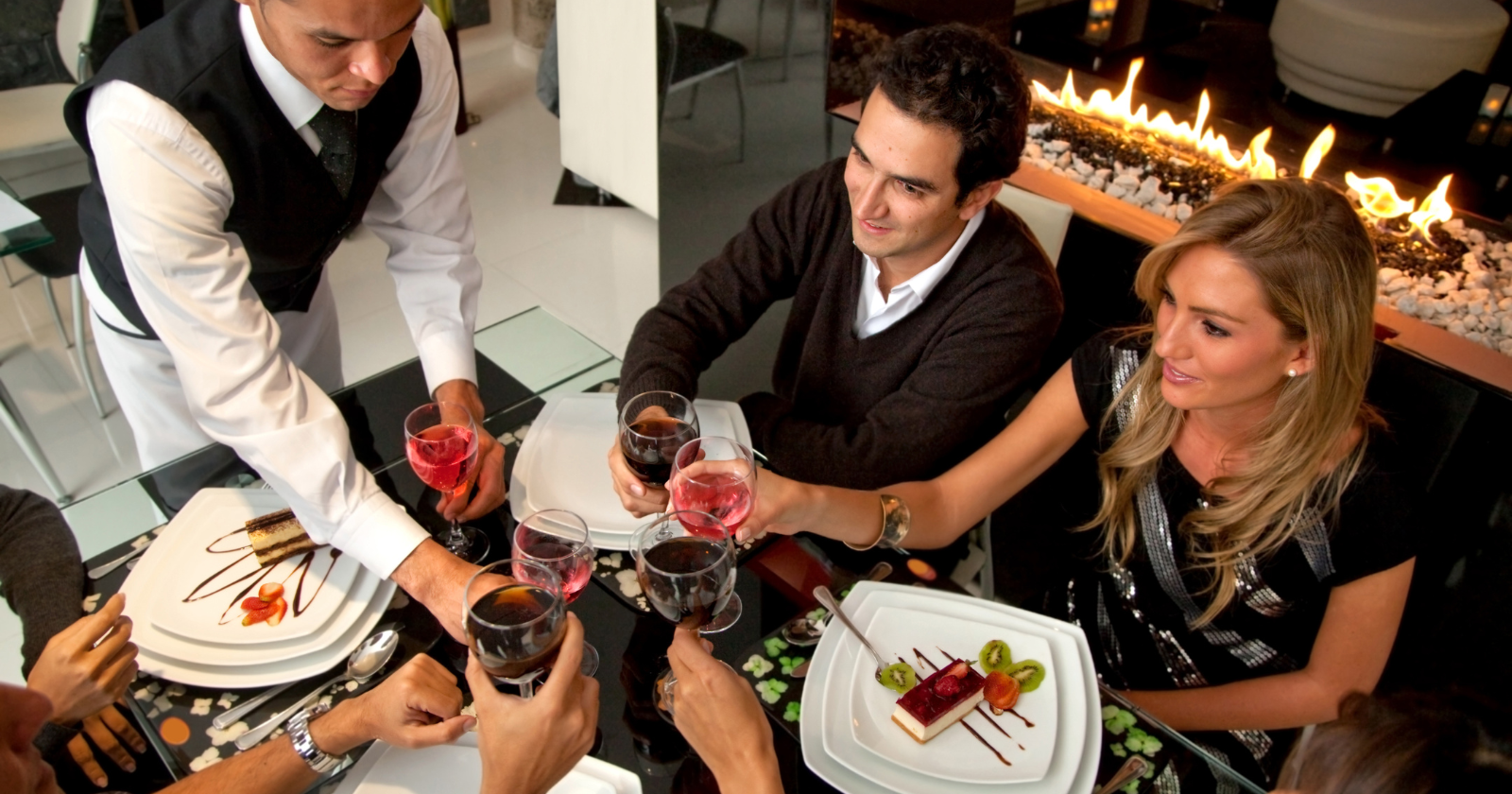
Ever watch someone truly wealthy navigate a restaurant? I don’t mean flashy new money or someone trying to impress.
I mean genuinely wealthy people who’ve had money long enough that they’ve stopped thinking about it.
I spent decades in rooms where real money made real decisions, the quiet kind that moves markets before lunch.
What struck me was how they moved through the space with a particular ease that had nothing to do with arrogance and everything to do with understanding exactly where they stood in the world.
Most middle-class diners operate from a script they don’t realize they’re following: Order appropriately, don’t make waves, and show you belong but don’t overreach.
The wealthy? They threw out that script long ago.
They do things that would make most of us squirm, not because they’re rude, but because they’ve transcended the need to perform for anyone.
After years of watching these dynamics play out, I’ve identified nine behaviors that separate those who have real wealth from those still worried about appearances.
These are about what happens when money becomes irrelevant to your sense of worth.
1) They make special requests without apology
Watch a middle-class diner ask for a substitution.
There’s usually an apologetic dance, a nervous laugh, maybe even a “if it’s not too much trouble.”
The wealthy? They simply state what they want.
No preamble, no justification.
I once watched a billionaire request his salmon be cooked exactly seven minutes, no herbs, just salt, served on a separate plate from the vegetables.
The waiter took notes as no one blinked.
He wasn’t being difficult; he knew what he wanted and assumed the restaurant would accommodate him (and they did).
This is the absence of anxiety about being judged.
When you’re not worried about your place in the hierarchy, you stop performing deference you don’t feel.
2) They leave whenever they’re ready
Middle-class diners often feel held hostage by the meal’s rhythm: Appetizer, entree, dessert, coffee.
Even if they’re tired or have somewhere to be, they follow the script.
The wealthy leave when they’re done, mid-meal if necessary.
I’ve seen executives stand up after the main course, leave cash that more than covers everything, and walk out while others are still eating.
No elaborate goodbyes, no explanations about early meetings; they simply go.
They understand their time has value that transcends social protocols, and they’re not worried about what the waiter thinks or whether other diners judge them.
3) They bring their own wine and pay the corkage fee without flinching
Most people would never dream of bringing wine to a restaurant.
It feels presumptuous, like you’re insulting the establishment’s selection.
The wealthy? They’ll walk in with a $3,000 bottle from their cellar and happily pay the $150 corkage fee.
They want to drink what they want to drink.
The corkage fee is just a convenience charge for that privilege; they don’t view it as a penalty or feel sheepish about it.
It’s a simple transaction!
4) They treat service staff as genuine equals
Here’s what most people get wrong about wealth and service.
Middle-class diners often overcompensate, either being overly deferential or artificially friendly.
There’s performance in both directions.
The truly wealthy engage with service staff as professionals providing a service, nothing more, nothing less.
They don’t need to prove they’re down-to-earth by over-tipping or making forced conversation, but they also don’t need to establish dominance.
They ask their server’s opinion on dishes and actually listen, and remember names without making a show of it.
I watched a hedge fund founder have a fifteen-minute conversation with a sommelier about soil conditions in Burgundy because he was genuinely interested and recognized expertise when he encountered it.
Every restaurant has things they can make that aren’t on the menu.
Most diners would never ask, and the wealthy assume the menu is a suggestion.
“Can you do a simple grilled chicken breast with steamed broccoli?” Even at a French restaurant known for complex sauces.
They want what they want.
The fascinating part? Restaurants almost always accommodate them because their certainty makes the request seem reasonable.
6) They conduct business without lowering their voices
Middle-class diners whisper when discussing money or business, terrified of being overheard.
The wealthy discuss million-dollar deals at normal volume; they simply don’t carry the shame or secrecy about money that most of us do.
A merger discussion is no different from discussing the weather because it’s just another conversation.
This comfort with transparency extends to everything.
They’ll take calls at the table because they don’t see their business as something to hide.
7) They send food back without drama
If something’s wrong, they state it matter-of-factly and expect it to be fixed.
No anxiety, no over-explaining, no “I hate to be that person, but…”
Just: “This is overcooked. Please bring another.”
They don’t worry about being labeled difficult or making the server’s life harder.
This is because they paid for something specific and expect to receive it.
8) They ignore the prices completely
This is about genuinely not looking.
They order what they want without checking what it costs.
I knew someone was truly wealthy when I watched him order wine for the table without ever opening the wine list to the prices.
He discussed regions and vintages with the sommelier and made a selection based purely on what would pair well with dinner.
Most of us, even when we can afford it, feel compelled to check.
It’s a reflex born from years of having to care, and the wealthy have moved beyond that reflex.
9) They change reservations or cancel last-minute without guilt
A middle-class diner with a reservation at a hot restaurant feels obligated to show up.
Canceling feels like breaking a social contract, wasting the restaurant’s time, or being inconsiderate.
However, the wealthy cancel if their plans change.
They understand the restaurant has already calculated no-shows into their business model.
They don’t agonize over it or make elaborate excuses.
“We won’t be able to make it tonight” is sufficient.
Closing thoughts
These behaviors are about what happens when you stop needing external validation.
When your worth isn’t tied to how others perceive you, you stop performing for an imaginary audience.
The middle class lives in a constant state of social anxiety at restaurants because they’re always auditioning.
Auditioning to belong, to seem sophisticated, to not be difficult, and to be seen as generous but not wasteful.
The wealthy have stopped auditioning because they’ve since realized that the only audience that matters is themselves.
The practical lesson? You just need to recognize when you’re doing things for an audience that doesn’t exist.
The next time you’re at a restaurant, ask yourself: Would I do this if no one was watching?
If the answer is no, you might be trapped in a performance you don’t need to give.
