
There’s a moment — and it doesn’t announce itself — when you realize the invitations have quietly stopped coming.
Not all at once. It’s not dramatic. Nobody sits you down and says, “We’ve decided you’re too old for this.” It happens the way a tide goes out. You just look up one day and realize the water’s gone.
If you’re over 60, you probably already know exactly what I’m talking about. And here’s the part that stings: the people doing it? They genuinely believe they’re being kind.
According to a landmark WHO report on ageism, one in every two people worldwide holds moderately or highly ageist attitudes — and most of them don’t even realize it. The exclusion of older adults from social life isn’t some fringe issue. It’s baked into how we operate as a society.
What follows are seven things people quietly stop inviting you to after 60, and the real reasons they’ll never admit out loud.
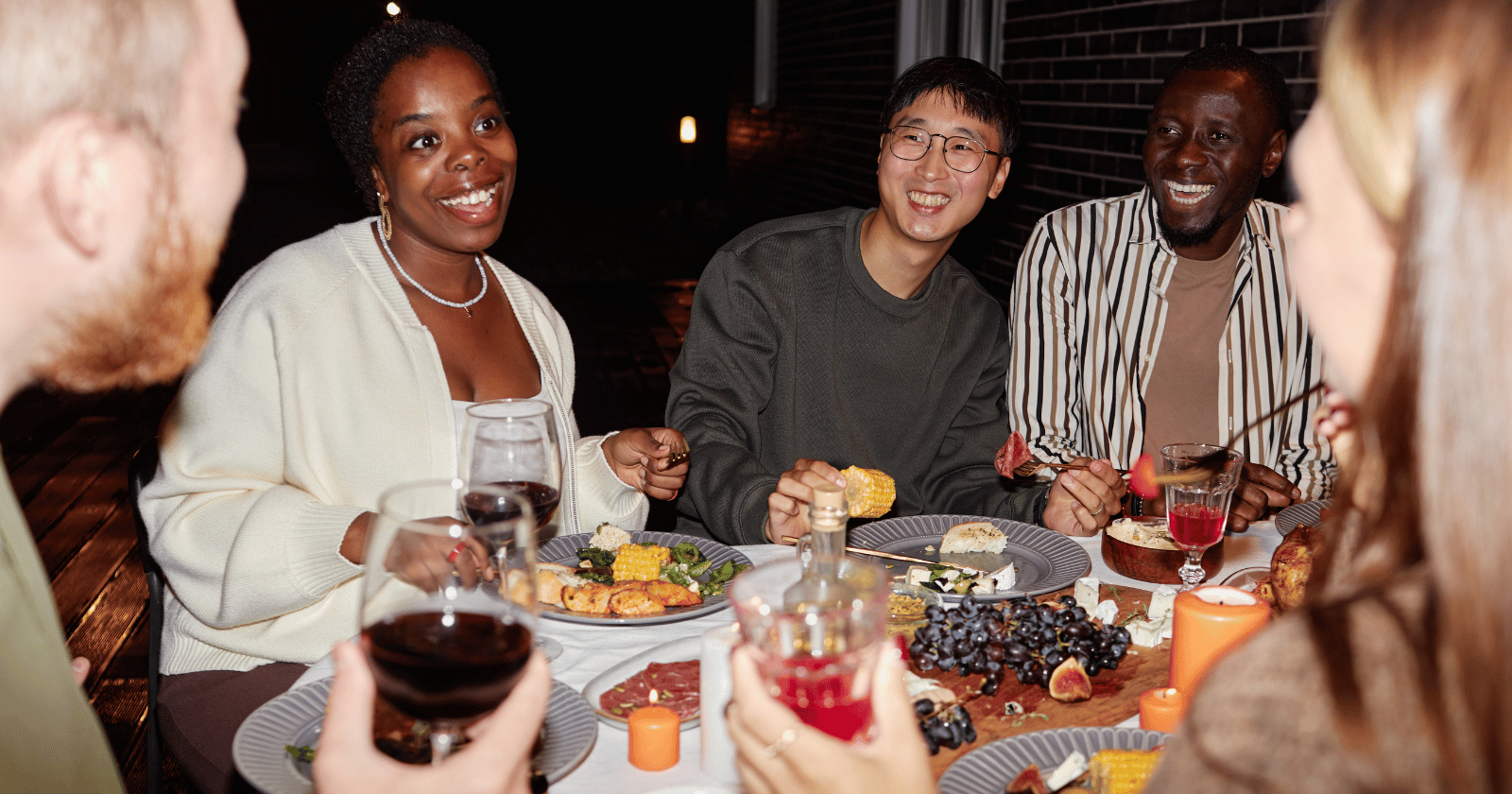
This one creeps in first. The dinner reservations that used to be at 8:30 PM start getting made without you. The after-work drinks, the spontaneous “let’s grab a bite” texts — they slowly dry up.
The reason nobody will tell you? They assume you can’t keep up. They picture you yawning into your soup at 9 PM. They think they’re doing you a favor by not putting you in a situation where you’d have to politely bow out early.
But what’s actually happening is something researchers have identified as a vicious cycle of chronic rejection. Ageist assumptions — “they won’t want to stay out late,” “they’d rather be in bed” — lead to exclusion, which leads to isolation, which then reinforces the very stereotype that caused the exclusion in the first place. As the American Society on Aging notes, this “othering” can also become self-imposed. You start telling yourself you don’t want to go, when the truth is you were never asked.
2. Group travel and adventure trips
Remember when your friend group would plan a hiking trip or a long weekend somewhere? At some point after 60, those plans start being made in group chats you’re no longer part of.
The unspoken reason is almost always about physical assumptions. People worry about your mobility, your stamina, whether you’ll slow the group down. They frame it as consideration. It’s not.
Research published in the Journal of Emergency Nursing spells out the stereotypes driving this: “They can’t keep up,” “they need frequent restroom stops,” “they can’t hear.” These assumptions are so deeply ingrained that people act on them without a second thought — and in doing so, cut older adults off from the kinds of physically and socially stimulating activities that actually keep them healthy. It’s a self-fulfilling prophecy dressed up as thoughtfulness.
3. Workplace celebrations (and ironically, even your own retirement party crowd)
The cruelest irony of the post-60 social landscape is how quickly the professional world forgets you. The colleagues you spent decades alongside — the people you ate lunch with every day, navigated crises with, celebrated promotions with — they move on with startling speed.
A study on post-retirement social contact found that when people leave the workplace, they lose the natural infrastructure that made those friendships possible. It’s not that your former colleagues don’t like you. It’s that without the shared physical space and daily routine, the effort to maintain the relationship now falls entirely on deliberate action — and most people simply don’t make that effort.
Research on retirement adjustment confirms what many retirees feel instinctively: the workplace didn’t just provide a paycheck. It provided belonging, connectedness, and emotional support. When that disappears, many people experience something researchers describe as a genuine identity crisis — and the former colleagues who once formed your daily social world quietly stop including you in theirs.
4. Family decision-making conversations
This one cuts deep because it happens inside your own home. Adult children start making plans — about holidays, about finances, about care arrangements — and you find out after the fact. Or worse, you’re present but treated as someone to be informed rather than consulted.
The real reason? Your family has started to see you as someone who needs to be managed rather than included. It’s a subtle shift in power dynamics, and it often comes from a place of genuine love and concern. But the effect is devastating.
A systematic review on ageism and psychological wellbeing found that when older adults internalize the stereotype that they’re less competent, they experience measurably worse mental health outcomes. The exclusion from family decisions doesn’t just hurt emotionally — it actively undermines cognitive function and self-worth. When people are consistently treated as though their opinions matter less, they start to believe it.
5. New Year’s parties and big milestone celebrations
At some point, the invitations to the big, loud, energetic celebrations — New Year’s Eve, milestone birthdays, engagement parties — start to thin out. Not because anyone dislikes you, but because of an unspoken calculation happening in the organizer’s mind: “Will they enjoy this? It’ll be loud. It’ll go late. There’ll be a lot of drinking.”
What they’re really doing is projecting their own fears about aging onto you. The WHO’s research on ageism has found that these attitudes cost older people far more than a missed party. An estimated 6.3 million cases of depression globally are attributable to ageism. And in the United States alone, the health consequences of age-based stereotypes and discrimination add up to roughly $63 billion in excess healthcare costs annually.
A missed New Year’s party might seem trivial. But when it’s part of a broader pattern — when it’s one of dozens of small exclusions happening across every area of your life — the cumulative effect is anything but trivial.
6. Weddings (or at least, the full experience)
You still get the invitation. But somewhere along the line, you notice you’ve been seated at the quieter table. You’re not part of the hen’s night or the bachelor party planning. You’re expected to leave before the dancing really gets going. You’re included, technically — but in a diminished, ceremonial way.
This is what researchers at the William James Center for Research found when they studied how ageism affects social participation: 86% of older adults in their study reported feelings of social rejection. Many described sensing a “subliminal suspicion and hesitancy” from younger people when they expressed interest in participating in activities. The message, though unspoken, was clear — you can come, but we don’t really expect you to keep up.
7. Spontaneous plans and casual get-togethers
Perhaps the most painful exclusion is also the most invisible: the death of spontaneity. The “hey, want to grab coffee?” texts. The last-minute invitations to come over and watch the game. The casual, unplanned social contact that makes up the fabric of friendship.
After 60, people start treating you like someone who needs advance notice, formal plans, and logistical accommodations. The spontaneous stuff — which is often where real intimacy lives — just stops.
Research from BMC Public Health found that 50% of individuals over 60 are at risk of social isolation, and one-third will experience significant loneliness later in life. The researchers noted that societal changes — reduced intergenerational living, greater geographical mobility, and less cohesive communities — have made this worse. But at the interpersonal level, it often comes down to something simpler: people stop thinking of you as someone to call on a whim.
What nobody wants to say out loud
Here’s the uncomfortable truth that ties all seven of these together: the exclusion isn’t driven by malice. It’s driven by discomfort. Younger people don’t want to confront their own aging. Including you — vibrant, present, fully alive you — forces them to think about a future they’d rather not face.
As research published in the American Journal of Public Health puts it, ageism promotes the social exclusion of older people from “meaningful roles and relationships,” and this exclusion functions as a chronic stressor that actively compromises health.
The National Academy of Sciences found that roughly 24% of adults aged 65 and older in the United States are socially isolated, and 43% of those over 60 report feeling lonely. These aren’t just numbers. They represent millions of people who were once deeply embedded in social networks that slowly, quietly, closed ranks without them.
So what do you do about it?
You name it. That’s the first step. You stop accepting the polite fiction that people are “just being considerate” and you recognize it for what it is — a form of discrimination so normalized that most people don’t even see it.
And then you refuse to comply. You show up anyway. You make the plans yourself. You call people out — gently, but honestly — when you notice the invitations drying up.
Because the research is clear on one thing: staying socially engaged isn’t just nice to have after 60. It’s one of the strongest predictors of whether you’ll maintain your cognitive function, your physical health, and your will to keep going. The people who thrive in their later decades aren’t the ones who gracefully accept their shrinking world.
They’re the ones who refuse to let it shrink in the first place.
