

The construction industry is one of the oldest and most significant industries in the world. Although in the last couple of years, the global economy faced some issues, still the total construction starts in 2019 were predicted to be worth just above $800 billion in the US only as per a Dodge Data and Analytics’ report presented in Oct 2018 (Source: contructiondive.com)
Construction projects are giant projects. And big projects involve the use of a lot of data. As per an article by Forbes, 35% costs in this industry just comprise the waste material and remedial work (Source: forbes.com). In construction projects, information needs to be maintained on material costs, design models, drawing sheets, legal documents and weather conditions. This information need not only be collected but also requires to be linked and processed to drive the project faster and smoother.
When you have so much data to be handled, it requires innovative technologies and methods to simplify the job for you. And as it has always been, necessity being the mother of invention, we are introduced to the technical approach of Big Data and Analytics in the construction industry.
What is Big Data?
Sas.com simply defines Big Data as a large volume of data that includes both structured and unstructured form. Storage, processing, visualizing and analyzing this huge amount of data was a problem of the past. Platforms like Hadoop have helped businesses in dealing with the data storage of large scale whereas technologies like Artificial Intelligence and Machine Learning use innovative models for processing the Big Data.
What is Big Data Analytics?
The amount of information does not matter if it does not give you any insight. Analytics is nothing but finding out patterns from the data. Data analytics is already existing in the world from a long time and Big Data Analytics is also not very different. It just involves the expansion of some pre-existing techniques, technologies, and concepts to make sense out of such a huge amount of data. Take a look at the following figure to understand how broad the environment of Big Data Analytics is.
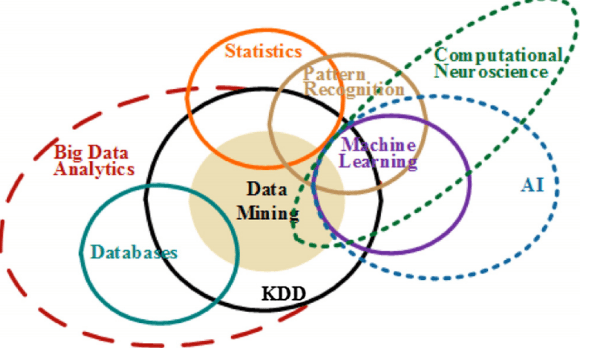
Multidisciplinary nature of Big Data Analytics
(Image Source: researchgate.net)
Let’s see how Big Data is helping the construction business:
Optimization of waste and resources
As the whole world is moving towards urbanization, construction projects are also expanding all around the globe. This expansion causes a lot of exploitation and misuse of natural resources.
Construction companies traditionally rely on WI (waste intelligence), which prescribes the remedial methods only after the problem has happened. But with the help of Big Data, the companies are moving towards WA (Waste Analytics), which suggests preventive methods to stop the pollution.
Big Data is helping in creating robust waste generation estimation models and correct material selection based on BIM (Building Information Modelling). This requires a lot of data on building design, material properties, surrounding environment and construction strategies.

(Image Source: fortune.com)
Generative Designs
Another paradigm shift in the construction industry is the introduction of Generative designs. Based on functional requirements, type of material, performance, cost, and method of manufacturing, etc. many designs are automatically generated using GD tools. Complex algorithms are deployed based upon the data related to design requirements to generate multiple designs. The huge amount of data is also required to test the performance of each design. And the correct evaluation helps designers to select designs according to changing conditions and requirements.
Autodesk has come up with a tool called Dreamcatcher which will help designers in creating generative designs.

(Image Source: autodesk.com)
Energy Management
Big data for energy management is useful in two ways. Firstly, to predict the energy consumption by the buildings the energy simulation software requires the use of data. The accuracy of this software depends upon the accuracy of the fine-tuning of parameters. The automatic tuning of these parameters involves a lot of computations on data collected. These software deal with hundreds of Terabytes of data.
Secondly, Building Energy Management Systems (BEMSs) also need Big Data and related technologies. These systems need hundreds and thousands of sensors to capture data for their architecture. Big data tools are also required to create computational intelligence to integrate the data received from heterogeneous sources to generate meaningful insights.

(Image Source: memoori.com)
Communication
The construction industry, as discussed, uses a lot of data and today the data cannot be limited to a single system. Data needs to be communicated and information needs to be passed. With the penetration of cloud computing in almost every industry, even construction project management is moving towards the use of such channels to work on shared platforms.
Imagine when there are numerous projects running simultaneously by a company if you are able to get a complete status update of each project with their planned timelines, forecasting, and analysis. Big data tools and technologies will help in creating such humongous information systems.
Safety Management
An article about the construction industry is incomplete if we do not talk about safety. Big data provides you with visual analytics and augmented reality which can give you an idea about danger zones in the construction projects.
The use of motion and proximity sensors can predict upcoming threats during construction. Weather-related data is also processed simultaneously to make sure that unfavorable conditions do not create unsafe conditions for the workers. All this data needs to be processed for correct simulation and Big Data tools are a must for the creation of accurate analytics.

(Image Source: constructconnect.com)
Conclusion
In this article, we discussed the role of Big Data technology in the construction industry. Although this industry produces data on a large scale, the adoption of Big Data tools is still very slow by the businesses of this industry.
But the basket of opportunities for Big Data technology is very big including IoT, BIM, Smart Buildings and AR/VR, etc. As the data revolution will be hitting this industry, you will see more surprises in the future. Research and development are going on in this field which gives birth to new business applications every day.
- How Emerging Technologies Are Transforming Property Presentation in Real Estate
- Streamlining Video Production: Tips for Using Online Editing Tools
- Why Bother Upgrading Your Internet? Here Are 4 Clear Benefits for Your Home and Business Setup
- Top 20 Sources of Tech Information You Can Find This Year
- Picking Smartphone Apps: Basic Criteria for Choosing the Best
- The Future of Dentistry: How Dental Innovations Are Changing the Global Dental Industry
